Life as a smoker has never been as difficult as it is today: warning labels on cigarette packs, smoke-free zones in public buildings, price increases, and almost daily bad news in the media. Non-smokers are angry at their fellow citizens who smoke. And yet the number of smokers is rising. Around 100,000 young people worldwide start smoking every day. The average age at which they start is 13. The number of girls and women who smoke is rising rapidly, and with it the risk of lung cancer among the female population. Young people are becoming addicted more quickly than previously assumed.

Ms. Z. has been smoke-free for three months. Lost in thought, she walks along a narrow street near her apartment. She sees a small shop, crosses the street, enters the shop, leaves it again after a short time, finds herself back on the street and wakes up from her thoughts. What has she just done? After three months without cigarettes, she absentmindedly entered the shop and bought a carton of her old brand of cigarettes, even though she hasn’t smoked for three months and no longer has any desire to do so. But for years, she bought her ration of cigarettes in this shop every third day. And because she was so lost in thought, she fell back into her old habit. Fortunately, the saleswoman took back the cigarette pack, but could not hide a grin on her face.
This little incident shows how strongly habits can shape us. And smoking is a very formative habit. When you take out your cigarette pack twenty times a day, or unfortunately often more, tap out a cigarette, put it between your lips and light it, inhale the first deep drag…
Over time, this carves a deep groove in the nerve pathways of the brain. It soon resembles a well-trodden, hardened path. It is no longer easy to leave it. You have become dependent. But it is not impossible to leave the well-trodden path.
Smoking as a health issue
Nicotine is a powerful poison. It accelerates heart activity and attacks the vascular and nervous systems. Arteriosclerosis is the result. If the arteries in the legs become narrowed, it results in the well-known smoker’s leg. This causes severe pain. High blood pressure, strokes, and impotence are further consequences of arteriosclerosis. Is the brief pleasure of taking a puff worth the price?
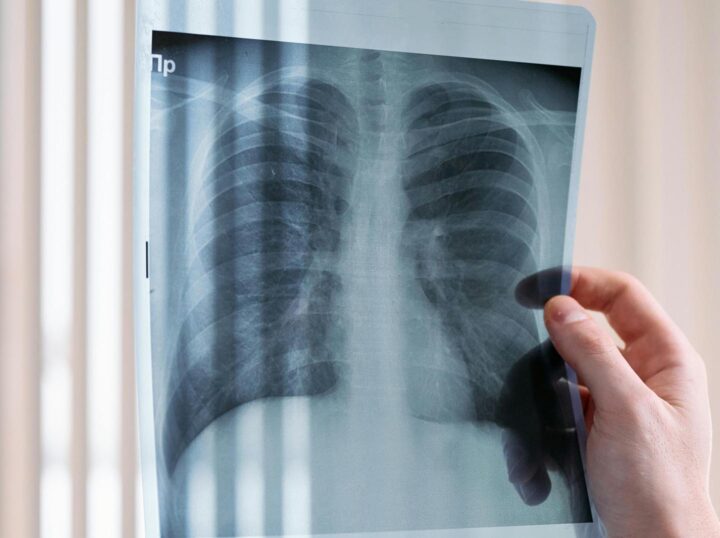
The lungs suffer even more. At first, only poor performance, shortness of breath, and coughing occur. Soon, chronic bronchitis sets in. Ninety percent of all people who suffer from chronic bronchitis are smokers or former smokers. The smoke paralyzes the cilia in the airways, causing the lungs to produce excessive amounts of mucus, accompanied by phlegm and shortness of breath. Continued smoking leads to COPD—chronic obstructive pulmonary disease. According to the WHO, this is the fourth leading cause of death worldwide. The cilia in the bronchi are destroyed, the mucous membrane of the alveoli degenerates, and they collapse. The inflamed mucous membrane of the bronchi thickens. It is no longer possible to absorb enough oxygen. As the disease progresses, the heart is also affected. Now the situation becomes life-threatening. Water accumulates in the legs and abdomen. Anyone who stops smoking at this point can barely save their life. Once lung tissue has been destroyed by emphysema, it cannot be regenerated.
Another devastating consequence of smoking is cancer. It is estimated that 30% of all cancer cases are attributable to smoking and another 30% to poor nutrition. We can eliminate or at least minimize both types of risk.
Smoking as a social problem
In the middle of the last century, smoking was much more socially acceptable than it is today. This is evidenced by the so-called smoking rooms, where men in particular would retreat after meals. Even the tuxedo derives from the smoking jacket, that was worn by men to protect their clothes from smoke.
It is frequently emphasized that smoking plays a significant economic role in a country’s revenue. Consider tobacco tax or the turnover in the tobacco industry, from tobacco farmers to suppliers of filter paper and other smoking accessories. However, the economic damage caused by smoking is also significant. Think of tobacco tax or the turnover in the tobacco industry, from tobacco farmers to suppliers of filter paper and other smoking accessories. But the economic damage, such as losses due to illness, birth defects in newborns, cleaning cigarette butts from public places and much more, exceeds the revenue from taxes many times over.
Passive Smoking
Forced exposure to secondhand smoke in closed rooms is not harmless, as many extensive studies have shown. Children, including unborn babies, suffer greatly from passive smoking. Is the brief pleasure of smoking a cigarette really worth more than the health of our children?
Initiation into drug use
Chemically speaking, nicotine is similar to the neurotransmitter acetylcholine. Neurotransmitters are substances that serve to stimulate nerve activity. Nicotine can easily cross the blood-brain barrier and bind to acetylcholine receptors, triggering reactions. In this sense, nicotine can actually boost brain performance in the short term and lift mood by releasing other neurotransmitters. This means that larger amounts of nicotine will soon be needed to achieve the same effect.
In addition, nicotine is the number one gateway drug to inhaling illegal drugs. Those who never start smoking are largely protected from these drugs. Virtually all users of intoxicating drugs smoke cigarettes. Adults really have a very important role model function here if they clearly take the side of non-smokers—for the sake of their children. It is our children and young people who start smoking. The proportion of new smokers in adulthood is negligible. Unfortunately, children and young people who smoke become adults who smoke. That is why it is important to protect our children. The greatest motivation for never starting smoking or for quitting should be love for our own children.

Which people become dependent or addicted? Scientists are trying to get to grips with this question. There have been several attempts to define an addictive personality. However, this is very difficult and somewhat fruitless. The probability model is more satisfactory. It suggests that a variety of unfavorable conditions must coincide over a longer period of time for addictive behavior to develop. Addiction always affects the whole family. All members are connected to each other like a moving object. If one part is out of balance, all the others are affected. This comparison also shows how important it is to “live as a family.” This includes cherished rituals that you can always look forward to. Anticipation has a very powerful effect. The effort required for such rituals does not have to be great. But it must come from the heart.
The ability to communicate should also be a priority in a family. Everyone should be able to talk about their own feelings, attitudes, and conflict resolution strategies. This brings us back to the topic of smoking. Here, too, many conflict situations arise when only one family member smokes. We are all familiar with the image of the smoker standing on the balcony, shivering. Are they standing outside voluntarily or under coercion? There are always different perspectives from which to view a situation.
Personal freedom
Do smoking bans in public places restrict personal freedom? Isn’t it also a right for someone to want to sit in a smoke-free environment? Unfortunately, smoke knows no boundaries. As we know, the freedom of the individual ends where the freedom of the next person begins. Tolerance is necessary on both sides. But given the negative consequences of smoking, wouldn’t it be better to put out that last stub? My heartfelt congratulations to anyone who manages to do so. If you can’t do it on your own, there are many places that offer help, such as Seventh-day Adventist churches, health insurance companies, and doctors.

Stay Always Up to Date
Sign up to our newsletter and stay always informed with news and tips around your health.

Esther Neumann studied Nutrition at the University of Vienna. Since then she served as an author for the health magazine “Leben und Gesundheit” and conducted health lectures in various locations of Austria.
Leave a Reply