When a child grows up, even in families where there are no serious conflicts, he needs to use psychological defense mechanisms to deal with the inevitable frustrations. Just as our immune system was created by God to protect our bodies against invaders, such as viruses or bacteria that produce illnesses, we also have psychological mechanisms in our minds to help us, if possible, to stay away from attitudes, feelings, thoughts, words and beliefs that may be unpleasant.

If thinking about a certain subject causes us a lot of emotional pain, the mind can block this out, using one of the defense mechanisms to spare us from experiencing a painful feeling. So, you can have anxiety and deny it. This is because the defense mechanism prevents this anguish from coming into your consciousness.
It hurts to think about what hurts and, in general, we avoid feeling emotional pain. Emotional pain can be anguish, sadness, fear, anxiety, guilt, shame, amongst others.
Psychological defense mechanisms kick in unconsciously. It’s not a choice you make consciously not to think about this or that mental pain, this or that conflict, loss or trauma. For example, an individual who is addicted to a substance, be it alcohol, an illicit drug or something else, can go on for many years saying that they don’t have a problem with drugs. This is not a conscious lie, but a psychological mechanism called denial.
For various reasons, it is difficult for this person to admit that they have no control over their substance use. Therefore, his mind creates this posture of denial and uses statements like:
- “I’ll stop drinking when I want to.”
- “I only drink a little bit.”
- “I only use drugs at the weekend.”
While the truth is that he can’t stop using these substances on his own, he drinks too much and uses drugs frequently.

Still in this example of denial, when the person admits that they have lost control over their substance use, by recognizing that they can’t stop this addiction without help, they take the first step towards recovery. This is because they are no longer dominated by denial. In this way, the truth appears in their mind, and that’s when they can seek appropriate help.
It’s interesting that Jesus said that if we know the truth, the truth will set us free. To have emotional healing, you need truth. Truth about ourselves, about our thoughts, feelings, desires and motivations.
When we experience conflicts from childhood to adulthood, our mind unconsciously and automatically uses mental defenses to keep us in reality and functioning as a person. We become what causes the least pain.
I’ll say it again: in life we become what causes the least pain. The problem is that, for some, this path of change is dysfunctional, complicated and hurts a lot of people.
A child may, for example, feel insecure and excessively afraid, and their mind creates a defense to deal with this emotional discomfort, which can be, for example, school phobia. In this child, excessive fear and perhaps some difficulty with the father or mother, in terms of affective interaction, produce an emotional discomfort that can be anguish. The mind then creates a defense against this anguish, which is the phobia.
In another child, faced with the same suffering, there may not be a phobia, but nocturnal enuresis, which is urinating in bed again when the child already had control over it.
A phobia is an exaggerated fear that serves as a defense against what frightens the person. If the person has conflicts that are difficult to resolve, the mind can create a phobia because, with the phobia, it can still function.
For example, if the phobia is of using an elevator, the person may take the stairs. The phobia can then be understood as a defense against the experience of emotional pain that is difficult for the phobic person to experience. It’s as if the phobic person’s mind says: “Oh, it’s not as bad for me to feel this phobia as it is for me to have to face my deep emotional pain.”

In phobia, they still know how to manage.
If the phobia is of elevators, he takes the stairs.
If the phobia is of heights, he doesn’t climb high places.
If it’s a phobia of enclosed spaces, he’ll avoid them or stay very close to an exit door.
But remember: a phobia is a defense against a pain that the person has not yet learned to face and deal with. What is this pain about? The answer lies in the person’s unconscious, beneath the surface of consciousness.
A phobia is an excessive fear, often irrational, because the individual knows, rationally, that there is no point in that kind of exaggerated manifestation of fear, but nevertheless suffers from it.
I’ve seen people who were afraid of birds. Rationally, it doesn’t make sense to have that kind of fear, does it? But for that person, the bird has a negative meaning in their emotional life, usually unconscious to them.
The most important thing is to understand that phobia, as I said, is an emotional defense mechanism, it reveals that, in the individual’s unconscious mind, there are conflicts that may not be clear to that person.
A person, regardless of their cultural level, can say: “Oh, I don’t know why I feel this kind of exaggerated fear.” Healing this requires becoming aware of the conflicts that lie beneath the surface of consciousness. This can be painful, because it hurts, as I said, to think about what hurts. That’s why we avoid thinking about what causes emotional pain and unconsciously use escape mechanisms to avoid experiencing that pain.
We do this until we are ready to face the truth that was unconscious. When this truth, which explains our mental suffering, reaches our consciousness, it will produce the chance to mature and resolve the symptoms.
That’s why knowing yourself is great knowledge.
That’s why Jesus said:
And you shall know the truth, and the truth shall make you free.
John 8:32
So one question that arises is: What truth about myself do I need to know in order to become free of this mental suffering?

To find out, you need to think, pray, reflect and try to make connections between the sufferings of the past and the symptoms of today. You need to put together the puzzle of your life.
Think about what happened in your childhood and adolescence that was bad for you. Try to remember what you felt at the time. What was on your mind? Was it fear, sadness, guilt, shame?
What did you do with these feelings when you were a child? Did you tell someone, get it off your chest? Did you swallow everything?
How did your father, mother or whoever raised you deal with your feelings? Did they support you, suppress you or do nothing because you didn’t tell them how you felt? Think about it. Ask God to understand what He knows you need to understand about your past sufferings, in order to be freed from the sufferings of the present.
Returning to the question of the defense mechanisms our mind uses, at a certain moment in life, we may need to use a defense mechanism.
But, with the passage of time and the decision to seek a resolution to the basic emotional sufferings that lie beneath the surface of what we consciously think, it is possible to abandon the mechanism that once served us but now hinders us.
What used to help us deal with painful situations can now be a barrier to our maturity and strength to live. An alcoholic may have lived in denial about losing control over their drinking for many years. He used this defense mechanism to avoid facing the problem, but by running away from the truth about his compulsion for alcohol, his life couldn’t improve, and he, his family and friends suffered.
To repeat: we can use a defense mechanism for many years, and it can prevent us from maturing and resolving conflicts. I’ll give you another example, other than the person with a drinking problem, to illustrate this.
Let’s say you broke your leg in an accident and had to use crutches for a while. As long as you couldn’t fully stand on the ground, the crutches were necessary. But if, when the doctor gave you the go-ahead to abandon the crutches because your leg had healed, you decided to continue using them, they would be a hindrance to walking rather than an aid. So what was necessary before would no longer be an advantage, but would become a disadvantage.

So it is with the psychological defenses we use and with character defects. To the extent that we are enlightened by God and come to see and admit that we have this or that character defect or defense that is now dysfunctional and gets in the way, then, seeing this, we have the chance to change.
It’s important, on the one hand, not to become complacent with our defenses and character defects and to strive to improve. On the other hand, it’s important to exercise patience with ourselves and, instead of condemning and belittling ourselves when we see our behavioral mistakes, to accept the pace at which we can change.
Sometimes we need to accept ourselves, with our faults and whatever else, before those faults can be removed. Accept ourselves as Jesus accepts us, even though we are sinners.
So, to improve mental suffering or relationship problems, it’s important to think about what the person might be running away from. Stop running away from the truth, accept the painful situation or accept the loss and, finally, think about what you can do now in your life, after the acceptance that you can’t do this or that, because you’re not omnipotent.
Really accepting our limitation is a step towards helping us to do what we couldn’t do before and can do now. Accepting ourselves frees us to be what we can be, with the help of God, relatives and friends. Allow yourself to know the truth about yourself, because the truth will make you free!

Stay Always Up to Date
Sign up to our newsletter and stay always informed with news and tips around your health.
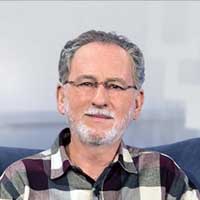
Dr. Cesar Vasconcellos de Souza is working as a psychiatrist and international speaker. He is author of 3 books, columnist of the health magazine “Vida e Saúde” for 25 years, and has a regular program on the “Novo Tempo” TV channel.
Leave a Reply