As dietetic professionals, we know there are many approaches used for weight loss including dietary changes, exercise regimens, behavior modification, drugs, and surgery. Most weight loss programs include a combination of approaches. Recently, many consumers have been turning to highly promoted and marketed herbs and herbal preparations in their quest to lose weight. Several widely sold herbal products claim to be effective for weight loss. We will review a few of the popular herbal remedies that are currently being marketed for controlling weight.

Garcinia—Herbal Appetite Suppressant?
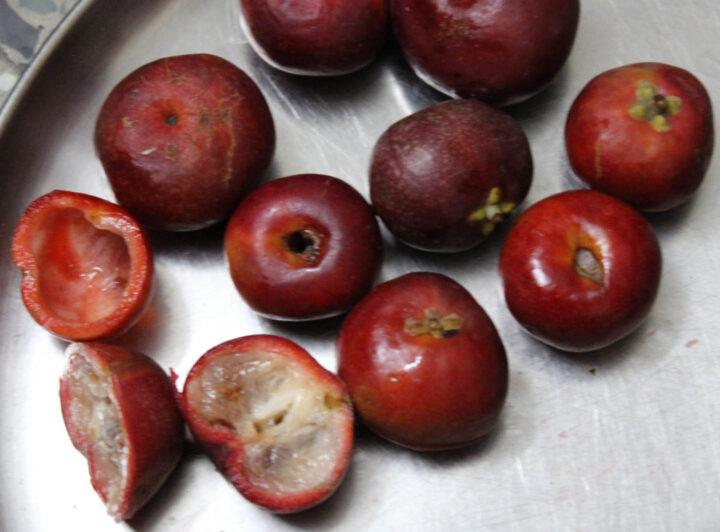
Most conventional pharmacological agents used for weight loss are classified as appetite suppressants. Two tropical herbs that have recently been promoted in the natural foods industry as appetite suppressants are Garcinia cambogia and Garcinia indica. The acidic fruits from these plants have long been used as a food in India, Laos, Malaysia, Thailand, and Burma. Muslims in India use the dried rind to flavor curries as a substitute for limes or tamarind.
Hydroxycitric acid (HCA), which constitutes up to 16 percent by weight of dried Garcinia fruits, is the active plant principle attributed to weight control. Preliminary research, based on laboratory experiments and animal research, suggests that HCA may potentially be an aid in weight loss. HCA has been shown in rats to significantly reduce food intake (hypothesized by suppressing appetite), body weight gain and body lipids. It has also been found to inhibit the conversion of carbohydrates into stored fat by inhibiting certain enzyme processes. The reputed effects of HCA are based on its reported action as an inhibitor of the enzyme ATP citrate lyase (citrate cleavage enzyme), which is required for the synthesis of fatty acids. The enzyme utilizes citrate, which has been exported from the mitochondria to the cytoplasm, and forms acetyl CoA and oxaloacetate from it. The results of animal studies have yet to be confirmed by well-designed, large-scale human studies.

In 1998, a large clinical trial of HCA did not show weight loss in human subjects. In this study men and women were randomized to receive HCA or placebo, along with a high-fiber, low-energy [5040 kl/day (1210 Kcal/day) 20% as fat] diet. HCA was taken 3 times per day (30 minutes before meals) for a total daily dose of 1,500 mg. The subjects were followed for 12 weeks (compared to 4 to 8 weeks in previous studies). Both groups lost weight, 4.1 +/- 3.9 Kg (mean +/- SD.) for placebo and 3.2 +/-3.3 Kg for HCA, and reduced body fat mass of 2.16 +/- 2.06% for placebo vs. 1.44 +/- 2.15% for HCA. While the mean losses were actually greater for placebo than HCA, the differences between groups were not statistically significant at the p< 0.05 level. The authors concluded that Garcinia cambogia failed to produce significant weight loss beyond that observed with the placebo.
Using Garcinia to lose weight is therefore questionable and needs to be really demonstrated to be helpful. More well-designed, large clinical trials are required before the promotional claims for Garcinia and HCA can be substantiated.
Ephedra, Guarana, Yerba Mate—Herbal Stimulants
Herbal stimulants are frequently used in herbal preparations promoted for weight loss. Among these are ephedra, guarana, and yerba mate. They are often found in combination in a single herbal preparation.
Ephedra Herb (ma huang)
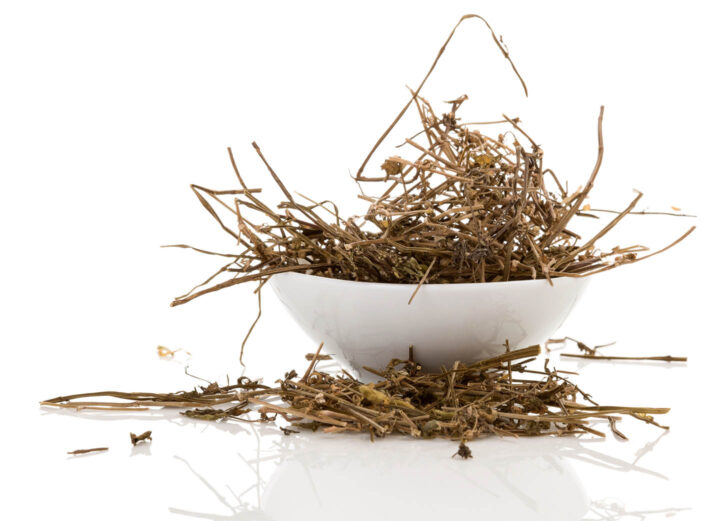
Ephedra herb (Ephedra sinica), also popularly known by its Chinese name ma huang has been extensively used in China as a nasal decongestant and for the relief of hay fever and asthma for over 5,000 years. Pharmacologists have confirmed ephedra’s traditional use as an effective decongestant. As a result, it is the first Chinese herbal medicine that achieved significant use in Western medicine.
Ephedra’s two key active constituents, ephedrine and pseudoephedrine, have been extensively studied and are widely used in both prescription and OTC medications for asthma, hay fever, nasal congestion (due to cold symptoms or allergy) and related conditions. Ephedrine and its related alkaloids have CNS stimulant activity. As a result ephedra herb and its extracts are frequently incorporated into so called “energy herbal supplements” and are popularly used in herbal weight loss aids.
Although ephedra does suppress appetite, its main mechanism for promoting weight loss appears to be by increasing metabolic rate of adipose tissue through thermogenesis. Its weight-reducing effects appear to be greatest in those individual with a low basal metabolic rate and/or decreased diet-induced thermogenesis.
A 1995 review of several studies suggests that ephedrine administered in combination with methylxanthines (caffeine) enhances fat loss. Ephedrine plus the addition of caffeine is thought to act by centrally suppressing appetite and peripherally stimulating fat oxidation. The authors of the study noted that in one trial the use of ephedrine plus caffeine was as effective as dexfenfluramine (Redux). They concluded that more research is needed to identify combinations of sympathomimetics and methylxanthines which improve efficiency and safety. They also noted that long-term trials and studies are lacking. (N.B. Redux itself has been associated with heart-valve disease. -Ed.)
A double-blind, placebo-controlled study involving 180 obese patients on a low-calorie diet were treated daily with either ephedrine/caffeine combination (60 mg/600 mg), ephedrine (60 mg), caffeine (600 mg) or a placebo divided into three doses for 6 months. Thirty-nine subjects dropped out of the study but were equally distributed among the four treatments. Mean weight loss was statistically significantly greater with the combination treatment (-16.6 Kg) compared to placebo (-13.2 Kg) from months 2 to 6. Weight loss using ephedrine alone or caffeine alone was similar to that of the placebo group. Patients receiving ephedrine, caffeine, or the combination experienced tremors, insomnia, and dizziness, which subsided after two months.
While ephedra may appear to have some utility in the use of weight loss, its use in weight control products is not appropriate and potentially dangerous. The chronic abuse of ephedra can cause adverse side effects, particularly in individuals with high blood pressure, heart problems, glaucoma, diabetes, and enlarged prostate. Ephedrine-containing products are contraindicated for those taking MAO inhibitor drugs. Misuse of ephedra can even result in death.
Guarana and Yerba Mate
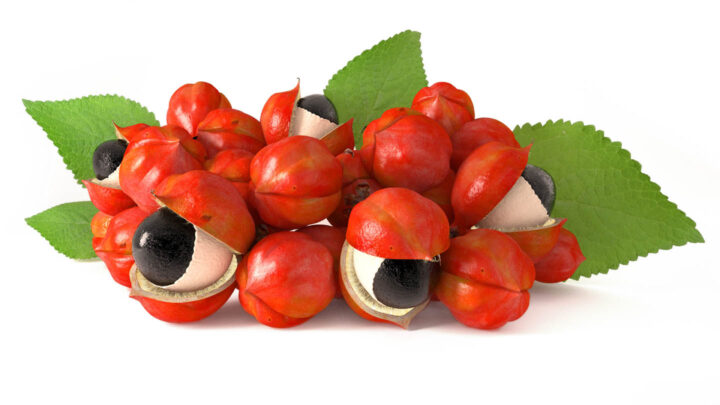
Guarana (Paullinia cupana), containing up to seven percent caffeine, and yerba mate, (llex paraguanensis), with up to two percent caffeine, are ingredients found frequently in combination with ephedra in herbal weight loss preparation. To prevent excessive CNS stimulation and cardiovascular stimulation these herbs are not recommended in combination with ephedra.
Senna, Cascara—Herbal Laxatives
Some consumers have used herbal laxatives as weight loss aids. Laxatives containing senna leaves (Cassia spp.) or cascara sagrada bark (Rhamnuspurshiana) may be used occasionally to alleviate constipation but are not recommended as part of a weight loss strategy. Speeding the passage of food through the digestive tract is likely to promote dehydration, and does not promote fat loss. Long-term use can lead to decreased muscle tone in the large intestine and dependence on laxatives.
Buchu, Juniper, and Uva-ursi—Herbal Diuretics
Consumers have often used diuretics irresponsibly as a quick way to lose weight. However, this temporary weight loss consists of water, not fat, and will be regained with hydration. Herbal diuretics sometimes used for this purpose such as buchu (Barosma spp.), juniper (juniperus communis), and uva-ursi (also known as bear-berry; Arctostaphylos uva-ursi) can irritate the kidney and are not appropriate for weight loss.
No Herbal Magic Bullet for Weight Loss
Despite the current popular marketing promotion of herbal weight loss supplements, there is truly no herbal magic bullet for weight control that is safe and effective in the long term. More research is warranted to evaluate the safety and efficacy of botanicals and their use in weight management. It is the role of the dietetics professional to convey this message to overweight patients utilizing herbal supplements for weight loss and to urge them to consult with their physician before doing so.

Stay Always Up to Date
Sign up to our newsletter and stay always informed with news and tips around your health.
This article was published originally in the Journal of Health and Healing, a publication of Wildwood Institute.

Dr. John Westerdahl is an internationally recognized authority in the fields of food, nutrition and wellness. He is a Registered Dietitian Nutritionist, Certified Nutrition Specialist, ACLM Certified Lifestyle Medicine Professional, Board Certified Anti-Aging Health Practitioner, Master Herbalist, Health Scientist and Health Educator.
Leave a Reply