How do we accept the hardships that life throws at us? How do we face harsh realities without running away or despairing? How do we deal with losses, changes and problems that life and sometimes people throw at us? Have you ever had the experience of being diagnosed with a serious illness? What was your reaction?

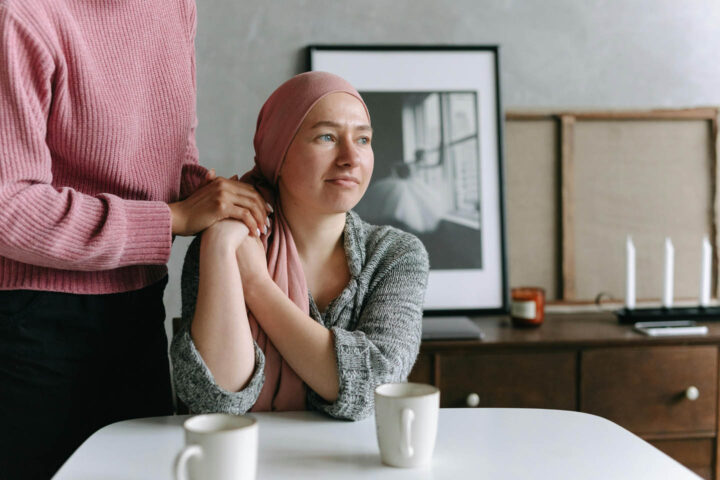
Let’s take a look at how we react when we go through this experience and what can help us deal with it. Receiving a diagnosis of a complicated illness, such as cancer, for example, produces a series of reactions and emotions, either immediately or further down the line. It’s common to think about how your life will change with the illness and treatment: what the treatment will be like, and whether you’ll be able to afford the costs associated with the illness. A bombardment of thoughts about being left with complications or dying can arise in the person’s head.
On the other hand, having a diagnosis helps direct treatment, and you can choose to respond to it by striving to follow medical instructions in order to improve your health because now you know what you have. It is important for someone diagnosed with a complicated illness to cultivate a positive attitude towards the disease, as this will help the body do its best to fight the disease. However, feeling anger, fear, and confusion does not mean that it will make you sicker. There is a time to have these feelings; what can be bad for health is ignoring or pushing these emotions into the subconscious, pretending that everything is fine.
In addition, you can use anger and guilt as motivation to set targets towards recovery. Going through grief is normal; psychological grief involves painful feelings in the face of some loss. Experiencing grief properly helps you take steps to move on and advance on the road to health. Anyone who has received a difficult diagnosis should seek information from reliable sources—I said reliable!—about their illness, treatment, progress, and prognosis.
It’s important to remember that even correct information may not apply exactly to your situation. For example, if you’ve been diagnosed with a terminal illness and, according to the statistics, your lifespan would be one year, think that you’re not a statistic; you’re a human being. A professor of medicine once said—I was in that class—that “statistics show everything, but they don’t show the essential”. Many people with serious diagnoses of illnesses are not part of the statistics of worsening and death, thank God.
Elisabeth Kübler-Ross, an American psychiatrist, identified the process of accepting pain and loss in human life, describing the five stages we go through when faced with difficult events in our lives. The stages are: denial, anger, bargaining, depression and acceptance.
In denial, the person says: “This can’t be happening!” Then comes anger, which brings up questions like: “Why me? It’s not fair!” Next comes negotiation or bargaining, when people make promises and try to negotiate with God, saying things like: “Oh, just let me live until my children are grown up”. Then comes the fourth stage: depression, expressed with phrases like: “I’m so sad; I don’t care about anything anymore”. Finally, comes the fifth stage: acceptance, when the person can conclude that everything will turn out all right.
Let’s look at each of these stages one step at a time. In the first stage, denial, shock, and panic take over. On receiving bad news, or a terrible diagnosis, the person refuses to accept or acknowledge reality, trying to do everything to turn back the clock or pretend that the situation isn’t happening. There is anxiety and fear, the person sleeps a lot, has fixed ideas, compulsive behaviors, and tries to keep busy. Denial is a buffer for the soul, a natural reaction to pain, loss, and change; it protects us from reality until we can use other resources to deal with the wound.
After denial comes anger. When you stop denying the pain, you enter the next stage: anger, which can be reasonable or irrational. You blame yourself, God and everyone around you for what you’ve lost. It’s like a person saying at this stage: “Why me? How did this happen to me?”. At this stage, it’s important to get things off your chest.
The third step in dealing with a loss or a difficult diagnosis is negotiation, or bargaining, when, after calming down, the person tries to make a negotiation with life, with God, with other people or with themselves. The idea is that if you do something—or if someone does something for you—maybe the loss won’t have to happen.
The next stage is depression, which arises when you realize that the negotiation hasn’t worked. There can be exhaustion from the efforts to defend oneself from reality and, when deciding to recognize what life has in store, the person becomes sad and sometimes very depressed. It’s the moment to mourn, the time to cry, and that hurts.
Finally comes acceptance. After closing your eyes, screaming, kicking and negotiating, making promises to God and feeling the pain, you reach a state of acceptance. Elisabeth Kübler-Ross described this stage, saying that acceptance is not a resigned and hopeless feeling, like giving up or thinking “what’s the point of all this?”, but represents the beginning of the end of the struggle. It’s not a happy stage; it’s almost an absence of emotions, as if the pain has passed and the struggle is over.
It’s not comfortable to go through these stages; in fact, it’s uncomfortable and sometimes very painful. We can feel like we’re tearing ourselves apart. We don’t have to let the stages dictate our behavior, but we do need to go through each one at the appropriate time. For some, each stage is quicker than for others and doesn’t always follow exactly that order. The way out of pain is by going through pain.
God promised in the Bible:
I will be with him in trouble.
Psalms 91:15
So God is no stranger to suffering. He comes and helps you; when you ask for help, He offers emotional support. Vent to someone you trust, open your heart and live through these stages until you reach acceptance; in this way, you will achieve inner peace, despite the diagnosis.

Stay Always Up to Date
Sign up to our newsletter and stay always informed with news and tips around your health.

Dr. Cesar Vasconcellos de Souza is working as a psychiatrist and international speaker. He is author of 3 books, columnist of the health magazine “Vida e Saúde” for 25 years, and has a regular program on the “Novo Tempo” TV channel.
Leave a Reply