We are currently at the peak of the holiday season, but instead of drinking coconut water on the beach, hiking the mountains and enjoying what life has to offer, a surprising number of people are reluctant to take time out from work. Recent research shows one in five people in Ireland do not take their full vacation leave entitlement.1)Personal and Work-Life Balance 2021 – Main Results. Central Statistics Office
And in the UK, two in five workers have taken less leave in recent years as a result of the pandemic.2)Churchill F. Four in 10 workers have taken less holiday during pandemic, survey finds. People Management, August 3, 2021
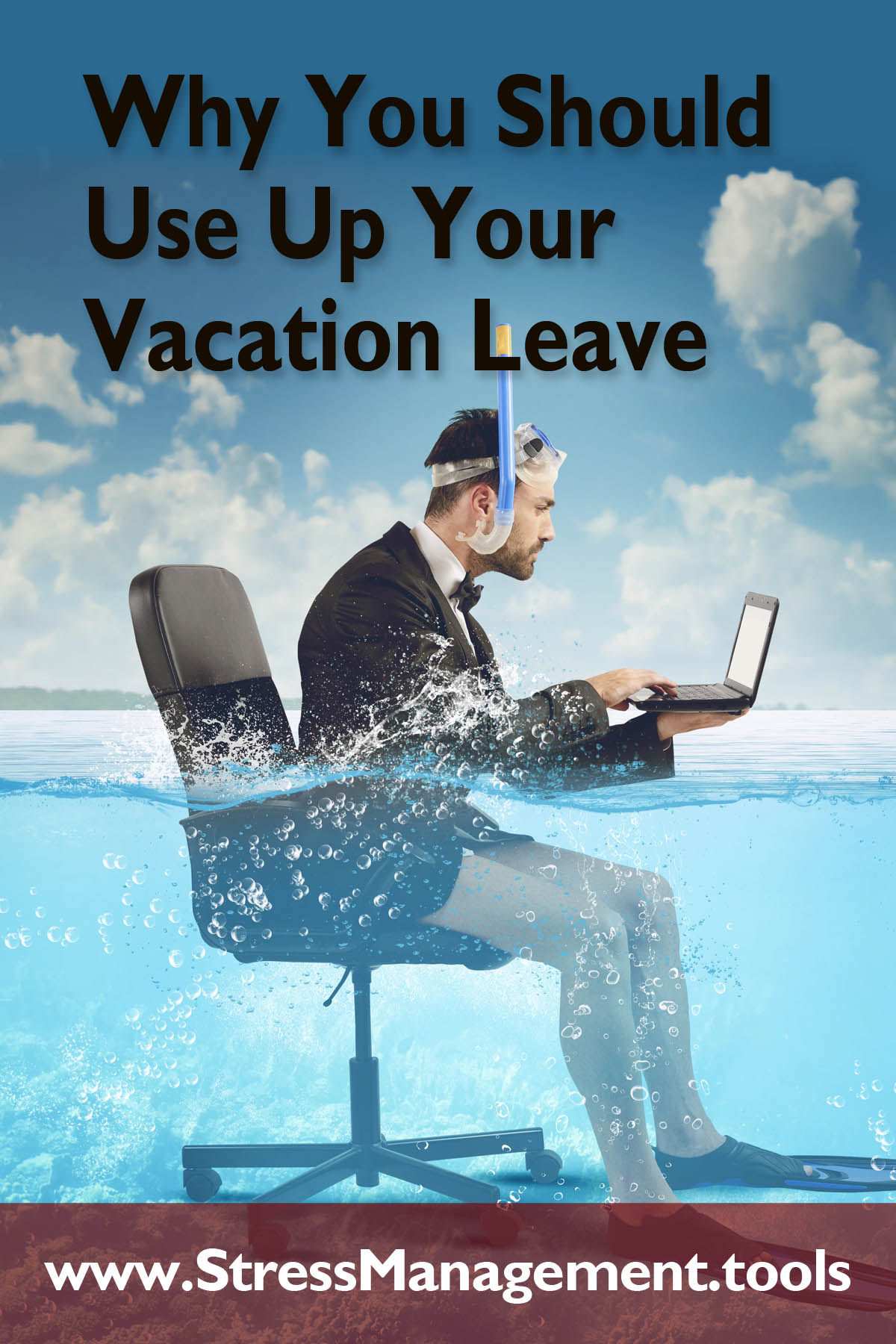
It is important to take time out from work in order to fully live our lives, but there are several issues that can discourage us from taking vacation leave. Some people have doubts about whether taking time out will allow for full psychological detachment from work, for example.3)Kuykendall L, Craig L, Stiksma M, Guarino K. Understanding employees’ unused vacation days: A social cognitive approach. J Occup Health Psychol. 2021 Apr;26(2):69-85. doi: 10.1037/ocp0000182. The fear that thoughts of work will invade our minds encourages many people to just keep working. A common trend among those who are obsessively passionate about their work, these feelings can become overbearing, controlling their thoughts and making them unable to temporarily forget about work.4)Vallerand, Robert & Houlfort, Nathalie & Forest, Jacques. (2014). Vallerand, R. J., Houlfort, N., & Forest, J. (2014). Passion for work: Determinants and outcomes. In M. Gagné (Ed.), The Oxford Handbook of Work Engagement, Motivation, and Self-Determination Theory (pp. 85-105). Oxford: Oxford University Press.
Another reason people do not take time off is because they do not expect to feel relaxed while on holidays.5)Kuykendall L, Craig L, Stiksma M, Guarino K. Understanding employees’ unused vacation days: A social cognitive approach. J Occup Health Psychol. 2021 Apr;26(2):69-85. doi: 10.1037/ocp0000182. This may be due to their circumstances or choices made about how to spend time off. In particular, family holidays may generate a lot of conflict, sometimes becoming even more stressful than work.6)Gram, M. (2005). Family Holidays. A Qualitative Analysis of Family Holiday Experiences. Scandinavian Journal of Hospitality and Tourism, 5(1), 2–22. https://doi.org/10.1080/15022250510014255 It’s unsurprising then that staying on at work instead of taking time out may be tempting for many.
Alternatively, some people fear the financial consequences of vacation leave. Holidays are expensive, especially for large families, leading many to forgo their leave entitlement to save money.7)Kuykendall L, Craig L, Stiksma M, Guarino K. Understanding employees’ unused vacation days: A social cognitive approach. J Occup Health Psychol. 2021 Apr;26(2):69-85. doi: 10.1037/ocp0000182.
Benefits of vacation leave
These are just some examples of why people may avoid holidays, but regardless of the reason, taking time off – especially from demanding jobs – has immediate benefits in terms of decreasing stress and burnout. These benefits are only temporary, with stress often climbing again shortly after returning to work. As such, regular respites throughout the year can help achieve the cumulative benefits of vacation leave on health.8)Kühnel J, Sonnentag S. How long do you benefit from vacation? A closer look at the fade-out of vacation effects. Journal of Organizational Behavior 32(2011) 1 pp 125-143 https://d-nb.info/1097755169/34
The good news is that taking time out for a week to two weeks is enough to recover and experience a boost of positive emotions. This will begin to decline as the time off comes to an end, but still offers the break needed to recharge your batteries.9)Nawijn, Jeroen & Mitas, Ondrej & Lin, Yeqiang & Kerstetter, Deborah. (2013). How Do We Feel on Vacation? A Closer Look at How Emotions Change over the Course of a Trip. Journal of Travel Research. 52. 265-274. http://dx.doi.org/10.1177/0047287512465961
Vacation leave is also beneficial for employers, as it improves employee productivity by up to 40%, reduces the likelihood of sick leave by 28%, and boosts creativity and mental health.10)Productivity increases in tandem with more annual leave. Blog at hrlocker.com Taking time out is also essential for parents, as their children gain immense benefits from spending more time together.11)Schuster MA, Chung PJ, Elliott MN, Garfield CF, Vestal KD, Klein DJ. Perceived effects of leave from work and the role of paid leave among parents of children with special health care needs. Am J Public Health. 2009 Apr;99(4):698-705. doi: 10.2105/AJPH.2008.138313.
Getting the best from vacation leave
You don’t need expensive foreign holidays to enjoy vacation leave. Here are three vacation activities that can improve well-being, whether you are away or on a staycation:12)Burke J et. al. Positive Health 100+ Research-based Positive Psychology and Lifestyle Medicine Tools to Enhance Your Wellbeing. ISBN 9781032246383
1. Practice relaxation
Relaxation can involve simple breathing practice that can help reduce anxiety. And it can be done wherever you are.13)Yu-Fen Chen et. al. The Effectiveness of Diaphragmatic Breathing Relaxation Training for Reducing Anxiety. https://doi.org/10.1111/ppc.12184
2. Spend time in nature
When on vacation leave, try to spend as much time as you can in nature because it is associated an improvement in both emotional and psychological health. It doesn’t matter what you do when enjoying nature; you can be active, for example walking, running, gardening, or simply sitting on a park bench or spending time sky-gazing.14)Leanne Martin, Mathew P. White, Anne Hunt, Miles Richardson, Sabine Pahl, Jim Burt, Nature contact, nature connectedness and associations with health, wellbeing and pro-environmental behaviours, Journal of Environmental Psychology, Volume 68, 2020, 101389, ISSN 0272-4944, https://doi.org/10.1016/j.jenvp.2020.101389.

3. Engage your brain
Take time off as an opportunity to develop your interests. If you love reading, plan to read a few books over the holiday. Research shows these activities support our minds and our moods,15)Kidd D et. al. Reading Literary Fiction and Theory of Mind: Three Preregistered Replications and Extensions of Kidd and Castano (2013) https://doi.org/10.1177/1948550618775410 regardless of age.16)Paulette Rothbauer, Nicole Dalmer, Reading as a lifeline among aging readers: Findings from a qualitative interview study with older adults, Library & Information Science Research, Volume 40, Issues 3–4, 2018, Pages 165-172, ISSN 0740-8188, https://doi.org/10.1016/j.lisr.2018.08.001. There are additional benefits if you help your children enjoy books over the summer.17)Research evidence on reading for pleasure. Department for Education. https://assets.publishing.service.gov.uk/government/uploads/system/uploads/attachment_data/file/284286/reading_for_pleasure.pdf
Alternatively, if you enjoy listening to music, take this time to dust off your CDs or rearrange your digital music library. Share music, play an instrument, write lyrics or even just listen to as much music as you can to improve your physical and mental health.18)Dingle GA, Sharman LS, Bauer Z, Beckman E, Broughton M, Bunzli E, Davidson R, Draper G, Fairley S, Farrell C, Flynn LM, Gomersall S, Hong M, Larwood J, Lee C, Lee J, Nitschinsk L, Peluso N, Reedman SE, Vidas D, Walter ZC, Wright ORL. How Do Music Activities Affect Health and Well-Being? A Scoping Review of Studies Examining Psychosocial Mechanisms. Front Psychol. 2021 Sep 8;12:713818. doi: 10.3389/fpsyg.2021.713818.
These are just a few ideas. What’s most important is to do something that engages your mind, helps you forget about your job and allows for a respite before you return to work feeling happier and more energized than before.

Stay Always Up to Date
Sign up to our newsletter and stay always informed with news and tips around your health.

Prof. Jolanta Burke is a Chartered Psychologist and an award-winning researcher at the Centre for Positive Health Sciences at RCSI University of Medicine and Health Sciences. She is a Programme Director for Masters in Applied Positive Psychology (Wellbeing and Health), Programme Co-director for Masters in Positive Health Coaching and a Research Lab Founding Director of the Positive Activity Lab at RCSI. She has been writing for the Guardian, Irish Independent, Psychology Today and other publications.
References
| ↑1 | Personal and Work-Life Balance 2021 – Main Results. Central Statistics Office |
|---|---|
| ↑2 | Churchill F. Four in 10 workers have taken less holiday during pandemic, survey finds. People Management, August 3, 2021 |
| ↑3, ↑5, ↑7 | Kuykendall L, Craig L, Stiksma M, Guarino K. Understanding employees’ unused vacation days: A social cognitive approach. J Occup Health Psychol. 2021 Apr;26(2):69-85. doi: 10.1037/ocp0000182. |
| ↑4 | Vallerand, Robert & Houlfort, Nathalie & Forest, Jacques. (2014). Vallerand, R. J., Houlfort, N., & Forest, J. (2014). Passion for work: Determinants and outcomes. In M. Gagné (Ed.), The Oxford Handbook of Work Engagement, Motivation, and Self-Determination Theory (pp. 85-105). Oxford: Oxford University Press. |
| ↑6 | Gram, M. (2005). Family Holidays. A Qualitative Analysis of Family Holiday Experiences. Scandinavian Journal of Hospitality and Tourism, 5(1), 2–22. https://doi.org/10.1080/15022250510014255 |
| ↑8 | Kühnel J, Sonnentag S. How long do you benefit from vacation? A closer look at the fade-out of vacation effects. Journal of Organizational Behavior 32(2011) 1 pp 125-143 https://d-nb.info/1097755169/34 |
| ↑9 | Nawijn, Jeroen & Mitas, Ondrej & Lin, Yeqiang & Kerstetter, Deborah. (2013). How Do We Feel on Vacation? A Closer Look at How Emotions Change over the Course of a Trip. Journal of Travel Research. 52. 265-274. http://dx.doi.org/10.1177/0047287512465961 |
| ↑10 | Productivity increases in tandem with more annual leave. Blog at hrlocker.com |
| ↑11 | Schuster MA, Chung PJ, Elliott MN, Garfield CF, Vestal KD, Klein DJ. Perceived effects of leave from work and the role of paid leave among parents of children with special health care needs. Am J Public Health. 2009 Apr;99(4):698-705. doi: 10.2105/AJPH.2008.138313. |
| ↑12 | Burke J et. al. Positive Health 100+ Research-based Positive Psychology and Lifestyle Medicine Tools to Enhance Your Wellbeing. ISBN 9781032246383 |
| ↑13 | Yu-Fen Chen et. al. The Effectiveness of Diaphragmatic Breathing Relaxation Training for Reducing Anxiety. https://doi.org/10.1111/ppc.12184 |
| ↑14 | Leanne Martin, Mathew P. White, Anne Hunt, Miles Richardson, Sabine Pahl, Jim Burt, Nature contact, nature connectedness and associations with health, wellbeing and pro-environmental behaviours, Journal of Environmental Psychology, Volume 68, 2020, 101389, ISSN 0272-4944, https://doi.org/10.1016/j.jenvp.2020.101389. |
| ↑15 | Kidd D et. al. Reading Literary Fiction and Theory of Mind: Three Preregistered Replications and Extensions of Kidd and Castano (2013) https://doi.org/10.1177/1948550618775410 |
| ↑16 | Paulette Rothbauer, Nicole Dalmer, Reading as a lifeline among aging readers: Findings from a qualitative interview study with older adults, Library & Information Science Research, Volume 40, Issues 3–4, 2018, Pages 165-172, ISSN 0740-8188, https://doi.org/10.1016/j.lisr.2018.08.001. |
| ↑17 | Research evidence on reading for pleasure. Department for Education. https://assets.publishing.service.gov.uk/government/uploads/system/uploads/attachment_data/file/284286/reading_for_pleasure.pdf |
| ↑18 | Dingle GA, Sharman LS, Bauer Z, Beckman E, Broughton M, Bunzli E, Davidson R, Draper G, Fairley S, Farrell C, Flynn LM, Gomersall S, Hong M, Larwood J, Lee C, Lee J, Nitschinsk L, Peluso N, Reedman SE, Vidas D, Walter ZC, Wright ORL. How Do Music Activities Affect Health and Well-Being? A Scoping Review of Studies Examining Psychosocial Mechanisms. Front Psychol. 2021 Sep 8;12:713818. doi: 10.3389/fpsyg.2021.713818. |
Leave a Reply