We’re in the middle of a teen mental health crisis – and girls are at its epicenter. Since 2010, depression, self-harm and suicide rates have increased among teen boys. But rates of major depression among teen girls in the U.S. increased even more – from 12% in 2011 to 20% in 2017.1)Twenge, J. M., Cooper, A. B., Joiner, T. E., Duffy, M. E., & Binau, S. G. (2019). Age, period, and cohort trends in mood disorder indicators and suicide-related outcomes in a nationally representative dataset, 2005–2017. Journal of Abnormal Psychology, 128(3), 185–199. https://doi.org/10.1037/abn0000410 In 2015, three times as many 10- to 14-year-old girls were admitted to the emergency room after deliberately harming themselves than in 2010.2)Mercado MC, Holland K, Leemis RW, Stone DM, Wang J. Trends in Emergency Department Visits for Nonfatal Self-inflicted Injuries Among Youth Aged 10 to 24 Years in the United States, 2001-2015. JAMA. 2017;318(19):1931–1933. doi:10.1001/jama.2017.13317 Meanwhile, the suicide rate for adolescent girls has doubled since 2007.3)QuickStats: Suicide Rates for Teens Aged 15–19 Years, by Sex — United States, 1975–2015 CDC Morbidity and Mortality Weekly Report

Rates of depression started to tick up just as smartphones became popular, so digital media could be playing a role. The generation of teens born after 1995 – known as iGen4)Twenge J. iGen. Why Today’s Super-Connected Kids Are Growing Up Less Rebellious, More Tolerant, Less Happy–and Completely Unprepared for Adulthood–and What That Means for the Rest of Us. Simon&Shuster or Gen Z – were the first to spend their entire adolescence in the age of the smartphone. They’re also the first group of teens to experience social media as an indispensable part of social life.5)Twenge J. et.al. Trends in U.S. Adolescents’ Media Use, 1976–2016: The Rise of Digital Media, the Decline of TV, and the (Near) Demise of Print. American Psychologica Association. http://dx.doi.org/10.1037/ppm0000203
Of course, both boys and girls started using smartphones around the same time. So why are girls experiencing more mental health issues?
Mining three surveys of more than 200,000 teens in the U.S. and U.K., my colleagues and I were able to find some answers.6)Twenge, J.M. and Martin, G.N. (2020), Gender differences in associations between digital media use and psychological well-being: Evidence from three large datasets. Journal of Adolescence, 79: 91-102. https://doi.org/10.1016/j.adolescence.2019.12.018
The screens we use
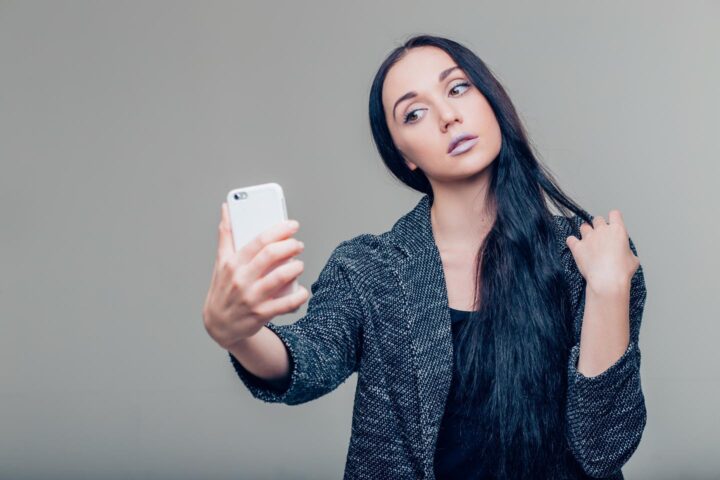
We found that teen boys and girls spend their digital media time in different ways: Boys spend more time gaming, while girls spend more time on their smartphones, texting and using social media.
Gaming involves different forms of communication. Gamers often interact with each other in real time, talking to each other via their headsets.
In contrast, social media often involves messaging via images or text. Yet even something as simple as a brief pause before receiving a response can elicit anxiety.7)Rao A. Texting Culture Is Giving All of Us Anxiety. https://www.vice.com/en/article/pavnbb/texting-anxiety
Then, of course, there’s the way social media creates a hierarchy, with the number of likes and followers wielding social power. Images are curated, personas cultivated, texts crafted, deleted and rewritten. All of this can be stressful, and one study found that simply comparing yourself with others on social media made you more likely to be depressed.8)Mai-Ly N. Steers, Robert E. Wickham, and Linda K. Acitelli. Seeing Everyone Else’s Highlight Reels: How Facebook Usage is Linked to Depressive Symptoms. Journal of Social and Clinical Psychology 2014 33:8, 701-731 https://doi.org/10.1521/jscp.2014.33.8.701

And, unlike many gaming systems, smartphones are portable. They can interfere with face-to-face social interaction9)Ryan J. Dwyer, Kostadin Kushlev, Elizabeth W. Dunn, Smartphone use undermines enjoyment of face-to-face social interactions, Journal of Experimental Social Psychology, Volume 78, 2018, Pages 233-239, ISSN 0022-1031, https://doi.org/10.1016/j.jesp.2017.10.007. or be brought into bed, two actions that have been found to undermine mental health and sleep.10)Jean M. Twenge, Garrett C. Hisler, Zlatan Krizan, Associations between screen time and sleep duration are primarily driven by portable electronic devices: evidence from a population-based study of U.S. children ages 0–17, Sleep Medicine, Volume 56, 2019, Pages 211-218, ISSN 1389-9457, https://doi.org/10.1016/j.sleep.2018.11.009.
Are girls more susceptible than boys?
It’s not just that girls and boys spend their digital media time on different activities. It may also be that social media use has a stronger effect on girls than boys.
Previous research revealed that teens who spend more time on digital media are more likely to be depressed and unhappy.11)Riehm KE, Feder KA, Tormohlen KN, et al. Associations Between Time Spent Using Social Media and Internalizing and Externalizing Problems Among US Youth. JAMA Psychiatry. 2019;76(12):1266–1273. doi:10.1001/jamapsychiatry.2019.2325
Twenge, J.M., Campbell, W.K. Media Use Is Linked to Lower Psychological Well-Being: Evidence from Three Datasets. Psychiatr Q 90, 311–331 (2019). https://doi.org/10.1007/s11126-019-09630-7 In our new paper, we found that this link was stronger for girls than for boys.
Both girls and boys experience an increase in unhappiness the more time they spend on their devices. But for girls, that increase is larger.
Only 15% of girls who spent about 30 minutes a day on social media were unhappy, but 26% of girls who spent six hours a day or more on social media reported being unhappy. For boys, the difference in unhappiness was less noticeable: 11% of those who spent 30 minutes a day on social media said they were unhappy, which ticked up to 18% for those who spent six-plus hours per day doing the same.
Why might girls be more prone to unhappiness when using social media?
Popularity and positive social interactions tend to have a more pronounced effect on teen girls’ happiness than boys’ happiness.12)Flook, L. (2011), Gender Differences in Adolescents’ Daily Interpersonal Events and Well-Being. Child Development, 82: 454-461. https://doi.org/10.1111/j.1467-8624.2010.01521.x Social media can be both a cold arbiter of popularity and a platform for bullying, shaming and disputes.
In addition, girls continue to face more pressure about their appearance,13)Kahalon R, Shnabel N, Becker JC. Experimental Studies on State Self-Objectification: A Review and an Integrative Process Model. Front Psychol. 2018 Aug 13;9:1268. doi: 10.3389/fpsyg.2018.01268. which could be exacerbated by social media. For these reasons and more, social media is a more fraught experience for girls than for boys.14)Tiggemann, M. and Slater, A. (2013), NetGirls: The Internet, Facebook, and body image concern in adolescent girls. Int. J. Eat. Disord, 46: 630-633. https://doi.org/10.1002/eat.22141
From this data on digital media use and unhappiness, we can’t tell which causes which, although several experiments suggest that digital media use does cause unhappiness.15)Yuen, E. K., Koterba, E. A., Stasio, M. J., Patrick, R. B., Gangi, C., Ash, P., Barakat, K., Greene, V., Hamilton, W., & Mansour, B. (2019). The effects of Facebook on mood in emerging adults. Psychology of Popular Media Culture, 8(3), 198–206. https://doi.org/10.1037/ppm0000178
Melissa G. Hunt, Rachel Marx, Courtney Lipson, and Jordyn Young. No More FOMO: Limiting Social Media Decreases Loneliness and Depression. Journal of Social and Clinical Psychology 2018 37:10, 751-768 https://doi.org/10.1521/jscp.2018.37.10.751
If so, digital media use – especially social media – might have a more negative effect on girls’ mental health than on boys’.
Looking ahead
What can we do?
First, parents can help children and teens postpone their entry into social media.
It’s actually the law that children can’t have a social media account in their own name until they are 13. This law is rarely enforced, but parents can insist that their children stay off social media until they are 13.16)Children’s Online Privacy Protection Rule (“COPPA”). Federal Trade Commission
Among older teens, the situation is more complex, because social media use is so pervasive.
Still, groups of friends can talk about these challenges. Many are probably aware, on some level, that social media can make them feel anxious or sad. They might agree to call each other more, take breaks or let others know that they’re not always going to respond instantly – and that this doesn’t mean they are angry or upset.
We’re learning more about the ways social media has been designed to be addictive, with companies making more money the more time users spend on their platforms.17)Solon O. Ex-Facebook president Sean Parker: site made to exploit human ‘vulnerability’. The Guardian, 9 Nov. 2017
That profit may be at the expense of teen mental health – especially that of girls.

Stay Always Up to Date
Sign up to our newsletter and stay always informed with news and tips around your health.
This article is republished from The Conversation under a Creative Commons license. Read the original article.


Jean Twenge is the author of more than 160 scientific publications, and several books on the topic of generational differences, most recently “iGen: Why Today’s Super-Connected Kids are Growing Up Less Rebellious, More Tolerant, Less Happy – and Completely Unprepared for Adulthood.”
References
| ↑1 | Twenge, J. M., Cooper, A. B., Joiner, T. E., Duffy, M. E., & Binau, S. G. (2019). Age, period, and cohort trends in mood disorder indicators and suicide-related outcomes in a nationally representative dataset, 2005–2017. Journal of Abnormal Psychology, 128(3), 185–199. https://doi.org/10.1037/abn0000410 |
|---|---|
| ↑2 | Mercado MC, Holland K, Leemis RW, Stone DM, Wang J. Trends in Emergency Department Visits for Nonfatal Self-inflicted Injuries Among Youth Aged 10 to 24 Years in the United States, 2001-2015. JAMA. 2017;318(19):1931–1933. doi:10.1001/jama.2017.13317 |
| ↑3 | QuickStats: Suicide Rates for Teens Aged 15–19 Years, by Sex — United States, 1975–2015 CDC Morbidity and Mortality Weekly Report |
| ↑4 | Twenge J. iGen. Why Today’s Super-Connected Kids Are Growing Up Less Rebellious, More Tolerant, Less Happy–and Completely Unprepared for Adulthood–and What That Means for the Rest of Us. Simon&Shuster |
| ↑5 | Twenge J. et.al. Trends in U.S. Adolescents’ Media Use, 1976–2016: The Rise of Digital Media, the Decline of TV, and the (Near) Demise of Print. American Psychologica Association. http://dx.doi.org/10.1037/ppm0000203 |
| ↑6 | Twenge, J.M. and Martin, G.N. (2020), Gender differences in associations between digital media use and psychological well-being: Evidence from three large datasets. Journal of Adolescence, 79: 91-102. https://doi.org/10.1016/j.adolescence.2019.12.018 |
| ↑7 | Rao A. Texting Culture Is Giving All of Us Anxiety. https://www.vice.com/en/article/pavnbb/texting-anxiety |
| ↑8 | Mai-Ly N. Steers, Robert E. Wickham, and Linda K. Acitelli. Seeing Everyone Else’s Highlight Reels: How Facebook Usage is Linked to Depressive Symptoms. Journal of Social and Clinical Psychology 2014 33:8, 701-731 https://doi.org/10.1521/jscp.2014.33.8.701 |
| ↑9 | Ryan J. Dwyer, Kostadin Kushlev, Elizabeth W. Dunn, Smartphone use undermines enjoyment of face-to-face social interactions, Journal of Experimental Social Psychology, Volume 78, 2018, Pages 233-239, ISSN 0022-1031, https://doi.org/10.1016/j.jesp.2017.10.007. |
| ↑10 | Jean M. Twenge, Garrett C. Hisler, Zlatan Krizan, Associations between screen time and sleep duration are primarily driven by portable electronic devices: evidence from a population-based study of U.S. children ages 0–17, Sleep Medicine, Volume 56, 2019, Pages 211-218, ISSN 1389-9457, https://doi.org/10.1016/j.sleep.2018.11.009. |
| ↑11 | Riehm KE, Feder KA, Tormohlen KN, et al. Associations Between Time Spent Using Social Media and Internalizing and Externalizing Problems Among US Youth. JAMA Psychiatry. 2019;76(12):1266–1273. doi:10.1001/jamapsychiatry.2019.2325 Twenge, J.M., Campbell, W.K. Media Use Is Linked to Lower Psychological Well-Being: Evidence from Three Datasets. Psychiatr Q 90, 311–331 (2019). https://doi.org/10.1007/s11126-019-09630-7 |
| ↑12 | Flook, L. (2011), Gender Differences in Adolescents’ Daily Interpersonal Events and Well-Being. Child Development, 82: 454-461. https://doi.org/10.1111/j.1467-8624.2010.01521.x |
| ↑13 | Kahalon R, Shnabel N, Becker JC. Experimental Studies on State Self-Objectification: A Review and an Integrative Process Model. Front Psychol. 2018 Aug 13;9:1268. doi: 10.3389/fpsyg.2018.01268. |
| ↑14 | Tiggemann, M. and Slater, A. (2013), NetGirls: The Internet, Facebook, and body image concern in adolescent girls. Int. J. Eat. Disord, 46: 630-633. https://doi.org/10.1002/eat.22141 |
| ↑15 | Yuen, E. K., Koterba, E. A., Stasio, M. J., Patrick, R. B., Gangi, C., Ash, P., Barakat, K., Greene, V., Hamilton, W., & Mansour, B. (2019). The effects of Facebook on mood in emerging adults. Psychology of Popular Media Culture, 8(3), 198–206. https://doi.org/10.1037/ppm0000178 Melissa G. Hunt, Rachel Marx, Courtney Lipson, and Jordyn Young. No More FOMO: Limiting Social Media Decreases Loneliness and Depression. Journal of Social and Clinical Psychology 2018 37:10, 751-768 https://doi.org/10.1521/jscp.2018.37.10.751 |
| ↑16 | Children’s Online Privacy Protection Rule (“COPPA”). Federal Trade Commission |
| ↑17 | Solon O. Ex-Facebook president Sean Parker: site made to exploit human ‘vulnerability’. The Guardian, 9 Nov. 2017 |
Leave a Reply