You probably already know that how you eat before bed affects your sleep. Maybe you’ve found yourself still lying awake at 2 a.m. after enjoying a cup of coffee with dessert. But did you know that your eating choices throughout the day may also affect your sleep at night?

In fact, more and more evidence shows that overall dietary patterns can affect sleep quality and contribute to insomnia.1)Zuraikat FM, Makarem N, St-Onge M-P, Xi H, Akkapeddi A, Aggarwal B. A Mediterranean Dietary Pattern Predicts Better Sleep Quality in US Women from the American Heart Association Go Red for Women Strategically Focused Research Network. Nutrients. 2020; 12(9):2830. https://doi.org/10.3390/nu12092830
Scoditti E, Tumolo MR, Garbarino S. Mediterranean Diet on Sleep: A Health Alliance. Nutrients. 2022; 14(14):2998. https://doi.org/10.3390/nu14142998
I am a nutritional epidemiologist, and I’m trained to look at diets at the population level and how they affect health.
In the U.S., a large percentage of the population suffers from poor sleep quality and sleep disorders like insomnia and obstructive sleep apnea, a condition in which the upper airway becomes blocked and breathing stops during sleep.2)Casper-Gallup State of Sleep in America 2022 Report. https://www.gallup.com/analytics/390536/sleep-in-america-2022.aspx At the same time, most Americans eat far too much fatty and processed food, too little fiber and too few fruits and vegetables.3)Average Healthy Eating Index-2020 Scores for the U.S. Population – Total Ages 2 and Older and by Age Groups, WWEIA, NHANES 2017-2018a.
Although it is difficult to determine whether these two trends are causally linked to one another, more and more research points to linkages between sleep and diet and offers hints at the biological underpinnings of these relationships.4)Zuraikat F. et.al. Sleep and Diet: Mounting Evidence of a Cyclical Relationship. https://doi.org/10.1146/annurev-nutr-120420-021719
How diet and sleep quality can be intertwined
My colleagues and I wanted to get a deeper understanding of the possible link between sleep and diet in Americans who are 18 and older. So we analyzed whether people who follow the government’s Dietary Guidelines for Americans5)Dietary Guidelines for Americans. health.gov get more hours of sleep.
Using a nationally representative dataset of surveys collected from 2011 to 2016, we found that people who did not adhere to dietary recommendations such as consuming enough servings of fruits, vegetables, legumes and whole grains had shorter sleep duration.6)Erica C. Jansen, Aric Prather, Cindy W. Leung, Associations between sleep duration and dietary quality: Results from a nationally-representative survey of US adults, Appetite, Volume 153, 2020, 104748, https://doi.org/10.1016/j.appet.2020.104748
In a separate study, we followed more than 1,000 young adults ages 21 to 30 who were enrolled in a web-based dietary intervention study designed to help them increase their daily servings of fruits and vegetables. We found that those who increased their fruit and vegetable consumption over a three-month period reported better sleep quality and reductions in insomnia symptoms.7)Jansen E. et. al. Changes in fruit and vegetable consumption in relation to changes in sleep characteristics over a 3-month period among young adults. https://doi.org/10.1016/j.sleh.2021.02.005
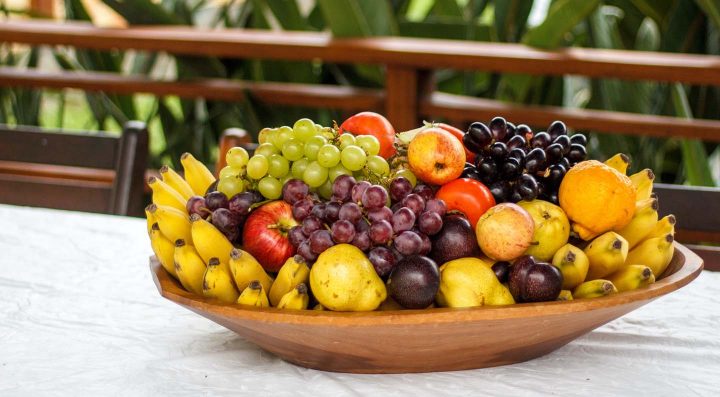
Research conducted outside the U.S. by my group and others also shows that healthier overall dietary patterns are associated with better sleep quality and fewer insomnia symptoms. These include the Mediterranean diet8)Zuraikat FM, Makarem N, St-Onge M-P, Xi H, Akkapeddi A, Aggarwal B. A Mediterranean Dietary Pattern Predicts Better Sleep Quality in US Women from the American Heart Association Go Red for Women Strategically Focused Research Network. Nutrients. 2020; 12(9):2830. https://doi.org/10.3390/nu12092830 – a diet rich in plant foods, olive oil and seafood, and low in red meat and added sugar – and anti-inflammatory diets.9)Farrell ET, Wirth MD, McLain AC, Hurley TG, Shook RP, Hand GA, Hébert JR, Blair SN. Associations between the Dietary Inflammatory Index and Sleep Metrics in the Energy Balance Study (EBS). Nutrients. 2023; 15(2):419. https://doi.org/10.3390/nu15020419 These are similar to the Mediterranean diet but include additional emphasis on certain components in the diet like flavonoids, a group of compounds found in plants, which are shown to lower inflammatory biomakers in the blood.
Parsing the foods and nutrients
Within overall healthy diet patterns, there are numerous individual foods and nutrients that may be linked to quality of sleep, with varying degrees of evidence.
For example, studies have linked consumption of fatty fish,10)Hansen A.L. et.al. Fish Consumption, Sleep, Daily Functioning, and Heart Rate Variability. https://doi.org/10.5664/jcsm.3714
The redaction is noting that this study compares fish consumption with the use of other types of meat, but not compared to a vegetarian diet or other sources of Omega 3 dairy,11)Marie-Pierre St-Onge, Faris M. Zuraikat, Mackenzie Neilson, Exploring the Role of Dairy Products In Sleep Quality: From Population Studies to Mechanistic Evaluations, Advances in Nutrition, Volume 14, Issue 2, 2023, Pages 283-294, https://doi.org/10.1016/j.advnut.2023.01.004 kiwi fruit,12)Kanon AP, Giezenaar C, Roy NC, McNabb WC and Henare SJ (2023) Acute effects of fresh versus dried Hayward green kiwifruit on sleep quality, mood, and sleep-related urinary metabolites in healthy young men with good and poor sleep quality. Front. Nutr. 10:1079609. doi: 10.3389/fnut.2023.1079609 tart cherries13)Losso, Jack N. PhD; et.al. Pilot Study of the Tart Cherry Juice for the Treatment of Insomnia and Investigation of Mechanisms. American Journal of Therapeutics 25(2):p e194-e201, March/April 2018. DOI: 10.1097/MJT and other berries14)Zhang L, Muscat JE, Kris-Etherton PM, Chinchilli VM, Fernandez-Mendoza J, Al-Shaar L, Richie JP. Berry Consumption and Sleep in the Adult US General Population: Results from the National Health and Nutrition Examination Survey 2005–2018. Nutrients. 2023; 15(24):5115. https://doi.org/10.3390/nu15245115 such as strawberries and blueberries with better sleep. One of the common pathways through which these foods may affect sleep is by providing melatonin, an important modulator of sleep and wake cycles in the brain.
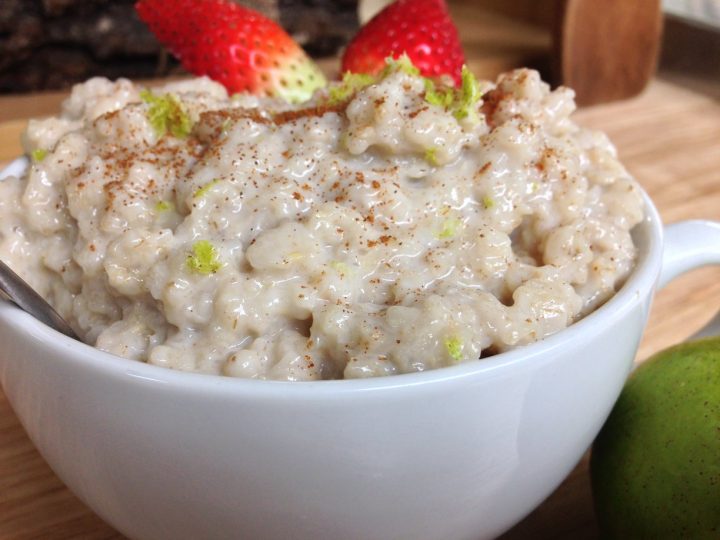
Fiber-rich foods like beans and oatmeal and certain protein sources – especially those that are high in the amino acid tryptophan, are also associated with higher-quality sleep.15)Wilson K. et.al. Diet Composition and Objectively Assessed Sleep Quality: A Narrative Review. https://doi.org/10.1016/j.jand.2022.01.007 Individual nutrients that may be beneficial include magnesium,16)Abbasi B, Kimiagar M, Sadeghniiat K, Shirazi MM, Hedayati M, Rashidkhani B. The effect of magnesium supplementation on primary insomnia in elderly: A double-blind placebo-controlled clinical trial. J Res Med Sci. 2012 Dec;17(12):1161-9. PMID: 23853635 vitamin D, iron,17)Maymona Al Hinai, Erica C Jansen, Peter XK Song, Karen E Peterson, Ana Baylin, Iron Deficiency and Vitamin D Deficiency Are Associated with Sleep in Females of Reproductive Age: An Analysis of NHANES 2005–2018 Data, The Journal of Nutrition, Volume 154, Issue 2, 2024, Pages 648-657, https://doi.org/10.1016/j.tjnut.2023.11.030 omega-3 fatty acids18)Erica C Jansen, et. al. Plasma DHA Is Related to Sleep Timing and Duration in a Cohort of Mexican Adolescents, The Journal of Nutrition, Volume 150, Issue 3, 2020, Pages 592-598, https://doi.org/10.1093/jn/nxz286 and manganese.19)Chia-Lun Yang, et.al. Manganese and Sleep Outcomes in United States Adults: Results from the 2017–2020 National Health and Nutrition Examination Survey (NHANES), The Journal of Nutrition, Volume 154, Issue 1, 2024, Pages 213-223, https://doi.org/10.1016/j.tjnut.2023.11.012 Some foods are sources of multiple nutrients.
Untangling the complexity
One important caveat with a lot of the research on individual foods, as well as diet patterns, is that most studies cannot easily disentangle the direction of the relationships.
In other words, it’s hard to know whether the association is a result of diet affecting sleep, or sleep affecting diet. The reality is that it is likely a cyclical relationship, where a healthy diet promotes good sleep quality, which in turn helps to reinforce good dietary habits.20)Zuraikat F. et.al. Sleep and Diet: Mounting Evidence of a Cyclical Relationship. https://doi.org/10.1146/annurev-nutr-120420-021719
With observational studies, there are also possible confounding factors, such as age and economic status, that may have important correlations with both sleep and diet.
Foods to avoid for sleep health
Aiming for higher intake of sleep-promoting foods isn’t necessarily enough to get better sleep. It’s also important to avoid certain foods that could be bad for sleep. Here are some of the main culprits:
- Saturated fats, such as that in burgers and fries and processed foods, could lead to less slow-wave sleep, which is considered the most restorative sleep.21)St. Onge M et.al. Fiber and Saturated Fat Are Associated with Sleep Arousals and Slow Wave Sleep. https://doi.org/10.5664/jcsm.5384
- Refined carbohydrates, such as those in white bread and pasta, are metabolized quickly. If you eat these foods for dinner, they can result in waking up from hunger.22)Mantantzis K. et.al. Effects of Dietary Carbohydrate Profile on Nocturnal Metabolism, Sleep, and Wellbeing: A Review. https://doi.org/10.3389/fpubh.2022.931781
- Alcohol disrupts sleep quality.23)Mahesh M. Thakkar, Rishi Sharma, Pradeep Sahota, Alcohol disrupts sleep homeostasis, Alcohol, Volume 49, Issue 4, 2015, Pages 299-310, https://doi.org/10.1016/j.alcohol.2014.07.019 Although the sedative effects of alcohol can initially make it easier to fall asleep, it disrupts sleep patterns by shortening the amount of REM, or rapid eye movement, sleep in the first part of the night and leads to more night awakenings.
- Caffeine consumed even six hours before bed can make it difficult to fall asleep because it blocks the hormone adenosine, which promotes sleepiness.24)Drake C. et.al. Caffeine Effects on Sleep Taken 0, 3, or 6 Hours before Going to Bed. https://doi.org/10.5664/jcsm.3170
- The consistent overconsumption of calories can lead to weight gain, one of the strongest predictors of obstructive sleep apnea.25)Yaoyao Qian, et.al. Longitudinal risk factors for obstructive sleep apnea: A systematic review, Sleep Medicine Reviews, Volume 71, 2023, 101838, https://doi.org/10.1016/j.smrv.2023.101838 Having excess weight is a factor because it can put additional pressure on the diaphragm and lungs, and can also lead to a narrower airway if fat accumulates around the neck and throat.

Interestingly, our group has recently shown that toxicants in food or food packaging, like pesticides,26)Zamora, A.N., Watkins, D.J., Peterson, K.E. et al. Association between pesticide exposure and sleep health among a representative sample of US adults: evidence from NHANES 2009–2014. BMC Public Health 21, 2199 (2021). https://doi.org/10.1186/s12889-021-12014-x mercury27)Erica C. Jansen, et.al. Mercury exposure in relation to sleep duration, timing, and fragmentation among adolescents in Mexico City, Environmental Research, Volume 191, 2020, 110216, https://doi.org/10.1016/j.envres.2020.110216 and phthalates28)Zamora, A.N., Peterson, K.E., Goodrich, J.M. et al. Associations between exposure to phthalates, phenols, and parabens with objective and subjective measures of sleep health among Mexican women in midlife: a cross-sectional and retrospective analysis. Environ Sci Pollut Res 30, 65544–65557 (2023). https://doi.org/10.1007/s11356-023-26833-5 – chemicals used to manufacture plastics – can affect sleep. Since toxicants can be found in both healthy and unhealthy foods, this research suggests that some foods can contain a mix of components that are both beneficial and harmful for sleep.
Timing of meals and gender considerations
The timing and consistency of eating, known as “chrononutrition” in the sleep research field, also very likely help to explain associations between healthy diets and good sleep.
In the U.S., eating at conventional meal times as opposed to random snacking has been associated with better sleep.29)Kim S, DeRoo LA, Sandler DP. Eating patterns and nutritional characteristics associated with sleep duration. Public Health Nutrition. 2011;14(5):889-895. doi:10.1017/S136898001000296X In addition, late-night eating is typically associated with unhealthier food intake – such as processed snacks – and could cause more fragmented sleep.30)Iao SI, Jansen E, Shedden K, et al. Associations between bedtime eating or drinking, sleep duration and wake after sleep onset: findings from the American time use survey. British Journal of Nutrition. 2022;127(12):1888-1897. doi:10.1017/S0007114521003597
A final and very interesting piece of this puzzle is that associations between diet and sleep often differ by gender. For example, it appears that the associations between healthy diet patterns and insomnia symptoms could be stronger among women.31)Jansen E. et.al. Changes in fruit and vegetable consumption in relation to changes in sleep characteristics over a 3-month period among young adults. https://doi.org/10.1016/j.sleh.2021.02.005 One reason for this could be gender differences in sleep. In particular, women are more likely than men to suffer from insomnia.32)Zeng L-N, Zong Q-Q, Yang Y, Zhang L, Xiang Y-F, Ng CH, Chen L-G and Xiang Y-T (2020) Gender Difference in the Prevalence of Insomnia: A Meta-Analysis of Observational Studies. Front. Psychiatry 11:577429. doi: 10.3389/fpsyt.2020.577429
Keys to a good night’s sleep
Overall, there is not one magic food or drink that will improve your sleep. It’s better to focus on overall healthy dietary patterns throughout the day, with a higher proportion of calories consumed earlier in the day.
And, in addition to avoiding caffeine, alcohol and heavy meals in the two to three hours before bed, the last few hours of the day should include other good sleep hygiene practices.33)Healthy Sleep Habits. AASM Sleep Education
These include disengaging from technology, reducing light exposure and creating a comfortable and relaxing environment for sleep. Moreover, allowing enough time to sleep and maintaining a consistent bedtime and wake time is essential.

Stay Always Up to Date
Sign up to our newsletter and stay always informed with news and tips around your health.
This article is republished from The Conversation under a Creative Commons license. Read the original article.


Erica is a nutritional epidemiologist who focuses on diet and sleep in relation to health along the lifespan, but particularly during adolescence. She conducts her research mostly within the ELEMENT cohort, a Mexican birth cohort that has been followed for over 25 years. She is part of the faculty of the University of Michigan.
References
| ↑1 | Zuraikat FM, Makarem N, St-Onge M-P, Xi H, Akkapeddi A, Aggarwal B. A Mediterranean Dietary Pattern Predicts Better Sleep Quality in US Women from the American Heart Association Go Red for Women Strategically Focused Research Network. Nutrients. 2020; 12(9):2830. https://doi.org/10.3390/nu12092830 Scoditti E, Tumolo MR, Garbarino S. Mediterranean Diet on Sleep: A Health Alliance. Nutrients. 2022; 14(14):2998. https://doi.org/10.3390/nu14142998 |
|---|---|
| ↑2 | Casper-Gallup State of Sleep in America 2022 Report. https://www.gallup.com/analytics/390536/sleep-in-america-2022.aspx |
| ↑3 | Average Healthy Eating Index-2020 Scores for the U.S. Population – Total Ages 2 and Older and by Age Groups, WWEIA, NHANES 2017-2018a. |
| ↑4, ↑20 | Zuraikat F. et.al. Sleep and Diet: Mounting Evidence of a Cyclical Relationship. https://doi.org/10.1146/annurev-nutr-120420-021719 |
| ↑5 | Dietary Guidelines for Americans. health.gov |
| ↑6 | Erica C. Jansen, Aric Prather, Cindy W. Leung, Associations between sleep duration and dietary quality: Results from a nationally-representative survey of US adults, Appetite, Volume 153, 2020, 104748, https://doi.org/10.1016/j.appet.2020.104748 |
| ↑7 | Jansen E. et. al. Changes in fruit and vegetable consumption in relation to changes in sleep characteristics over a 3-month period among young adults. https://doi.org/10.1016/j.sleh.2021.02.005 |
| ↑8 | Zuraikat FM, Makarem N, St-Onge M-P, Xi H, Akkapeddi A, Aggarwal B. A Mediterranean Dietary Pattern Predicts Better Sleep Quality in US Women from the American Heart Association Go Red for Women Strategically Focused Research Network. Nutrients. 2020; 12(9):2830. https://doi.org/10.3390/nu12092830 |
| ↑9 | Farrell ET, Wirth MD, McLain AC, Hurley TG, Shook RP, Hand GA, Hébert JR, Blair SN. Associations between the Dietary Inflammatory Index and Sleep Metrics in the Energy Balance Study (EBS). Nutrients. 2023; 15(2):419. https://doi.org/10.3390/nu15020419 |
| ↑10 | Hansen A.L. et.al. Fish Consumption, Sleep, Daily Functioning, and Heart Rate Variability. https://doi.org/10.5664/jcsm.3714 The redaction is noting that this study compares fish consumption with the use of other types of meat, but not compared to a vegetarian diet or other sources of Omega 3 |
| ↑11 | Marie-Pierre St-Onge, Faris M. Zuraikat, Mackenzie Neilson, Exploring the Role of Dairy Products In Sleep Quality: From Population Studies to Mechanistic Evaluations, Advances in Nutrition, Volume 14, Issue 2, 2023, Pages 283-294, https://doi.org/10.1016/j.advnut.2023.01.004 |
| ↑12 | Kanon AP, Giezenaar C, Roy NC, McNabb WC and Henare SJ (2023) Acute effects of fresh versus dried Hayward green kiwifruit on sleep quality, mood, and sleep-related urinary metabolites in healthy young men with good and poor sleep quality. Front. Nutr. 10:1079609. doi: 10.3389/fnut.2023.1079609 |
| ↑13 | Losso, Jack N. PhD; et.al. Pilot Study of the Tart Cherry Juice for the Treatment of Insomnia and Investigation of Mechanisms. American Journal of Therapeutics 25(2):p e194-e201, March/April 2018. DOI: 10.1097/MJT |
| ↑14 | Zhang L, Muscat JE, Kris-Etherton PM, Chinchilli VM, Fernandez-Mendoza J, Al-Shaar L, Richie JP. Berry Consumption and Sleep in the Adult US General Population: Results from the National Health and Nutrition Examination Survey 2005–2018. Nutrients. 2023; 15(24):5115. https://doi.org/10.3390/nu15245115 |
| ↑15 | Wilson K. et.al. Diet Composition and Objectively Assessed Sleep Quality: A Narrative Review. https://doi.org/10.1016/j.jand.2022.01.007 |
| ↑16 | Abbasi B, Kimiagar M, Sadeghniiat K, Shirazi MM, Hedayati M, Rashidkhani B. The effect of magnesium supplementation on primary insomnia in elderly: A double-blind placebo-controlled clinical trial. J Res Med Sci. 2012 Dec;17(12):1161-9. PMID: 23853635 |
| ↑17 | Maymona Al Hinai, Erica C Jansen, Peter XK Song, Karen E Peterson, Ana Baylin, Iron Deficiency and Vitamin D Deficiency Are Associated with Sleep in Females of Reproductive Age: An Analysis of NHANES 2005–2018 Data, The Journal of Nutrition, Volume 154, Issue 2, 2024, Pages 648-657, https://doi.org/10.1016/j.tjnut.2023.11.030 |
| ↑18 | Erica C Jansen, et. al. Plasma DHA Is Related to Sleep Timing and Duration in a Cohort of Mexican Adolescents, The Journal of Nutrition, Volume 150, Issue 3, 2020, Pages 592-598, https://doi.org/10.1093/jn/nxz286 |
| ↑19 | Chia-Lun Yang, et.al. Manganese and Sleep Outcomes in United States Adults: Results from the 2017–2020 National Health and Nutrition Examination Survey (NHANES), The Journal of Nutrition, Volume 154, Issue 1, 2024, Pages 213-223, https://doi.org/10.1016/j.tjnut.2023.11.012 |
| ↑21 | St. Onge M et.al. Fiber and Saturated Fat Are Associated with Sleep Arousals and Slow Wave Sleep. https://doi.org/10.5664/jcsm.5384 |
| ↑22 | Mantantzis K. et.al. Effects of Dietary Carbohydrate Profile on Nocturnal Metabolism, Sleep, and Wellbeing: A Review. https://doi.org/10.3389/fpubh.2022.931781 |
| ↑23 | Mahesh M. Thakkar, Rishi Sharma, Pradeep Sahota, Alcohol disrupts sleep homeostasis, Alcohol, Volume 49, Issue 4, 2015, Pages 299-310, https://doi.org/10.1016/j.alcohol.2014.07.019 |
| ↑24 | Drake C. et.al. Caffeine Effects on Sleep Taken 0, 3, or 6 Hours before Going to Bed. https://doi.org/10.5664/jcsm.3170 |
| ↑25 | Yaoyao Qian, et.al. Longitudinal risk factors for obstructive sleep apnea: A systematic review, Sleep Medicine Reviews, Volume 71, 2023, 101838, https://doi.org/10.1016/j.smrv.2023.101838 |
| ↑26 | Zamora, A.N., Watkins, D.J., Peterson, K.E. et al. Association between pesticide exposure and sleep health among a representative sample of US adults: evidence from NHANES 2009–2014. BMC Public Health 21, 2199 (2021). https://doi.org/10.1186/s12889-021-12014-x |
| ↑27 | Erica C. Jansen, et.al. Mercury exposure in relation to sleep duration, timing, and fragmentation among adolescents in Mexico City, Environmental Research, Volume 191, 2020, 110216, https://doi.org/10.1016/j.envres.2020.110216 |
| ↑28 | Zamora, A.N., Peterson, K.E., Goodrich, J.M. et al. Associations between exposure to phthalates, phenols, and parabens with objective and subjective measures of sleep health among Mexican women in midlife: a cross-sectional and retrospective analysis. Environ Sci Pollut Res 30, 65544–65557 (2023). https://doi.org/10.1007/s11356-023-26833-5 |
| ↑29 | Kim S, DeRoo LA, Sandler DP. Eating patterns and nutritional characteristics associated with sleep duration. Public Health Nutrition. 2011;14(5):889-895. doi:10.1017/S136898001000296X |
| ↑30 | Iao SI, Jansen E, Shedden K, et al. Associations between bedtime eating or drinking, sleep duration and wake after sleep onset: findings from the American time use survey. British Journal of Nutrition. 2022;127(12):1888-1897. doi:10.1017/S0007114521003597 |
| ↑31 | Jansen E. et.al. Changes in fruit and vegetable consumption in relation to changes in sleep characteristics over a 3-month period among young adults. https://doi.org/10.1016/j.sleh.2021.02.005 |
| ↑32 | Zeng L-N, Zong Q-Q, Yang Y, Zhang L, Xiang Y-F, Ng CH, Chen L-G and Xiang Y-T (2020) Gender Difference in the Prevalence of Insomnia: A Meta-Analysis of Observational Studies. Front. Psychiatry 11:577429. doi: 10.3389/fpsyt.2020.577429 |
| ↑33 | Healthy Sleep Habits. AASM Sleep Education |
Leave a Reply