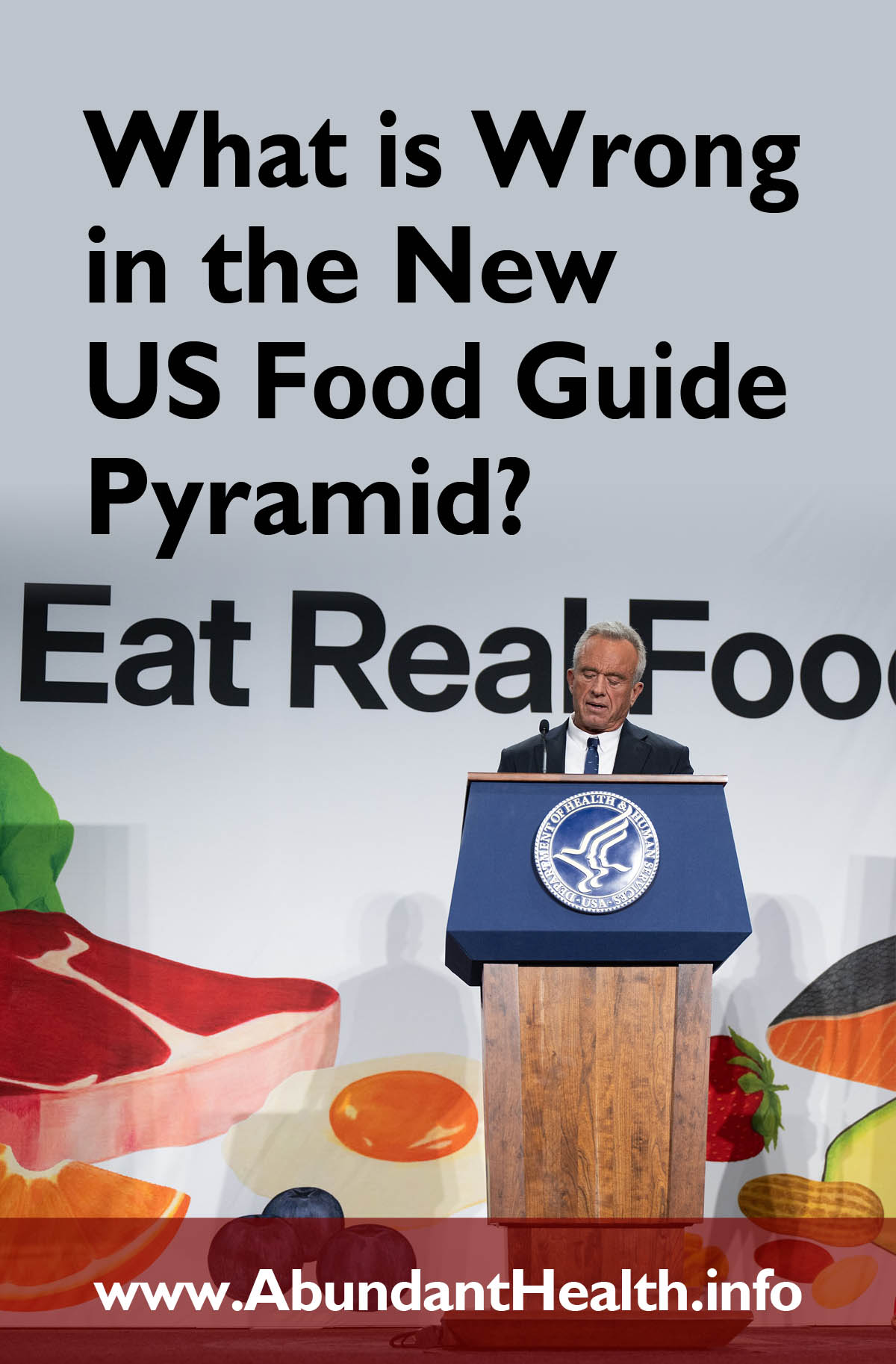
In January of this year, United States health secretary Robert F. Kennedy Jr released the government’s revamped dietary guidelines for 2025 to 2030.1)Fact Sheet: Trump Administration Resets U.S. Nutrition Policy, Puts Real Food Back at the Center of Health. US Department of Health
These recommendations on healthy eating are updated every five years and help shape food policy and education for millions of Americans.
Under the slogan “eat real food”, the new guidelines recommend people “prioritise protein at every meal”, eat full-fat dairy and plenty of whole grains, and limit ultra-processed foods. A new food pyramid has also been redesigned and flipped on its head.
But are the guidelines based in good science? And how much has actually changed?
Much of the core guidance is unchanged
As in previous versions, the new guidelines promote nutrient-rich foods – such as fruits, vegetables and whole grains – and appropriate portions.
They continue to recommend people get protein from a variety of sources and limit added sugars and salt. Saturated fat remains capped at less than 10% of total calories.
This is consistent with the long-standing body of nutrition evidence.
Diets rich in whole foods are the most strongly linked to good health overall.2)Monteiro, Carlos A et al. Ultra-processed foods and human health: the main thesis and the evidence. The Lancet, Volume 406, Issue 10520, 2667 – 2684 https://doi.org/10.1016/S0140-6736(25)01565-X There is also evidence they help prevent and manage heart disease, diabetes and – increasingly – mental health.3)Grajek M, Krupa-Kotara K, Białek-Dratwa A, Sobczyk K, Grot M, Kowalski O and Staśkiewicz W (2022) Nutrition and mental health: A review of current knowledge about the impact of diet on mental health. Front. Nutr. 9:943998. doi: 10.3389/fnut.2022.943998
So, what’s different?
1. More protein
One of the major changes is an increase in recommended protein intake. The previous recommendation was 0.8 grams per kilogram of body weight each day – it’s now 1.2–1.6 grams.
The change was based on a rapid review, which mainly focused on weight loss and exercise studies.4)The Scientific Foundation For The Dietary Guidelines For Americans. realfood.gov
However, this evidence base is too narrow to make dietary recommendations for the whole population, which has varying needs.5)Suzanne P Murphy, Ann L Yaktine, Alicia L Carriquiry,
Planning Nutritionally Adequate Diets for Groups: Methods Used to Develop Recommendations for a Child and Adult Care Food Program, Advances in Nutrition, Volume 12, Issue 2, 2021, Pages 452-460, ISSN 2161-8313, https://doi.org/10.1093/advances/nmaa119.
The revised guidelines also encourage eating protein at every meal, without explicitly prioritising lean options.6)Lean meat and poultry, fish, eggs, tofu, nuts and seeds and legumes/beans eatforhealth.gov.au
2. Full-fat dairy
The guidelines also recommend full-fat rather than low-fat dairy products.
Yet many people – particularly those at higher risk of heart disease – may continue to benefit from choosing reduced-fat dairy. This is the Heart Foundation’s position in both Australia and the US.7)Dairy and heart health www.heartfoundation.org.au
New dietary guidelines underscore importance of healthy eating heart.org January 07, 2026
3. Limit ultra-processed foods
The new advice explicitly says people should limit and avoid ultra-processed foods.
This is in line with a growing body of research linking them to chronic disease and inflammation.8)Monteiro C.A. Ultra-Processed Foods and Human Health. The Lancet November 18, 2025
Previous guidelines recommended eating “nutrient-dense foods” without specifically mentioning ultra-processed foods.
4. A new – inverted – food pyramid
The new “Real Food” website contrasts its food pyramid with the 1992 food pyramid. But that model had already been replaced by MyPlate in 2011.
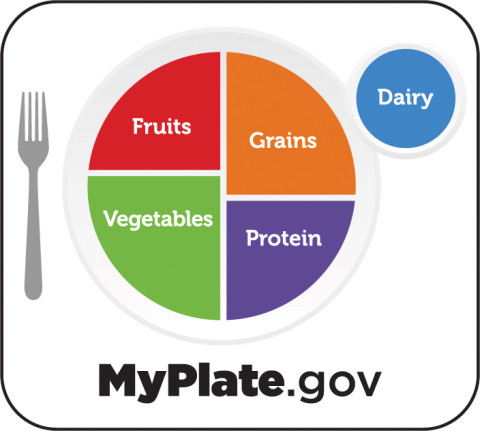
In this diagram, half the plate is made up of fruits and vegetables. Whole grains and protein each make up a quarter, and dairy is shown separately.
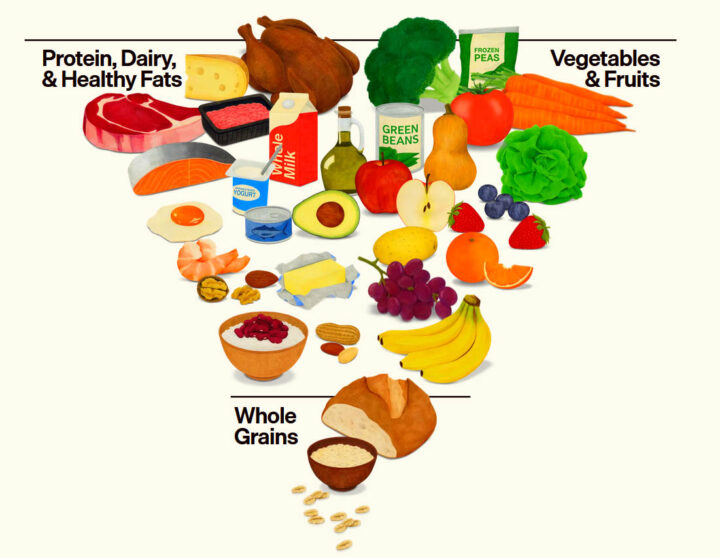
The new pyramid marks a clear shift. Meats, dairy and oils are at the widest edge – which is now at the top – along with vegetables. Fruits, nuts and grains appear in smaller proportions at the pointy tip.
Confusingly, this contradicts the written recommendations, which continue to promote 2–4 daily servings of whole grains and a variety of protein sources from both animal and plant foods.
This visual focus on animal-based foods may encourage people to exceed the (written) recommendations to limit saturated fats at 10% of what you eat overall, and to balance plant and animal-based foods.
5. Vague alcohol guidance
Alcohol limits have appeared in the guidelines since 1980 – these have now been removed. The new advice is to “limit alcoholic beverages” without quantifying what “limit” means.
Warnings about alcohol’s links to cancers, present in guidelines for 25 years, have also been removed. Scientific consensus links alcohol consumption to at least seven types of cancer.9)Jun S. et.al. Cancer risk based on alcohol consumption levels: a comprehensive systematic review and meta-analysis. https://doi.org/10.4178/epih.e2023092
In 2024, the US Surgeon General called for cancer warning labels on alcoholic beverages.10)Upadhyay B. US top doctor calls for cancer warnings on alcohol. BBC 3 January 2025
6. Low carbs recommendation
The advice says people with “certain chronic diseases” may benefit from following a lower carbohydrate diet.
While this is supported by evidence – for example, it can help some people manage type 2 diabetes – reducing carbohydrates won’t be safe for everyone (such as children, pregnant women and older adults).11)Teicholz N et.al. Myths and Facts Regarding Low-Carbohydrate Diets https://doi.org/10.3390/nu17061047
So this advice shouldn’t be seen as a blanket suggestion.
Conflicts of interest
The scientific report accompanying the new guidelines disclosed that several committee members had financial relationships with food industry groups.12)The Scientific Foundation For The Dietary Guidelines For Americans. realfood.gov
Three of nine members received grants or consulting fees from the National Cattlemen’s Beef Association. One also received support from the National Pork Board.
At least three members were linked to dairy industry organisations, and another was involved in developing a high-protein meal replacement product.
Industry connections are not new. For example, an analysis of the 2020–25 dietary guidelines found 95% of committee members had conflicts of interest with food or pharmaceutical companies.13)Mialon M, Serodio PM, Crosbie E, Teicholz N, Naik A, Carriedo A. Conflicts of interest for members of the US 2020 dietary guidelines advisory committee. Public Health Nutrition. 2024;27(1):e69. doi:10.1017/S1368980022000672
However, under the Trump administration, the 2025 development process diverged from standard procedures.14)Janet M de Jesus, Eve E Stoody, Dana M DeSilva, Julia B Quam, Julie E Obbagy, Dennis Anderson-Villaluz, Elizabeth B Rahavi, Meghan E Adler, Tessa A Lasswell, Kara A Beckman, Addressing misinformation about the Dietary Guidelines for Americans, The American Journal of Clinical Nutrition,
Volume 119, Issue 5, 2024, Pages 1101-1110, ISSN 0002-9165, https://doi.org/10.1016/j.ajcnut.2024.02.034.
The faster review lacked the usual systematic evidence protocols, public comment period and standard safeguards designed to limit individual influence and conflicts.
The missing conversation
“Eat real food” is simple messaging. But for many, it’s not simple in practice.
Perhaps the most striking omission is the guidelines’ lack of attention to socio-economic realities. The report announces a deliberate shift away from “health equity”, which considers how factors like race and income affect access to healthy food.
Access to affordable, healthy food remains limited across the US, especially for people in low-income communities, rural areas, or those working long and unpredictable hours.15)Food Security Status of U.S. Households in 2024. usda.gov
People choose food based on whether it’s affordable, accessible and culturally relevant – but the guidelines overlooked these structural drivers.
Instead, they place the responsibility for healthy eating solely on individuals, rather than within the broader food system.
What does this all mean?
No dietary guidelines, however well-designed, can overcome a food system that prioritises profit over public health.16)Jennifer Clapp, Rachael Vriezen, Amar Laila, Costanza Conti, Line Gordon, Christina Hicks, Nitya Rao, Corporate concentration and power matter for agency in food systems, Food Policy, Volume 134, 2025, 102897, ISSN 0306-9192, https://doi.org/10.1016/j.foodpol.2025.102897.
While these recommendations contain some sensible advice about promoting whole foods and avoiding processed foods, they also introduce contradictions and confusion.
People seeking individualised, evidence-based support for their eating should consult a dietitian.

Stay Always Up to Date
Sign up to our newsletter and stay always informed with news and tips around your health.
This article is republished from The Conversation under a Creative Commons license. Read the original article.


Lauren has an international reputation for improving health care by creating knowledge, translating it into real-life scenarios, and evaluating improvements for people, providers, and funders. Her work spans general practice, community care, aged care, allied health, workforce development, digital health, and population health.

Emily Burch is an Accredited Practicing Dietitian and Lecturer at Southern Cross University. She holds a PhD in Type 2 Diabetes and her current research is dedicated to enhancing the quality of care for people living with diabetes in both the Australian private and public health sectors.
References
| ↑1 | Fact Sheet: Trump Administration Resets U.S. Nutrition Policy, Puts Real Food Back at the Center of Health. US Department of Health |
|---|---|
| ↑2 | Monteiro, Carlos A et al. Ultra-processed foods and human health: the main thesis and the evidence. The Lancet, Volume 406, Issue 10520, 2667 – 2684 https://doi.org/10.1016/S0140-6736(25)01565-X |
| ↑3 | Grajek M, Krupa-Kotara K, Białek-Dratwa A, Sobczyk K, Grot M, Kowalski O and Staśkiewicz W (2022) Nutrition and mental health: A review of current knowledge about the impact of diet on mental health. Front. Nutr. 9:943998. doi: 10.3389/fnut.2022.943998 |
| ↑4, ↑12 | The Scientific Foundation For The Dietary Guidelines For Americans. realfood.gov |
| ↑5 | Suzanne P Murphy, Ann L Yaktine, Alicia L Carriquiry, Planning Nutritionally Adequate Diets for Groups: Methods Used to Develop Recommendations for a Child and Adult Care Food Program, Advances in Nutrition, Volume 12, Issue 2, 2021, Pages 452-460, ISSN 2161-8313, https://doi.org/10.1093/advances/nmaa119. |
| ↑6 | Lean meat and poultry, fish, eggs, tofu, nuts and seeds and legumes/beans eatforhealth.gov.au |
| ↑7 | Dairy and heart health www.heartfoundation.org.au New dietary guidelines underscore importance of healthy eating heart.org January 07, 2026 |
| ↑8 | Monteiro C.A. Ultra-Processed Foods and Human Health. The Lancet November 18, 2025 |
| ↑9 | Jun S. et.al. Cancer risk based on alcohol consumption levels: a comprehensive systematic review and meta-analysis. https://doi.org/10.4178/epih.e2023092 |
| ↑10 | Upadhyay B. US top doctor calls for cancer warnings on alcohol. BBC 3 January 2025 |
| ↑11 | Teicholz N et.al. Myths and Facts Regarding Low-Carbohydrate Diets https://doi.org/10.3390/nu17061047 |
| ↑13 | Mialon M, Serodio PM, Crosbie E, Teicholz N, Naik A, Carriedo A. Conflicts of interest for members of the US 2020 dietary guidelines advisory committee. Public Health Nutrition. 2024;27(1):e69. doi:10.1017/S1368980022000672 |
| ↑14 | Janet M de Jesus, Eve E Stoody, Dana M DeSilva, Julia B Quam, Julie E Obbagy, Dennis Anderson-Villaluz, Elizabeth B Rahavi, Meghan E Adler, Tessa A Lasswell, Kara A Beckman, Addressing misinformation about the Dietary Guidelines for Americans, The American Journal of Clinical Nutrition, Volume 119, Issue 5, 2024, Pages 1101-1110, ISSN 0002-9165, https://doi.org/10.1016/j.ajcnut.2024.02.034. |
| ↑15 | Food Security Status of U.S. Households in 2024. usda.gov |
| ↑16 | Jennifer Clapp, Rachael Vriezen, Amar Laila, Costanza Conti, Line Gordon, Christina Hicks, Nitya Rao, Corporate concentration and power matter for agency in food systems, Food Policy, Volume 134, 2025, 102897, ISSN 0306-9192, https://doi.org/10.1016/j.foodpol.2025.102897. |
Leave a Reply