While flying from coast to coast recently, I was engaged in a conversation with my seatmate about his successful business. He put great emphasis on how hard he worked and the long hours he kept. Then he made this startling statement: “I think sleep is the biggest waste of time and I try to find employees who don’t need any, either!”

Unfortunately, we live in a society today that does not value the importance of rest and sleep. Like this gentleman, many consider sleep to be a waste of time, and an option at best. This attitude has infected all age groups in society! Over the past several decades adults in the U.S. have decreased the average number of hours of sleep by about twenty percent.1)Wake Up America: A National Sleep Alert, 1993. http://www.sleepfoundation.org. This means that we are sleeping an hour and a half less daily than our grandparents did. As a result, 40 percent of Americans reported that they are so sleepy during the day that it interferes with their daily activities.2)”Sleep In America” Survey, National Sleep Foundation, 1999. Of critical concern is the effect this has on our safety on the highway. The National Transportation and Safety Administration reports that each year over 100,000 car crashes due to drowsy drivers occur in the United States.
Perhaps even more alarming is the dramatic decrease in the sleep of teenagers. Seventy-five years ago this age group was sleeping eight to nine hours per night. However, today that has dropped to 7 hours or less even though they actually need more than when they were pre-teens.3)Wake Up America: A National Sleep Alert, 1993. http://www.sleepfoundation.org. A nationwide survey done in 1999 by the National Sleep Foundation found that 60 percent of teens under the age of 18 complained about being tired during the day, and 15 percent reported falling asleep at school!4)Mougin, et al., European Journal of Applied Physiology, 63:77-82,1991.
Why is sleep necessary?
Depriving ourselves of sleep is much like depriving ourselves of food. If we eat fewer calories than we need each day, we will slowly lose weight because the effects are cumulative. When we deprive ourselves of sleep, we accumulate the total amount of sleep loss over days in the same way. If you lose one hour of sleep each night over a week, at the end of the week you will have a sleep debt of seven hours, which is nearly the same as losing a whole night’s sleep.

What is surprising to many people is that a sleep debt of three to eight hours will produce noticeable effects on both their physical and mental performance. Research on French cyclists who had lost only three hours of sleep showed that they fatigued faster than when rested.5)Sleep Research Online, 1(4):107-111, 1999. Evidence continues to accumulate that relatively small amounts of sleep loss weaken the immune system and make us more likely to succumb to infections and diseases.6)NEIM, 334924, 1996.
Sleep debt also has direct effects on thinking ability and mental efficiency. During the past 10 years, scores of studies have looked at this area with a very clear pattern of findings. Sleep debt produces a general slowing of most mental processes. Sleepy people have a very difficult time concentrating and keeping their attention fixed on the task at hand. Important information is frequently missed, and these lapses can be disastrous. A momentary lapse while driving could result in not seeing a child emerging onto the street, or an accountant can miss a number in a column of figures, thereby arriving at an incorrect conclusion. These momentary flickers in sustained attention are directly related to the amount of sleep debt. Amazingly, research in Canada has shown that traffic accidents increase by 8 percent in the 24 hours following the spring-time change, when only an hour of sleep is usually lost, and an almost equal decrease in the fall when an hour is ”gained.”7)Engle, F., et al, Sleep, 22:151, 1999.
When we deal with a task that has many parts that must be considered in relationship to each other, sleep debt can have a marked impact on our performance. Tired persons may be able to recall information from their long-term memory with fair accuracy, but it is the short-term (immediate) memory that is most affected. This can have drastic effects on complex tasks like important contract negotiations or driving a car on a busy freeway.
Even our moods are affected by sleep debts. Not only do tired people feel more fatigued and less vigorous, but they tend to become more depressed. As sleep debt increases, people lose their ability to enjoy things and activities they normally do. They often withdraw from others, as their irritability increases significantly.
The ability to exercise routine problem solving may remain intact with moderate amounts of sleep debt. However, the more difficult problems require novel and creative solutions that are much less likely to be forthcoming when we are tired. As we become more tired, we act more like an airplane on autopilot. We can usually handle the simple changes and the relatively ordinary demands of life most of the time. However, anything out of the ordinary will increase the likelihood of our making significant errors. Motivation to tackle the tough tasks of life suffers also. Sleep-deprived individuals have been found unwilling to work at tasks that require more than automatic performance.“8)NASA Technical Memo, 103884.
The bottom line is that when we allow ourselves to get tired, the highest mental functions are compromised. When discernment, judgment, initiative and creativity are blunted we cannot make clear decisions. When decision-making is compromised, everything we do is negatively affected–our learning abilities, our reasoning abilities, our safety, our efficiency, our communication skills, and our relationships.
Causes of Sleep Debt
In the modern world there are many reasons why so many do not get enough sleep. For most it is simply that they do not value sleep, and as humans we rarely choose to do what we do not value. Some of the most common thieves of sleep are television and Internet surfing, entertainment, sports, overwork, stress and anxiety, night-shift work, noisy environments, the use of stimulants such as caffeine, overeating and/or late-night eating, many common medications, and a sedentary lifestyle. While we love to blame the boss for making us work too much, we must honestly examine all our activities in light of our important priorities.

The Spiritual Impact Of Sleep Loss
A pastor friend of mine recently was caught in immoral activity that cost him his job. As he looks back on that experience, he says that he allowed himself to become so tired and worn out that he could not resist the temptation to revert to behaviors that he had engaged in before he became a Christian more than 25 years ago!
Fatigue certainly has a more important impact on our spiritual lives than it has on our ordinary daily activities. Optimal decision-making capacity is necessary to differentiate between right and wrong. Yet when we are tired, we have even less motivation and willpower to act on what we know is correct. Thus we fall into temptation more easily. Remember, for centuries sleep deprivation has been a most effective ingredient of brainwashing, and is even purposefully used today by professional labor and hostage negotiators.
Bible study and prayer is the lifeline of the Christian. The devil knows that if he can keep us tired, even in the good activities of life, it will lessen our ability and interest in the study and understanding of the Bible, and will weaken our commitment to communicate with God in prayer.
How much sleep do we need?
Most sleep researchers agree that humans can “get by” on about seven hours of sleep per night. But how many of us want to just get by in life? The evidence is strong that for peak performance in all areas of our lives, we need between eight and nine hours of sleep each night. To maximize their learning and memory abilities, our teen students need a little more. Obviously, getting those amounts of sleep will require careful choices and self-discipline.

Suggestions For Staying Rested
Here are a few things you can choose to ensure you stay at your rested optimum: Have a regular time for going to bed and a regular time to rise that allows you eight to nine hours of good sleep-and stick to your schedule.
- Go to bed early each night-it is a good habit.
- Exercise a minimum of 30 minutes each day at least several hours before retiring.
- Eat a healthful diet and avoid late, large evening meals.
- Learn to control your stress and anxiety positively by putting your trust in God. ”When you lie down, you will not be afraid; Yes, you will lie down and your sleep will be sweet.” (Proverbs 3:24)
- Set aside one day each week for rest and recuperation and take a truly restful vacation each year.
- Avoid the use of alcohol or stimulants and eliminate watching exciting or depressing television.
- Try to sleep in a dark, quiet, cool room with a firm, comfortable bed.
- Take a 15-30 minute nap ideally, just before mealtime, to restore rested performance when you are tired.
- Be sure to see your physician if you suspect you might have a sleep disorder.
There are significant rewards for choosing to get enough rest: rested people will accomplish more in less time, do it better, more efficiently, and safely! They will also be better lovers of God, spouses, children, and others.
God instituted the Sabbath as a day of rest to repair nature’s exhausted energies. No mind can continue day after day without cessation, either in business which taxes the mental powers, or in the acquirement of knowledge, without injury. There is no night in Heaven. There is no wear and weariness of the human machinery. There we shall never be sensible of fatigue; never need or want repose. There is no tire in performing God’s will; we shall never be wearied in sounding his praise. We shall always have the freshness of the morning. But as we are now in this world, with bodies which weary, we must pay heed to God’s plans, and take repose when we need it.9)White, E.G., Pamphlet, 43, 1879.13. 39
Do not become overwhelmed with the great amount of work you must do in your lifetime, for you are not required to do it all at once. Let every power of your being go to each day’s work, improve each precious opportunity, appreciate the help that God gives you, and make advancement up the ladder of progress step by step. Remember that you are to live but one day at a time, that God has given you one day, and heavenly records will show how you have valued its privileges and opportunities. May you so improve every day given you of God that at last you may hear the Master say, “Well done, thou good and faithful servant.10)White, E.G., My Life Today, 95
The FatigueBusters® Double Check Checklist
- l feel tired.
- My sleep last night was shorter than eight hours or of poor quality.
- I have been awake without resting for more than 12 hours.
- During the past week I have slept less than eight hours per night.
- Today I experienced unusual mental lapses and/or clumsiness.
- I am feeling irritable, upset or angry.
- Today has been especially stressful.
- I have recently been sick.
- I consumed alcohol or sleep-inducing medications during the past 24 hours.
- Today I drank less than six to eight glasses of water.
- My meals were irregular today, or I had a large, fatty meal less than four hours ago.
How are you doing? If you checked one or more items, your decision-making ability, safety, emotions, and communication skills may be seriously compromised © 1995 Total Life Creations. Fatigue Busters is a trademark of Total Life Creations.

Stay Always Up to Date
Sign up to our newsletter and stay always informed with news and tips around your health.
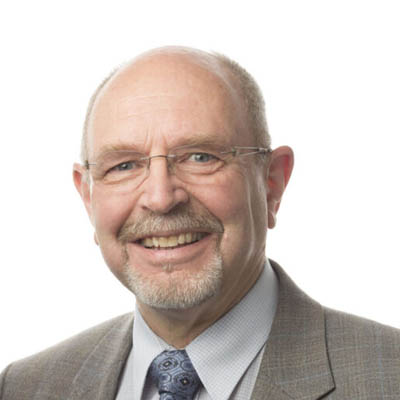
Fred Hardinge, DrPH, MPH is known internationally as a creative educator and motivational speaker. His background includes pastoral ministry, academic teaching, community health education, corporate training and consultation, administration and private health counseling. As Associate Health Ministries Director for the General Conference of Seventh-day Adventists he has the privilege of spending a lot of his time sharing, consulting, speaking and teaching on health and its relationship to spiritual life around the globe.
References
| ↑1, ↑3 | Wake Up America: A National Sleep Alert, 1993. http://www.sleepfoundation.org. |
|---|---|
| ↑2 | ”Sleep In America” Survey, National Sleep Foundation, 1999. |
| ↑4 | Mougin, et al., European Journal of Applied Physiology, 63:77-82,1991. |
| ↑5 | Sleep Research Online, 1(4):107-111, 1999. |
| ↑6 | NEIM, 334924, 1996. |
| ↑7 | Engle, F., et al, Sleep, 22:151, 1999. |
| ↑8 | NASA Technical Memo, 103884. |
| ↑9 | White, E.G., Pamphlet, 43, 1879.13. 39 |
| ↑10 | White, E.G., My Life Today, 95 |
Leave a Reply