Men over 45 often suffer from decreased urinary flow due to symptomatic benign prostatic hyperplasia (BPH). This common medical condition in older men results from a nonmalignant enlargement of the prostate gland. BPH affects about 10 million American men, with about one-half of men aged 70 years or older having symptoms.

Cost of annual treatment of BPH exceeds $2 billion in the United states, and accounts for 1.7 million physician office visits a year.1)Wilt TJ, et al. Saw Palmetto Extracts for Treatment of Benign Prostatic Hyperplasia. A Systematic Review. JAMA, 280:1604-9, 1998. Standard treatment options for BPH include the use of drugs, or surgery to remove some prostatic tissue. The synthetic drugs do have side effects such as hypertension, dizziness, and impotence. There are also a number of therapeutic preparations made from plant materials that have proven useful. These are discussed below.
Since the prostate sits under the bladder, and surrounds the urethra, or exit tube from the bladder, the enlargement of the prostate gland will cause a narrowing or obstruction of the urethra, resulting in difficult or painful urination, urinary retention, a weak urine flow, an increased sense of need to urinate, frequent nighttime trips to the bathroom, as well as the potential for a kidney infection. The male hormone, testosterone, is made in the testes and secreted into the blood. It is then picked up by certain cells of the prostate and converted there by the enzyme 5-alpha-reductase to the more potent androgen (male hormone) dihydro-testosterone (DHT), a substance that appears to stimulate prostate growth.2)Tyler V. Herbs of Choice. The Therapeutic Use of Phytomedicinals, Haworth Press, Inc., New York, NY, 1994.
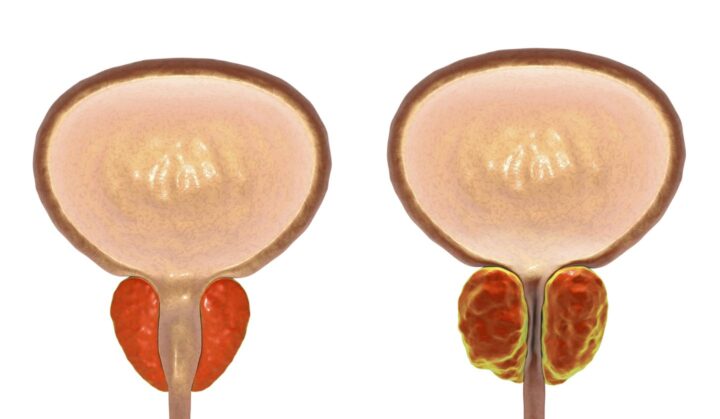
The resulting enlarged prostate usually contains relatively high levels of dihydro-testosterone, which is known to trigger cell nuclei to make proteins and increase cell metabolism. These increases in cellular activity contribute to the development of BPH. Some phytomedicinals, plant products, can also inhibit the activity of 5-alpha-reductase.
Palmetto Power
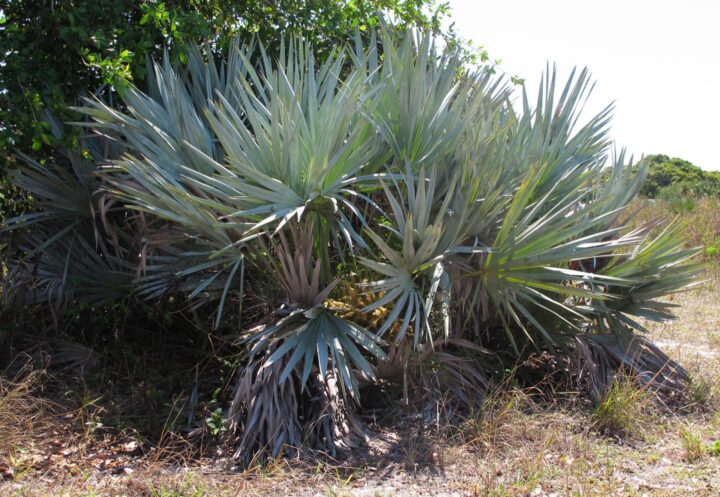
There are about 30 botanical medications used for the treatment of BPH.3)Lowe FC and Ku JC. Phytotherapy in Treatment of Benign Prostatic Hyperplasia: A Critical Review. Urology, 48:12-20, 1996. The most widely used include saw palmetto and stinging nettle. Extracts of the dried ripe fruit of the American dwarf saw palmetto (Serenoa repens) have been used for the treatment of people with mild to moderate cases of BPH. The dwarf saw palmetto grows up to 4 feet in the Southeastern United States. The plant is a bushy palm with leaves in a fan-shaped arrangement of about 20 sharp finger-like segments forming a crown.
_%E2%80%94_Scott_Zona_001.jpg)
In late summer the plant produces deep purple berries up to an inch long. Inside the berries there is pale-brown spongy pulp. The seeds have an unpleasant soapy taste. Saw palmetto berries contain a variety of phytosterols (plant sterols) and their glucosides as well as a number of active flavonoids, which are the components that inhibit the production of BHP. Saw palmetto extracts reduce prostate uptake of DHT by about 40 percent.
Plant sterols such as beta-sitosterol are reported to inhibit the activity of the enzyme 5-alpha-reductase. The active substances in saw palmetto, such as the phytosterols, provide such beneficial effects as increased urinary flow, increased ease in commencing urination, reduced residual urine, decreased frequency of urination, and a decreased urge to urinate during the night.4)Foster S. Saw Palmetto: Help for the Prostate. The Herb Companion, 10:58,59, 1988.
Men with an enlarged prostate who received an extract of saw palmetto for 30 days, experienced 45 percent less nocturnal trips to the bathroom, a 50 percent increase in urinary flow rates, diminished residual urinary volume, and less pain during urination. After three months, 90 percent of the patients using the saw palmetto considered the therapy successful, and free of any side effects.5)Braeckman J. The Extract of Serenoa repens in the Treatment of Benign Prostatic Hyperplasia: A Multicenter Open Study. Curr Ther Res, 55:777-85, 1994.
As with all herbal preparations, therapeutic benefits are most predictable when standardized products are used.
The symptoms of BPH and prostate cancer are similar, so that the use of saw palmetto may reduce the symptoms of prostate problems and mask the signs of a more serious prostate problem. Since saw palmetto can skew the results of the blood test that is often used to screen for prostate cancer, the physician should be informed when a patient is taking saw palmetto.6)Foster S. Herbal Renaissance.Growing, Using and Understanding Herbs in the Modern World, Gibbs Smith Publ, Layton, UT, 1993.
Nettles That Sting
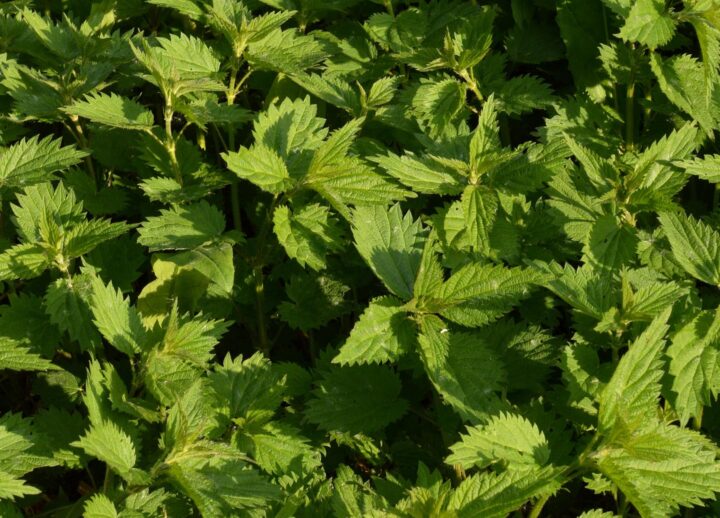
Stinging nettle (Urtica dioica), a perennial that grows from 2 to 6 feet tall, is an inconspicuous plant, blending well into the vegetation of waste places or in moist thickets. However, if you walk unknowingly into a patch of stinging nettle while wearing shorts, you will not forget the plant in a hurry. The deeply toothed leaves and fibrous stems are covered with tiny, hollow, silica-tipped hairs that contain an irritant. The sting is caused by the ends of the fragile hairs penetrating the skin, breaking off, and releasing the irritating toxins, which include histamine, acetylcholine, and formic acids.7)Fleming T (Editor). PDR for Herbal Medicines, Medical Economics Comp., Montvale, NJ, 1998.
_(Urtica_dioica)_-_B%C3%A6rum,_Norway_2021-05-27.jpg)
The chemicals that cause the sting are neutralized by rubbing the burning area with leaves of jewelweed or yellow dock. Clearly, the fresh plant must be handled carefully, preferably with gloves. Once cooked or dried, the nettles lose their sting.
The spring shoots are used as a green vegetable when cooked. The dried plant or the juice of fresh leaves, which are high in potassium and flavonoids, have been used for their diuretic effect, and also to stop excessive menstrual flow and nosebleeds. An extract of the leaves is also used for urinary infections, as an irrigation therapy for treatment of kidney gravel, and as supportive therapy for rheumatic ailments.8)Belaiche P and Lievoux O. Clinical Studies on the Palliative Treatment of Prostatic Adenoma with Extract of Urtica Root. Phytotherapy Res, 5:267-69, 1991. A root preparation is used to relieve the symptoms of an enlarged prostate, without actually reducing the size of the prostate.
The root of stinging nettle has been shown to provide symptomatic relief of urinary difficulties in men with benign enlargement of the prostate.9)Hirano T, et al. Effects of Stinging Nettle Root Extracts and Their Steroidal Components on the Na+, K+ATPase of the Benign Prostatic Hyperplasia. Planta Medica, 60:30-33, 1994. A dose of 4 to 6 grams per day of Urtica dioica is used to increase the volume of urine produced while diminishing the urge to void during the night. French researchers observed that men with prostate enlargement who daily consumed stinging nettle root-extract greatly reduced the frequency of nocturia (night urination), especially in patients with less severe conditions.
Pumpkin Seeds
Another botanical agent which has received attention in Europe for prostate problems is ground pumpkin seeds (Cucurbita pepo). These seeds are very rich in phytosterols. Ten grams of ground seeds twice a day has been found to relieve difficulties associated with an enlarged prostate. No side effects have been reported.10)Breza J, et al. Efficacy and acceptability of tadenan (Pygeum africanum extract) in the treatment of benign prostatic hyperplasia: a multicenter trial in central Europe. Curr Med Res Opin, 14:127-139, 1998.

Pygeum
A number of European studies have reported the efficacy of Pygeum africanum (or prunus africana) for the treatment of benign prostatic hyperplasia. The usual treatment consists of a 50 mg extract of Pygeum africanum twice daily. After 1-2 months of such treatment, men over 50 years of age with an enlarged prostate experienced less need for nighttime urination, an improved urinary flow and volume, and a reduced post-voiding residual volume. Clinical benefits were even maintained for one month after treatment.11)Gansser D and Spiteller G. Aromatase Inhibitors from Urtica dioica Roots. Planta Medica, 61:138-40, 1995.


Highlighted in the February, 1999 issue of Alternative Medicine Alert are a number of reports of research conducted on this herb, which comes from the bark of the African prune tree, an evergreen from the mountains of Africa.
Several research studies, both controlled, double-blind, and “open-label”, have shown statistically significant relief of symptoms of BPH, within a period of one to two months. in one study, that combined results from a number of clinical trials involving 2,000 patients for 25 years, revealed improvement of symptoms in the majority of men.
In ten double-blind studies (neither subjects not physicians knew which patients got Pygeum as the only therapy, and which were getting a conventional medicine) results were better with Pygeum than with conventional drug therapy.
One of the best studies involved 263 men in 8 centers in Europe. Two months of Pygeum therapy were able to help symptomatic improvement, even though there was no decrease in size of the prostate.
There are no known harmful drug interactions; side-effects are infrequent and mostly related to the digestive system.
Cancer Risks
A more serious condition than BPH is cancer of the prostate, which is the second most common cause of death due to cancer in American men. An estimated 185,000 new cases of prostate cancer will be identified this year in the United States. Among the dietary factors, a high intake of vegetables is protective from prostate cancer, while a high consumption of fat, saturated animal fat, red meat, milk, and dairy products possibly increases risk.12)Gansser D and Spiteller G. Aromatase Inhibitors from Urtica dioica Roots. Planta Medica, 61:138-40, 1995. High consumers of meat, milk, cheese, and eggs were reported in one study to have 3 to 4 times more prostate cancer than those who ate little of these foods. Obesity and alcohol intake do not appear to be related to prostate cancer.13)Snowdon DA, et al. Diet, Obesity and Risk of Fatal Prostate Cancer. Am J Epidemiol, 120:244-50, 1984.
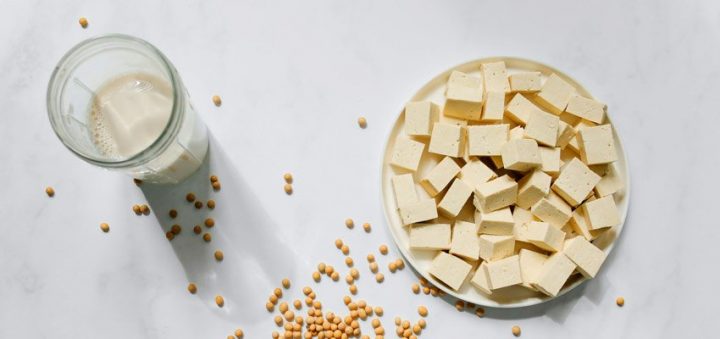
In a prospective study of 8,000 men of Japanese ancestry, those who consumed tofu once a week or less were 3 times more likely to get prostate cancer than those who ate tofu daily. Of the dietary factors studied, tofu was the most protective.14)Severson RK, et al. A Prospective Study of Demographics, Diet, and Prostate Cancer Among Men of Japanese Ancestry in Hawaii. Cancer Res, 49:1857-60, 1989.
Lycopene, the red pigment in tomatoes, guava, pink grapefruit, and watermelon, has been shown to accumulate in the prostate gland. A regular intake of lycopene-rich foods significantly reduces risk of prostate cancer. The consumption of tomato products, rich in the red lycopene pigment, is associated with a reduced risk of prostate cancer. In the Adventist Health Study, men who ate tomatoes more than five times a week had a 40 percent lower risk of prostate cancer compared with those men consuming tomatoes less than once a week.15)Mills PK, et al. Cohort Study of Diet, Lifestyle, and Prostate Cancer in Adventist Men. Cancer, 64:598-604, 1989.
In the Health Professionals Study, the more lycopene men ate, the less their risk of prostate cancer—the risk was 22 percent lower and 35 percent lower in those men consuming 4 to 7 servings per week and more than 10 servings of tomato products per week, respectively, compared with those consuming less than 1.5 servings per week.16)Giovannucci EL, et al. Intake of Carotenoids and Retinol in Relation to Risk of Prostate Cancer. J Natl Cancer Inst, 87:1767-76, 1995.
Regular physical and chemical prostate checkups are indicated after 40 years of age if family history is positive, and after 50 years if not, to catch cancer before it spreads.
Conclusion
There are a few herbs with a successful track record of bringing symptomatic relief to men with an enlarged prostate gland. In addition, eating a diet rich in fruits and vegetables and low in fat and animal products will reduce the risk of cancer of the prostate.

Stay Always Up to Date
Sign up to our newsletter and stay always informed with news and tips around your health.
This article was published originally in the Journal of Health and Healing, a publication of Wildwood Institute.

Winston is Professor of Nutrition and Director of the dietetics internship program at Andrews University in Berrien Springs, Michigan, where he has taught health and nutrition classes since 1987.

Marjorie has been instructor at the School of Public Health in Loma Linda, until she moved 1977 with her husband to Wildwood Lifestyle Center & Hospital where she served for many years as the Editor in Chief of the Journal of Health and Healing.
References
| ↑1 | Wilt TJ, et al. Saw Palmetto Extracts for Treatment of Benign Prostatic Hyperplasia. A Systematic Review. JAMA, 280:1604-9, 1998. |
|---|---|
| ↑2 | Tyler V. Herbs of Choice. The Therapeutic Use of Phytomedicinals, Haworth Press, Inc., New York, NY, 1994. |
| ↑3 | Lowe FC and Ku JC. Phytotherapy in Treatment of Benign Prostatic Hyperplasia: A Critical Review. Urology, 48:12-20, 1996. |
| ↑4 | Foster S. Saw Palmetto: Help for the Prostate. The Herb Companion, 10:58,59, 1988. |
| ↑5 | Braeckman J. The Extract of Serenoa repens in the Treatment of Benign Prostatic Hyperplasia: A Multicenter Open Study. Curr Ther Res, 55:777-85, 1994. |
| ↑6 | Foster S. Herbal Renaissance.Growing, Using and Understanding Herbs in the Modern World, Gibbs Smith Publ, Layton, UT, 1993. |
| ↑7 | Fleming T (Editor). PDR for Herbal Medicines, Medical Economics Comp., Montvale, NJ, 1998. |
| ↑8 | Belaiche P and Lievoux O. Clinical Studies on the Palliative Treatment of Prostatic Adenoma with Extract of Urtica Root. Phytotherapy Res, 5:267-69, 1991. |
| ↑9 | Hirano T, et al. Effects of Stinging Nettle Root Extracts and Their Steroidal Components on the Na+, K+ATPase of the Benign Prostatic Hyperplasia. Planta Medica, 60:30-33, 1994. |
| ↑10 | Breza J, et al. Efficacy and acceptability of tadenan (Pygeum africanum extract) in the treatment of benign prostatic hyperplasia: a multicenter trial in central Europe. Curr Med Res Opin, 14:127-139, 1998. |
| ↑11, ↑12 | Gansser D and Spiteller G. Aromatase Inhibitors from Urtica dioica Roots. Planta Medica, 61:138-40, 1995. |
| ↑13 | Snowdon DA, et al. Diet, Obesity and Risk of Fatal Prostate Cancer. Am J Epidemiol, 120:244-50, 1984. |
| ↑14 | Severson RK, et al. A Prospective Study of Demographics, Diet, and Prostate Cancer Among Men of Japanese Ancestry in Hawaii. Cancer Res, 49:1857-60, 1989. |
| ↑15 | Mills PK, et al. Cohort Study of Diet, Lifestyle, and Prostate Cancer in Adventist Men. Cancer, 64:598-604, 1989. |
| ↑16 | Giovannucci EL, et al. Intake of Carotenoids and Retinol in Relation to Risk of Prostate Cancer. J Natl Cancer Inst, 87:1767-76, 1995. |
Leave a Reply