Why is It Impossible to Have Good Health Without Regular Exercise?
Moderate exercise helps the heart in seven ways:
- Increases power of the beat. The actual strength of the heart muscle improves.
- Achieves more efficiency for the same oxygen supply because the enzymes inside the heart muscle that control its action are increased in amount and character.
- Reduces heart rate throughout the day. Slowing the heart rate by only five beats per minute can add up to more than 7,000 heartbeats saved per day by simple regular, steady exercise!
- Produces smoother, even larger coronary arteries. More backup capillaries and reserve channels for the blood to flow through the heart muscles are built by steady exercise.
- Helps control appetite, thus creating less coronary trouble in the first place.
- Reduces coronary atherosclerosis by substantially increasing the HDL—little pickup trucks that cruise around through the body picking up cholesterol and removing it from plaques. A drug to do this would cost plenty! No wonder the heart lasts longer on moderate exercise.
Regular moderate exercise helps to balance the circulation to all the organs of the body:
- Moderate exercise provides enough blood flow to the kidneys and supporting abdominal organs to help lower blood pressure. Overexertion can’t do this.
- It helps provide adequate blood supply to the stomach and bowels to help the digestive system instead of compromising it.
- It supports enough blood flow to the skin to help cool us down instead of pushing us up to a fever of 100-101°F (37,7-38,3°C), or higher, as is common in competitive exercise or other overexertion, especially on hot, humid days.
- Moderate exercise opens more capillaries in the supporting tissues of the body—the micro-circulation for all the cells of the body is balanced, so not only muscles but the entire body receives fresh, nourishing blood.
- Blood sludge is dangerous—moderate exercise stirs up stale blood from the veins in the legs and inactive tissues and pushes it into the active circulation to be vivified in the lungs and detoxified in the liver. Blood is supposed to be a smooth, thin liquid tissue, not a stale pasty mix of problems prone to clot. “Perfect health depends on perfect circulation.”1)White, E.G., Testimonies for the Church, Vol. 2, p. 531. Moderate exercise makes the blood thinner, but overexertion makes the blood thicker—more viscous and more vulnerable to clotting.
Too much inactivity makes the mind stale—exercise puts zest into life. Action-exercise puts more life into the hydraulics of our blood vessels and into the electronics of the brain and nervous system. Brain circuits can go stale, too. Not a few committees could benefit from serious exercise breaks!
We have two kinds of muscle fibers. Action-exercise increases and builds up both kinds. The muscular system is improved in several ways by regular, vigorous exercise or work:
- Strength: The “curl,” or flexion of the arms, can be increased two percent per week in a gym but four percent per week in fresh air and sunshine.2)Hettinger, T., Physiology of Strength. Thomas, Springfield, p. 84, 1961.
- Endurance: Good work and other physical exercise can strengthen the adrenal glands to help increase our endurance. This really counts in the late afternoon when there is a real tendency to run out of “steam.”
- Flexibility: It is important to put each limb and muscle group through its complete range of motion every day.
- Support and management structures: Functions are sustained, even improved.
Even bones need weight-bearing exercise. Women who get more exercise have the least amount of deforming, painful osteoporosis. Exercise should be started early in life and maintained to prevent the crippler of the aged, osteoporosis.
What Is the Best Exercise?
Simple. What was Adam’s exercise? Speaking of the Great Physician, what was His exercise? What was Paul’s? Physiology is a science, not a fad. The best exercise obeys not just the law of atrophy of disuse by pushing muscular activity but also the law of moderation in all things, thus helping the rest of the body to thrive. True action-exercise is safer and better.
More than 4,000 heart attacks in people living near Boston, Massachusetts, and near Augsburg, Germany were analyzed. As reported in one of the most prestigious medical journals in the world, The New England Journal of Medicine (NEJM), there was more than twice the risk of getting a heart attack within 60 minutes of excessive exercise, even when these people exercised five times per week.
But the weekenders, who exercised only one time per week, had over 120 times the risk of getting a heart attack within 60 minutes of their exertion. Those that exercised three times per week fared much better. But those who exercised five or more times experienced much better protection than those who exercised only three times per week!3)Mittleman, M.A., et al., Triggering of Acute Myocardial infarction by Heavy Physical Exertion. The New Eng J Med, 3129:1677-83, 1993, and Willich, SN., 61 al., Physical Exertion as a trigger of Acute Myocardial infarction, The New Eng J Med, 329:1684-1690, 1993. Also note the editorial and five letters on dangers of over-exertion in this issue. This lays to rest the older idea that three workouts per week are enough. Overexertion was obviously a triggering cause of heart attacks.
Why?
Because excess exertion makes the clot-triggering platelets too sticky.
Because with too-strenuous exercise, the liver can’t and doesn’t make enough of the clot-dissolving enzyme called plasmin, or fibrinolysin.
Result?
The NEJM estimates 25,000 extra heart attacks each year in America from too-intense exercise. This is no trivial observation!4)Mittleman, M.A., et al., Triggering of Acute Myocardial infarction by Heavy Physical Exertion. The New Eng J Med, 3129:1677-83, 1993, and Willich, SN., 61 al., Physical Exertion as a trigger of Acute Myocardial infarction, The New Eng J Med, 329:1684-1690, 1993. Also note the editorial and five letters on dangers of over-exertion in this issue.
What Is Too-Intense Exercise?
For the average person, six-MET exercise is too intense. What’s a MET? In exercise physiology, a MET is One Metabolic Equivalent = 3.5 ml of oxygen consumed per kilogram of body weight per minute.
In plain English:
- 1 MET = resting flat
- 2 METs = sitting
- 3 METs = moving
- 4 METs = slow walking
- 5 METs = brisk walking
- 6 METs = jogging, pushing a car out of snow all by yourself, heavy lifting, competitive sports
An activity that goes way beyond sweat to labored panting is too much. It is intemperate and obviously dangerous. So 6 METs (fast jogging or running) is unwise—it is un-physiologic, tending to clot the blood instead of helping keep it more liquid.
Deaths in Marathoners
Thirty-six heart attacks or sudden deaths in marathoners were reported in medical literature by Noakes. Fifty percent of these occurred within 24 hours of overexertion.5)Noakes, T.C., Heart disease in marathon runners: a review. Med Sci Sports Exec, 19(3):187-94, 1987. Even staid Switzerland had eight more of similar sudden cardiac deaths.6)Marti B., Guerre S., et al., Sudden death during mass running events in Switzerland 1978-1987: an epidemiologic-pathologic study. Schwiez MedWochenschr, 119(15): 473-482, 1989. The more intense the competition, the more the deaths. The authors estimated mathematically that the risk of cardiac death in Swiss mass running was more than 50 times higher than normal.
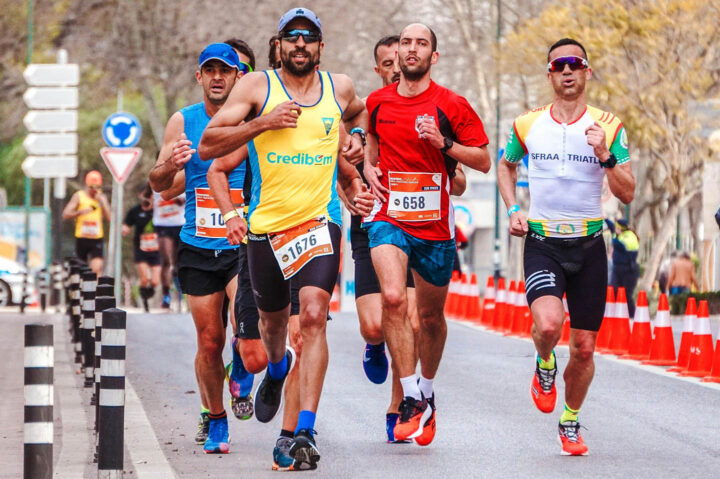
In ltaly, 49 young athletes who died suddenly in the Veneto region were analyzed. The prevalence for sudden death was more than twice as high for young athletes as for non-athletes.7)Thieve G., Basso C., Corrade D., Is prevention of sudden death in young athletes feasible? Cardiology, 44(6):497- 505, 1999.
What Kills Young Athletes?
The combination of severe stress, severe exertion, sticky platelets, deficiency of plasmin, dangerous arrhythmias, and spasms of the coronary artery imposed on the background of preexisting disease, weakness, or unrecognized congenital heart disease can quite easily explain the distinct tendency for the high risk of disasters from overexertion. Ordinary people can do this with snow-shoveling, racket-ball, competitive tennis, basketball, or any exercise associated with panting or puffing. You have seen the red-faced, stressed people struggling to beat somebody else in putting little balls through little holes.
Something Better
No wonder the Great Physician walked and led even thousands of others in walking, not jogging, up to the Mount of Blessing. However, if your little daughter on her new tricycle is speeding out of control down the driveway, headed for a coming truck—RUN!
But if you want to balance your circulation, calm down your platelets, and help your liver balance your blood clotting instead of triggering trouble, you will find that “There is no exercise that can take the place of walking.”8)White, E.G., Health Reformer, July 1, 1872. Other forms of exercise such as biking, swimming, rowing, canoeing, and mountain climbing all have their place.

What About Physical Work?
Physical work is great exercise. Any part of the body that is intelligently used will develop and prosper. Sports develop muscles, bones, heart, and lungs, but they fall far short of focused physical work in the development of character. “Strength of character,” we are told, “consists of two things, power of will and power of self control.”9)White, E.G., Counsels to Parents, Teachers and Students, Pacific Press Pub, Mt View, California, 1943, p 222. and, ”The will goes with the labor of the hands.”10)White, E.G., The Ministry of Healing, p. 239. With every board that the young man Jesus cut, his willpower developed. Every skillful cut with a tool fosters self—control. Sports are entirely different. They build much more ego than character. They build self-centeredness. Pride in athletic prowess is inflated. Notice that long-term competitive sports spoil the motivation, the attitudes, and the inclination which is imperative for patient, productive, self-sacrificing labor.
Don’t forget the marketable value of skills learned. Life is more than a game, it is a battle and a march. Motivated work builds solid character, not just muscles. Why eat pinkish wet cardboard-like genetically modified tomatoes from California, when you can serve real home-grown tomatoes that have the form and the power of the real thing.
Competitive exercise makes boys out of men. Real work makes men out of boys. Try it. With your boys and girls start a small garden. This could liven up not only your salads or sandwiches, but your mind also.

The modern TV-driven sport movement builds the muscles of the athletes but the bellies of the spectators! About half of American adults and a third of the youth are obese now. Notice that at the very time in life when middle-aged men and women are in great need of daily exercise, the sports they learned in high school and college fail them. it is uncommon, almost rare, for these older men and women to play several games of basketball, football, or tennis each week of their lives. What is needed is a way to get serious action-exercise every day. How can this be done?
Most People Believe in Exercise—It Is Time for Us to Live It
If you don’t fight for exercise you won’t get it! Here are some suggestions.
Walking: brisk walking every day—out in nature, in the park, around some blocks if necessary. You can’t keep excellent health and vigor without regular exercise. There are ten times more electrified oxygen outside in the fresh air compared to indoors such as a gymnasium. Indoor air-pollution tends toward mediocrity, not excellence.
Breaks: short snappy walks followed by drinking a full glass of water would help break up boredom, improving your flow of thought and your resiliency and drive. Stairs are for climbing. Use them. There is a place for calisthenics—but remember balance. Don’t do just one or two kinds of calisthenics. Variety of exercise builds for better posture, smoother body mechanics, and finer poise under pressure.
Gardening: Grow your own! Your fresh, home-grown fruits and vegetables will taste better and be better. Plant an apple tree. Do something. Action-exercise is dynamic but moderate. It is balanced.
Building: for a teenager to help build a garage, and then a house will do more for his inner morale and self-image (perception of personal worth) than a dozen lectures! Earning some cash, paying tithe on it, and putting some away in his or her own checking account is action-exercise at its finest.
Remember: “Action is a law of our being” and moderation is a law of life.

Stay Always Up to Date
Sign up to our newsletter and stay always informed with news and tips around your health.
This article was published originally in the Journal of Health and Healing, a publication of Wildwood Institute.

Bernell E. Baldwin, PHD, specialized in Neurophysiology. He taught many students, doctors and lifestyle guests at Wildwood Institute. He was also active in research and teaching at the Schools of Medicine and of Health at Loma Linda University, Loma Linda, CA.
References
| ↑1 | White, E.G., Testimonies for the Church, Vol. 2, p. 531. |
|---|---|
| ↑2 | Hettinger, T., Physiology of Strength. Thomas, Springfield, p. 84, 1961. |
| ↑3, ↑4 | Mittleman, M.A., et al., Triggering of Acute Myocardial infarction by Heavy Physical Exertion. The New Eng J Med, 3129:1677-83, 1993, and Willich, SN., 61 al., Physical Exertion as a trigger of Acute Myocardial infarction, The New Eng J Med, 329:1684-1690, 1993. Also note the editorial and five letters on dangers of over-exertion in this issue. |
| ↑5 | Noakes, T.C., Heart disease in marathon runners: a review. Med Sci Sports Exec, 19(3):187-94, 1987. |
| ↑6 | Marti B., Guerre S., et al., Sudden death during mass running events in Switzerland 1978-1987: an epidemiologic-pathologic study. Schwiez MedWochenschr, 119(15): 473-482, 1989. |
| ↑7 | Thieve G., Basso C., Corrade D., Is prevention of sudden death in young athletes feasible? Cardiology, 44(6):497- 505, 1999. |
| ↑8 | White, E.G., Health Reformer, July 1, 1872. |
| ↑9 | White, E.G., Counsels to Parents, Teachers and Students, Pacific Press Pub, Mt View, California, 1943, p 222. |
| ↑10 | White, E.G., The Ministry of Healing, p. 239. |
Leave a Reply