It’s all over the media…. It’s a matter of international concern… It threatens the future well-being of cultures, nations, peoples. No, not AIDS. Not tuberculosis. Not anthrax. We’re talking about the easiest—perhaps the hardest to prevent and treat. We’re talking about obesity in children. Innocent—appearing enough—although aesthetically negative, it has much more serious outcomes than might appear at first glance.
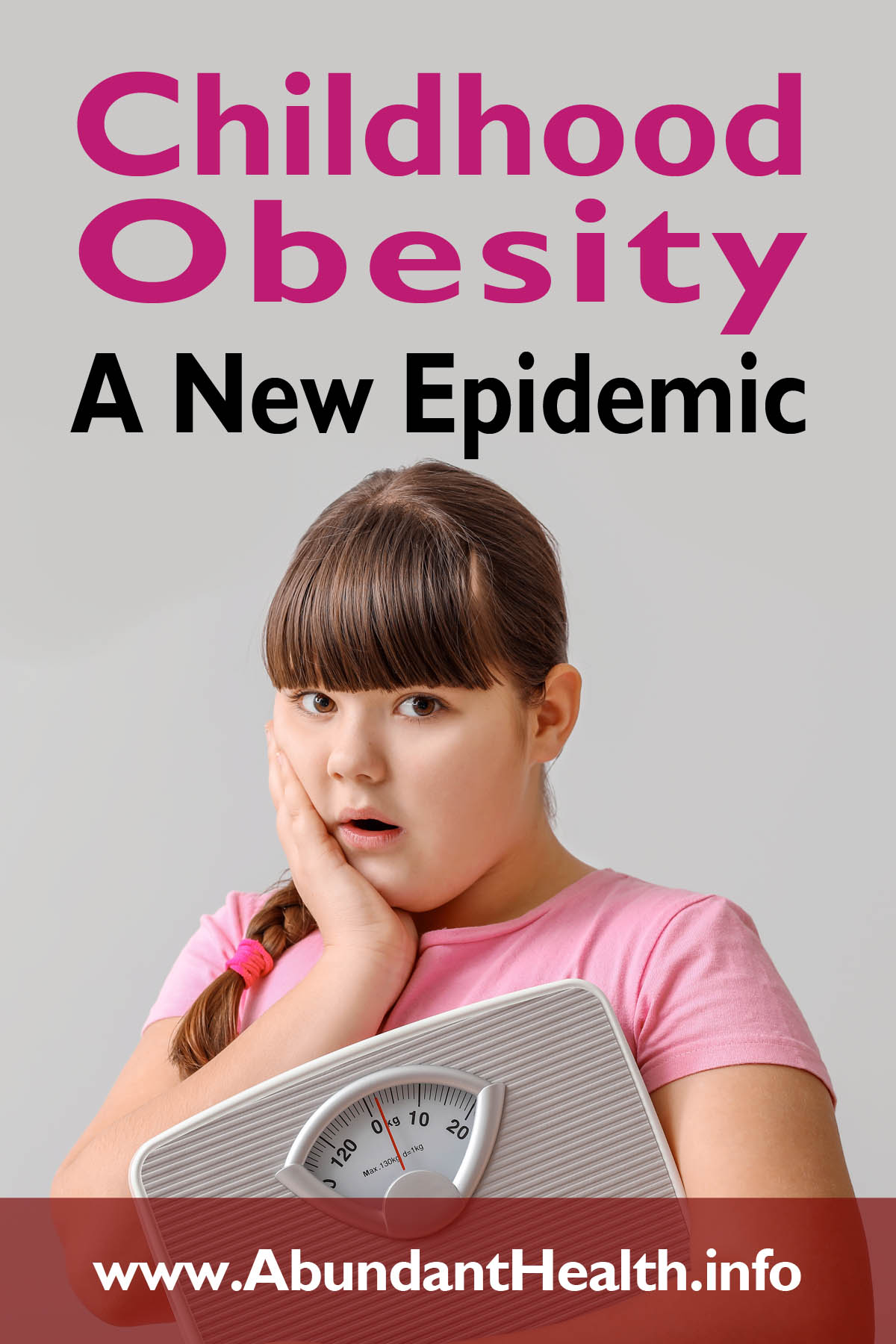
Look at these facts: Prevalence has increased more than 50% in the last 10 years! It involves, but is not limited to Australia, Japan, Brazil, Chile, Western Samoa, Mauritias, India, and China. It is described by the World Health Organization as “a complex condition, one with serious social and psychological dimensions, that affects virtually all ages and socioeconomic groups and threatens to overwhelm both developed and developing countries.”
How do we define childhood overweight and obesity?
It’s a matter of a comparison of a child’s weight with his height. Scientists have actually developed an easy way to figure it out mathematically. They came up with a figure called the Body Mass Index (BMI), and this figure can be compared with that of millions of children, worldwide.
if a child’s BMI is between 85 and 95% of children of his age, he is at risk for overweight. if it is more than 95%, he is overweight. This leaves a broad middle band for variation due to genetics, individual differences of normal metabolism, and other factors.
But so what?
Suppose a child really is overweight. What harm is that? Don’t hold your breath while we look at these facts: risk factors for heart disease which are associated with obesity—high blood pressure, high blood fats, excessively high insulin levels (related to diabetes), childhood diabetes (type Z)—8% to 45% among newly diagnosed children and adolescents, ovarian hyperandrogenesis (excessive secretion of male hormones by ovaries), breathing problems, pseudo-tumor cerebri (brain edema, increased pressure in head with headache, nausea and vomiting), Blounts disease (sterile destruction of part of shinbone causing bowlegs), slipped capital femoral epiphysis (dislocation of growing bone at top end of thigh bone), flatfeet, gallstones, fatty liver, social discrimination, low self-esteem, depression, and distorted body image. More than meets the eye, isn’t it!
How does obesity in childhood affect adult health?
Data indicate that the younger a child becomes obese, and the more obese he is at that age, the more obese he will be at any certain later age.
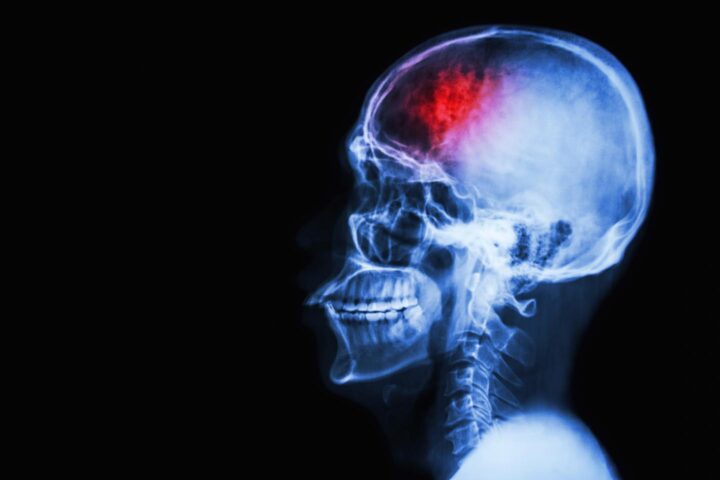
In the Harvard Growth Study, the relative risk of death from all causes, are compared with the risk for non-obese men, was almost twice as great. For coronary heart disease, it was 2.3 times greater. Colo-rectal cancer risk was 9.1 times greater, and a whopping 13.6 times greater risk of obese men developing cerebral vascular disease—mostly strokes—was found.
What causes obesity in children?
Yes, there are some genetic relationships, but the only study found to be significant is one of identical twins.
- Environmental factors: family attitudes and relationships, socio-demographic and other factors.
- In utero environment and infancy: both low and high birthweight were associated with obesity, breast feeding was associated with normal weight.
- Socioeconomic factors: in a study (N1-IANES) comparing prevalence of overweight between non—hispanic white, non—hispanic black, and hispanic children by sex and age, fewer white children were overweight than ethnic ones in about all categories.
- Acculturation: U.S. born were more obese than foreign-born.
- Parental attitudes: more frequently, “like parent—like child.”
- Parental information.
- Parental practices: both over—restriction and inadequate parental limit-setting as well as parental neglect were associated with more obesity.
- Amount of parental education: this seemed not to be significant in 9-10 year old black girls, whereas 29% of white girls whose parents had no high school education were overweight, 25% whose parents had had some college, and 16% of those whose parents had at least 4 or more years of college, were obese.
- The number of siblings did have some effect:
| # of siblings | black | white |
|---|---|---|
| 0 | 35% | 29% |
| 1 | 34% | 21% |
| 2 | 28% | 20% |
| 3 or more | 26% | 14% |
What made the difference? As you would anticipate, the caloric intake and increased portion size were associated with obesity, as were fast food eaten, fewer family meals, and soft drink usage. Decreased activity and increased inactivity were factors. The adherence to U.S. Dietary Guidelines was less in the obese group—fewer grains, much more added sugar, less dairy, fewer vegetables, much less fruit, less meat, and much more added fat.
In all adolescents studied, the calories contributed by soft drink consumption is of significance:
| Soft drinks consumed | calories | % protein | calcium (mg) |
|---|---|---|---|
| none | 1980 | 16 | 820 |
| 0.1 to 13 oz/d (1 – 370 ml/d) | 2150 | 16 | 800 |
| 13 to 26 oz/d (370 – 740 ml/d) | 2300 | 15 | 650 |
| more than 26 oz/d (740ml/d) | 2600 | 13 | 635 |
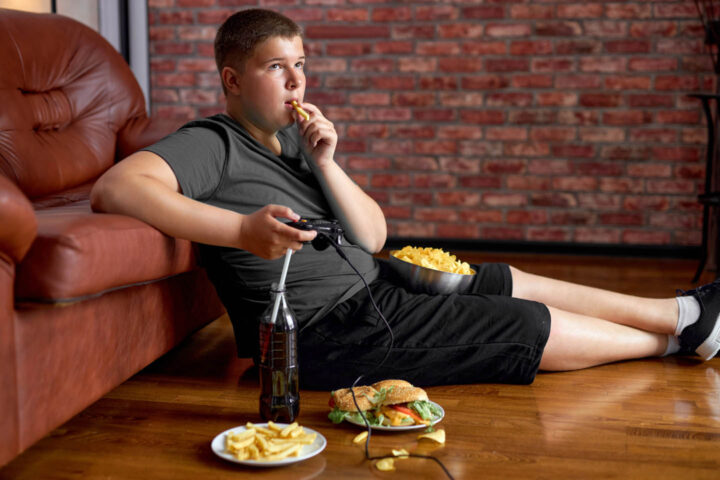
A number of studies had related low amounts of physical activity to childhood obesity: body fat mass was inversely related to physical activity in hours per week and time spent in sedentary activities—the more the activity, the less the body fat mass—preschool children with low physical activity gained substantially more subcutaneous fat than did the more active children.
TV viewing and childhood obesity:
- Mechanisms: less energy required to watch TV than to be physically active.
- Increased eating during viewing or from the effects of food advertising.
- Decreased metabolic activity during viewing.
- Epidemiologic studies: statistically significant correlation between hours per day watching TV and prevalence of obesity.
- Experimental studies: Reducing children’s television viewing to prevent obesity—a randomized controlled trial—7 hour per week television, video game and video budget resulted in statistically significant relative decrease in BMI (-0.45 kg/m2), triceps skinfold, and waist circumference.
So—The Number One Question—What Can We Do about it?
- Primary Medical Care
- Basic assessment of weight status: compare BMI with growth charts
- Note pattern of weight gain, stage of puberty, body shape and size of other family members.
- Educate family regarding healthful food and encourage providing nourishing meals, eaten in a pleasant environment.
- Evaluate possibility and causes of emotional overeating and suggest corrective measures, including psychiatric help if necessary.
- Encourage division of responsibility in eating—Parent provides healthy food at regular meals: child decides whether or not to eat, and how much to eat from what is offered.
- Encourage child and family activities.
- Set limits for TV, video games and computer time.
- Evaluate and deal appropriately with medical risks.
- Evaluate and deal appropriately with psychosocial risks: home, school, friends, depression, stress, risk behavior, family readiness to change.
- Recognize the problem as really one of the family rather than the child.
- Care: Monitor and encourage change, obtain necessary referrals: counseling for serious psychosocial matters, pediatric medical specialists, comprehensive family-based program with attention to behaviors, counsel with registered dietitian.
Recommendations for weight management:
- For children two to seven years: weight maintenance unless there are complications.
- For children seven years or older (at risk for overweight): maintenance if no complications, weight loss if complications.
- Overweight: weight loss.
What Can Public Health Services Do?
Schools can increase the amount and quality of physical education, integrate food and nutrition education into their curricula, increase accessibility, appeal, and healthy choices in school meals, and limit the availability of high-calorie, nutrient-poor foods and beverages in school stores, vending machines, and a-la-carte offerings.
Communities can promote convenient, safe, and adequate places for children to play and take part in physical activity. They can encourage urban designs to create opportunities for activity, and support programs which enable parents to model and support healthy lifestyles for their children.

Media can reduce or eliminate messages promoting unhealthful eating, sedentary lifestyles and body dissatisfaction.
Food manufacturers can limit marketing of high-calorie, nutrient-poor food products to children.
They can adopt a policy of promoting access to health services for children, insurance coverage for family-based prevention and treatment of childhood overweight, and promote the funding of applied research to identify successful intervention to prevent childhood overweight.
Sounds like utopia, doesn’t it? But coming close to home, what can we, as individuals do? Most importantly, we can become informed in the area of adequate, affordable nutrition. We can develop and maintain a consistent, do-able, appealing, and nutritious diet and eating style which will look good, taste good, and be good for us—attractive in appearance, taste appeal, and healthful—all in the same package, and model this at every opportunity. Simply obviously enjoying attractive, healthful food will develop some mentoring and following. As opportunity affords, on suitable occasions—picnics, brown bag lunches, fellowship dinners, special occasions—we can serve superior food freely. Ours can be the best set table of home-prepared food available. We can take advantage of every opportunity to teach what we know, simply, easily. Professional nutritionists and food service personnel can maximize every opportunity to advance the goals outlined above.
But beyond that we do well to consider most important the highest dimension of the child’s, and the parents’ personality and personhood, for what is man better than a highly developed animal, without the spiritual dimension? The Judeo-Christian world view, as well as the concept of personhood, predicates a very real personal God who is deeply concerned and involved with the well-being of the children He created. He not only instructs in science and revelation but accompanies that information with promises of help in bringing our lifestyle and behavior, including that of control of food choices and appetites, into accord with the best functioning of the mental, physical, and spiritual well-being of every individual.
if we do—untold good will result—now and throughout all future time for the individual and the race. If we don’t….

Stay Always Up to Date
Sign up to our newsletter and stay always informed with news and tips around your health.
This article was published originally in the Journal of Health and Healing, a publication of Wildwood Institute.

Dr. Haddad has been a teacher all her life, and loves teaching. Her pre-doctoral education was obtained at La Sierra university and Loma Linda University School of Public Health, her Doctoral work at Loma Linda University.
Marjorie has been instructor at the School of Public Health in Loma Linda, until she moved 1977 with her husband to Wildwood Lifestyle Center & Hospital where she served for many years as the Editor in Chief of the Journal of Health and Healing.
Leave a Reply