The prevalence of premenstrual syndrome (PMS) in young women is surprisingly high. They are affected regardless of socioeconomic status, race or cultural background.1)Schellenberg R., Treatment for the premenstrual syndrome with agnus castus fruit extract: prospective, randomized, placebo controlled study. British Medical Journal (Clinical research ed.), 322(7279):134-7, 2001. Nearly every woman experiences at least one PMS symptom sometime in her life; and it is estimated that 85-97% of women suffer from 1 or more symptoms. Specific symptoms vary from woman to woman. Quality of life is negatively influenced by PMS in 30-40% of women of reproductive age, and 5-10% suffer from severe complaints.2)Kraemer GR and Kraemer RR., Premenstrual syndrome, diagnosis and treatment experience. The Journal of Women’s Health, 7(7):893—907, 1998.3)Loch EG, et al., Treatment of premenstrual syndrome with a phytopharmaceutical formulation containing Vitex agnus castus. Journal of Women’s Health & Gender-Based Medicine, 9(3):315-20, 2000.4)Daugherty JE., Treatment strategies for premenstrual syndrome. American Family Physician, 58(1):183-92; 197-8, 1998.
.jpg)
The American College of Obstetricians and Gynecologists defines premenstrual syndrome as the cyclic occurrence of symptoms that are sufficiently severe o interfere with some aspect of life, and that appear consistently and in a predictable relationship to the menses.5)The American College of Obstetricians and Gynecologists, Clinical Management Guidelines, 15, 2000 A diagnosis of PMS must be based on diaries kept by women charting their symptoms for at least two to three consecutive months. Symptoms must occur during the last 14 days of the menstrual cycle (the luteal phase), have a major impact on normal functioning, and disappear by the end of the period.6)O’Brien PM, et al., Premenstrual syndrome is real and treatable. Practitioner, 44(1608):185-9,191;194-5,2000.
Symptoms of PMS
Women with PMS have reported more than 100 different symptoms.7)Loch EG, et al., Treatment of premenstrual syndrome with a phytopharmaceutical formulation containing Vitex agnus castus. Journal of Women’s Health & Gender-Based Medicine, 9(3):315-20, 2000. These symptoms appear to be both psychological and physical.8)O’Brien PM, et al., Premenstrual syndrome is real and treatable. Practitioner, 44(1608):185-9,191;194-5,2000. Typical psychological symptoms include mood swings, irritability, aggression, anxiety, depression, tension, and feeling out of control. Physical symptoms include abdominal bloating, fatigue, food cravings, weight gain, headache, and breast swelling before menses. Women with PMS usually have these symptoms during the 5 to l0 days just before their period.
Cause of PMS
The cause of PMS is not completely understood, but a wide variety of mechanisms has been proposed, such as hormonal change, effect of neurotransmitters, diet, drugs, lifestyle, estrogen imbalance, deficiency of essential fatty acids, and vitamin B6 deficiency.9)Schellenberg R., Treatment for the premenstrual syndrome with agnus castus fruit extract: prospective, randomized, placebo controlled study. British Medical Journal (Clinical research ed.), 322(7279):134-7, 2001.10)Loch EG, et al., Treatment of premenstrual syndrome with a phytopharmaceutical formulation containing Vitex agnus castus. Journal of Women’s Health & Gender-Based Medicine, 9(3):315-20, 2000.11)Berger D, et al., Efficacy of Vitex agnus castus L. extract Ze 440 in patients with pre-menstrual syndrome (PMS). Archives of Gynecology and Obstetrics, 264(3):150-3,2000.12)Bendich A., The potential for dietary supplements to reduce premenstrual syndrome. Journal of the American College of Nutrition, 19(1):3-12, 2000. Therefore, various therapeutic strategies have been utilized, but have been either controversial or have adverse side effects.

For women with mild symptoms, education, supportive counseling, and general self-care measures such as exercise and healthy diet are sometimes beneficial, and for women with severe symptoms, a variety of drugs is available to help alleviate the symptoms.13)Bendich A., The potential for dietary supplements to reduce premenstrual syndrome. Journal of the American College of Nutrition, 19(1):3-12, 2000. The desire for safe and effective non-drug treatment has prompted many women to consider the use of dietary supplements and herbal products.
What about the use of supplements?
Many types of dietary supplements have been used to reduce certain symptoms related to PMS. Calcium has been demonstrated to be of significant benefit as determined by a large, rigorous, double-blind, placebo-controlled trial, but its precise role in PMS needs to be further investigated.14)Bendich A., The potential for dietary supplements to reduce premenstrual syndrome. Journal of the American College of Nutrition, 19(1):3-12, 2000. Trials of vitamin B6 supplementation have had conflicting results. High doses of vitamin B6 (200 mg/day or more) for prolonged periods of time may cause neurological symptoms.15)Daugherty JE., Treatment strategies for premenstrual syndrome. American Family Physician, 58(1):183-92; 197-8, 1998. Evidence suggests that magnesium and vitamin E supplements might also be helpful, but this needs additional research. There is a need for a safe treatment that alleviates both physical and psychological complaints of PMS.
A variety of herbal products such as chasteberry has been suggested to reduce PMS symptoms. Research shows positive results. Women supplementing with chasteberry had a noticeable reduction in symptoms of anxiety, depression, water retention, and breast tenderness.16)Schellenberg R., Treatment for the premenstrual syndrome with agnus castus fruit extract: prospective, randomized, placebo controlled study. British Medical Journal (Clinical research ed.), 322(7279):134-7, 2001.17)Loch EG, et al., Treatment of premenstrual syndrome with a phytopharmaceutical formulation containing Vitex agnus castus. Journal of Women’s Health & Gender-Based Medicine, 9(3):315-20, 2000.18)Berger D, et al., Efficacy of Vitex agnus castus L. extract Ze 440 in patients with pre-menstrual syndrome (PMS). Archives of Gynecology and Obstetrics, 264(3):150-3,2000.
Chaste Tree Berry
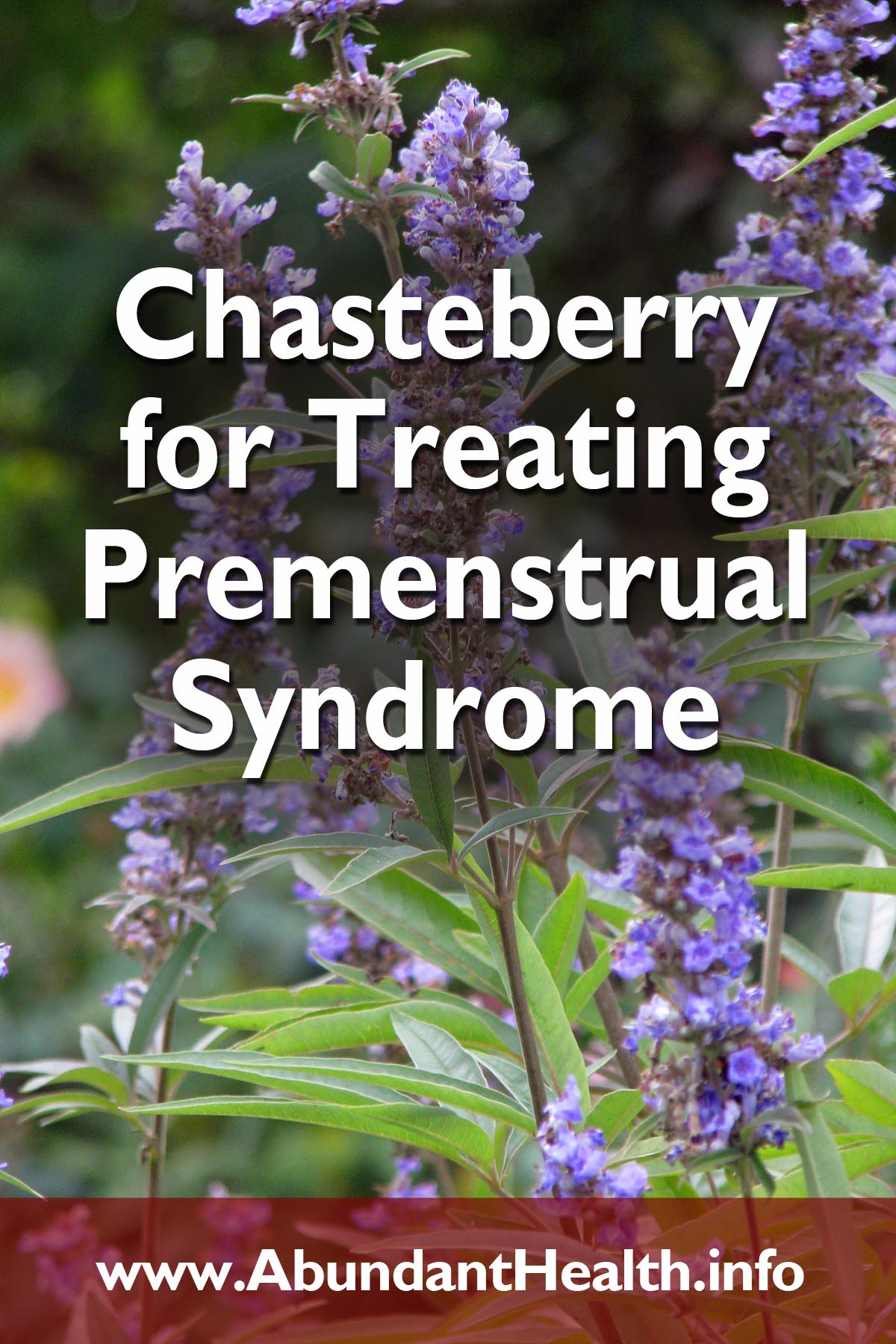
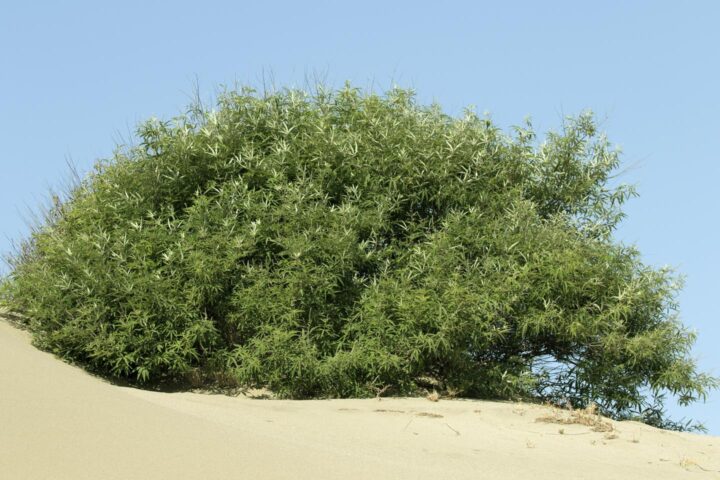
Chaste tree, or monk’s pepper, belongs to the Verbena family; its scientific name is Vitex agnus castus. It originated in the Mediterranean region and the Crimea. Nowadays it is also found in most warm areas of Asia, Africa and America. It is a shrub with finger-shaped leaves and slender violet flowers. It blooms in the summer and develops round, black-brown fruits. The fruit has a spicy pepper-like aroma and taste. The dried ripe fruits contain iridoids, flavonoids, and a progesterone-like compound. The essential oils are used medicinally.19)Hardy ML, Herbs of special interest to women. Journal of the American Pharmaceutical Association (Washington D.C.),40(2)234-42,1996,2000

The plants berries are thought to affect the pituitary, a small but powerful gland in the brain, which regulates hormonal production in the body.20)Hardy ML, Herbs of special interest to women. Journal of the American Pharmaceutical Association (Washington D.C.),40(2)234-42,1996,2000 Vitex is thought to stimulate the pituitary gland to produce more luteinizing hormone, and this leads to greater production of progesterone. Studies have shown that using chasteberry once a day over a period of several months helps normalize hormone balance and alleviate the symptoms of PMS. Thus, it can help restore normal menstrual cycles and improve emotional health.
Clinical Research
In a prospective, multicenter trial in Germany, Berger and his associates evaluated the clinical efficacy and tolerance of chaste tree extract (Ze 440) in 50 women suffering PMS. This extract was standardized to guarantee high reproducibility of the extract. The patients were treated daily with one tablet during three menstrual cycles. Forty-three patients completed the whole study protocol, which includes eight menstrual cycles. The PMS-related symptoms were reduced by the treatment. The severity of symptoms returned after cessation of the treatment.21)Berger D, et al., Efficacy of Vitex agnus castus L. extract Ze 440 in patients with pre-menstrual syndrome (PMS). Archives of Gynecology and Obstetrics, 264(3):150-3,2000.
After that, in a larger trial by Schellenberg and colleagues, the efficacy of Ze 440 was evaluated and shown to be effective in reducing PMS-related symptoms. 170 women with an average age of 36, and diagnosed with PMS, participated in a randomized, double-blind, placebo-controlled study over three consecutive menstrual cycles. The main objective of this study was to compare the efficacy and tolerability of chaste tree fruit (Ze 440) with placebo. The women received either one 20 milligram tablet of Vitex extract or a placebo pill each day at the start of their menstrual cycle. They were asked to rate changes in PMS symptoms, such as irritability, mood changes, anger, headache, breast tenderness, and bloating.22)Schellenberg R., Treatment for the premenstrual syndrome with agnus castus fruit extract: prospective, randomized, placebo controlled study. British Medical Journal (Clinical research ed.), 322(7279):134-7, 2001.
After three months of treatments, both the participants and their physicians assessed the symptoms. The evaluation included an assessment of severity of condition, overall improvement, and risk or benefit. The results showed that 52% of the women taking Vitex had significant improvement, compared to 24% in the placebo group. The greatest benefit was seen in reductions of mood changes, anger, headache, breast fullness and irritability. The only symptom that didn’t seem to change significantly in the herbal group was bloating before their period.

There were few mild reports of adverse events: four in the treatment group (acne, multiple abscesses bleeding between their periods, and hives) and three in the placebo group (acne early menstrual period, and gastric upset). None of these symptoms led the women to withdraw from the study Overall, patient acceptance was high and side effects were few and mild.
Femicur Study
In a large open, uncontrolled study (without a comparison group), the efficacy and tolerance of a new solid preparation from the extract of Vitex called Femicur was tested on patients suffering from PMS. According to the investigators, the different symptoms of PMS fall into four classic “symptom complexes” defined as depression, anxiety, craving, and hyperhydration (DACH). Each capsule contains 1.6-3.0 mg dried extract of Vitex in a ratio of 6.7-12.5:1, equivalent to 20 mg of dried berry.23)Loch EG, et al., Treatment of premenstrual syndrome with a phytopharmaceutical formulation containing Vitex agnus castus. Journal of Women’s Health & Gender-Based Medicine, 9(3):315-20, 2000.
The participants in the study received one capsule of Femicur twice daily. Questionnaires were designed specifically to determine the effect of Vitex on psychological and physical symptoms, the four classic DACH complexes, and single groups of characteristic symptoms. Improvement was assessed according to the standard Clinical Global Impression Scale, which allows patients to rate symptomatic change on a scale of one to seven (very much improved to very much worse).
At the end of the trial, statistically significant decreases were observed in the frequency of all symptoms and DACH complexes. Over one-half of patients reported that they were no longer affected by PMS, 51% had a decrease in symptoms, 6% reported no change, and 1% reported an increase in the number of symptoms. 86% of physicians noted that Vitex treatment was efficacious and 81% of participants rated their status after treatment as “very much or much better.” With regard to tolerability, 94% of the women rated the Vitex preparation as good or very good, and no serious side effects were reported.
Safety Issues
Although chaste tree berry extracts do not contain hormones, it should not be used together with birth control pills or other hormone replacement therapies without the supervision of a healthcare professional. Chaste tree berry extract should not be used during pregnancy or lactation.
Conclusion
Studies have shown that chaste tree’s (Vitex agnus castus) fruits or extracts are clinically effective for the treatment of PMS symptoms with few side effects. The treatment seems to reduce the symptoms rather than the duration of PMS.

Stay Always Up to Date
Sign up to our newsletter and stay always informed with news and tips around your health.
This article was published originally in the Journal of Health and Healing, a publication of Wildwood Institute.

Julienne was a graduate student in the Nutrition Department at Andrews University, Berrien Springs, Michigan, when writing this article.
References
| ↑1, ↑9, ↑16, ↑22 | Schellenberg R., Treatment for the premenstrual syndrome with agnus castus fruit extract: prospective, randomized, placebo controlled study. British Medical Journal (Clinical research ed.), 322(7279):134-7, 2001. |
|---|---|
| ↑2 | Kraemer GR and Kraemer RR., Premenstrual syndrome, diagnosis and treatment experience. The Journal of Women’s Health, 7(7):893—907, 1998. |
| ↑3, ↑7, ↑10, ↑17, ↑23 | Loch EG, et al., Treatment of premenstrual syndrome with a phytopharmaceutical formulation containing Vitex agnus castus. Journal of Women’s Health & Gender-Based Medicine, 9(3):315-20, 2000. |
| ↑4, ↑15 | Daugherty JE., Treatment strategies for premenstrual syndrome. American Family Physician, 58(1):183-92; 197-8, 1998. |
| ↑5 | The American College of Obstetricians and Gynecologists, Clinical Management Guidelines, 15, 2000 |
| ↑6, ↑8 | O’Brien PM, et al., Premenstrual syndrome is real and treatable. Practitioner, 44(1608):185-9,191;194-5,2000. |
| ↑11, ↑18, ↑21 | Berger D, et al., Efficacy of Vitex agnus castus L. extract Ze 440 in patients with pre-menstrual syndrome (PMS). Archives of Gynecology and Obstetrics, 264(3):150-3,2000. |
| ↑12, ↑13, ↑14 | Bendich A., The potential for dietary supplements to reduce premenstrual syndrome. Journal of the American College of Nutrition, 19(1):3-12, 2000. |
| ↑19, ↑20 | Hardy ML, Herbs of special interest to women. Journal of the American Pharmaceutical Association (Washington D.C.),40(2)234-42,1996,2000 |
Leave a Reply