In the whole food, plant-based world, many health-conscious eaters try to eliminate concentrated sugar from their diet, often left wondering which natural sweeteners offer the best nutrition – and if we can have too much of a good thing. The short answer is yes; there are guidelines and limits we should consider – because not all plant-based sweeteners are created equally.
The following options are considered to be the most beneficial:
Fresh Fruits. Described as nature’s candy, whole food sources such as fruit should always be our first choice. Fruits are an ideal sweetener due to their beneficial nutrients, vitamins, minerals, the water content, and the fiber which slows the absorption of sugar into our bloodstream and prevents sugar spikes. Fresh and frozen fruits are often used in baked goods, salads, smoothies, dressings, main dishes, and desserts such as nice cream.
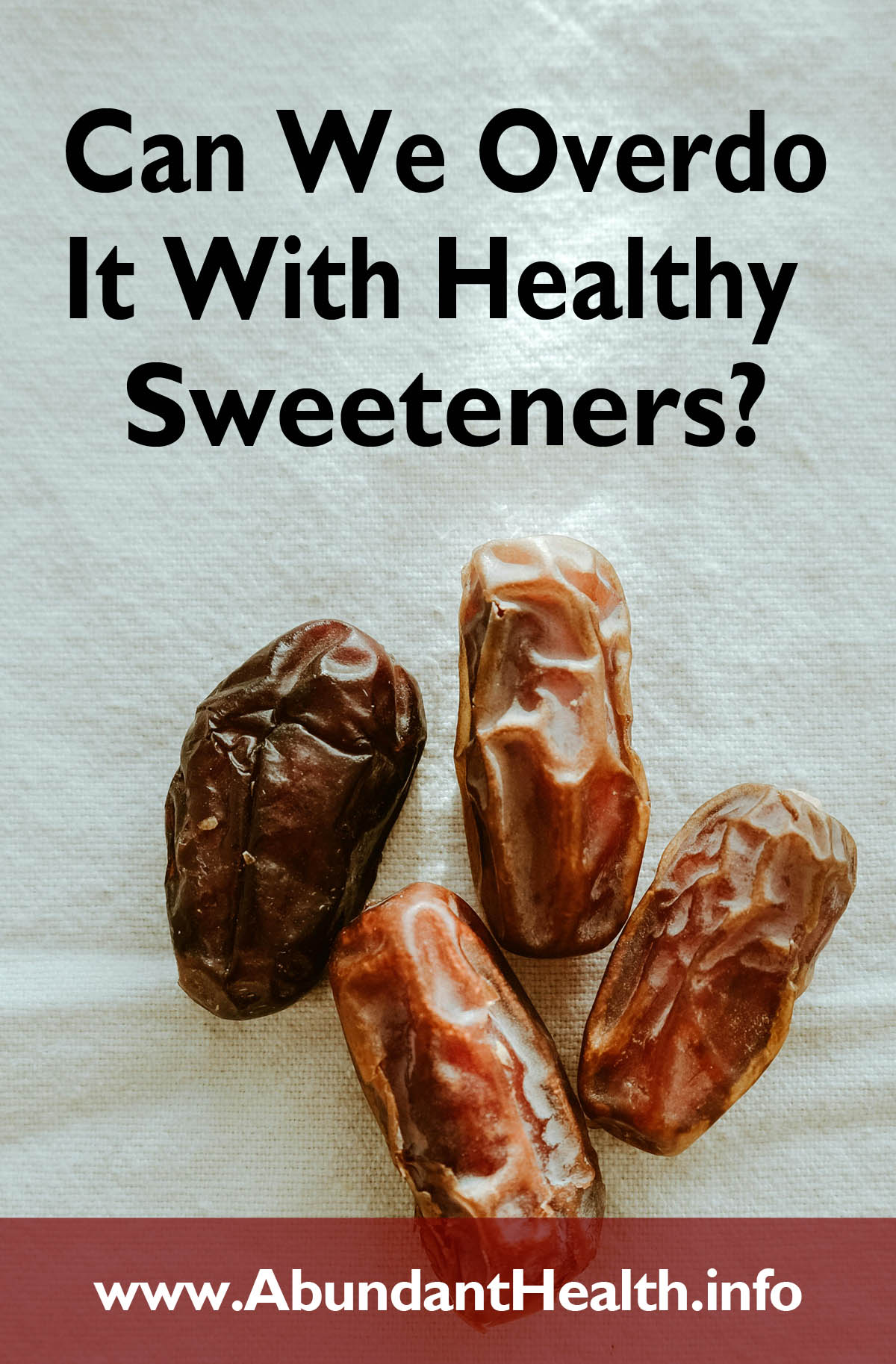
Dates. Dates are another whole food packed with fiber, water, antioxidants, vitamins, and minerals. However, they also contain high levels of natural sugars such as fructose and glucose. When water is removed during the drying process, the sugar content increases and makes them intensely sweet. Dates are often used to sweeten desserts, muffins, sauces, dressings, shakes, and energy bites.
Date Paste and Date Syrup. Date paste is made by simply blending whole dates with water into a smooth, thick consistency. Date syrup, on the other hand, is a thick, sweet liquid made by extracting the natural sugars from dates – usually through a simmering and pressing method. These products are used in baked goods, desserts, marinades, sauces, or to sweeten a hot drink.
Other Options: The National Health Association1)https://www.healthscience.org/ Fall 2025 Magazine article. recommends that all sweeteners must be fruit- or vegetable-based; some light processing – such as adding liquid – is acceptable. For example, sweet potatoes are a smart choice, and foods such as unsweetened applesauce and fresh fruit juice can also be used to sweeten desserts in small and infrequent quantities. Date sugar is not recommended due to the concentration of sugars that result from the drying process, and maple syrup is also best avoided due to its lack of fiber.
Other Sweeteners on the Market
Often marketed as healthier than table sugar, other natural sweeteners come in a wide variety of options, including agave nectar, brown rice syrup, coconut sugar, palm sugar, cane juice, raw sugars, sorghum syrup, and others. Marketing often presents them as healthier than table sugar, but the nutritional content and levels of processing in these products vary. While some of these sweeteners provide a few more nutrients than table sugar, the bad news is that they’re all still processed forms of sugar which are high in calories.
What about stevia and monk fruit, two popular plant-derived sweeteners which are not a significant source of calories? Let’s start with stevia. The research regarding stevia’s effect on the gut microbiome is inconsistent; some studies suggest stevia consumption can change the types and amounts of bacteria in the gut, while other studies report no significant impact. The majority of studies do agree that further long-term research is needed.
Also, the World Health Organization (WHO), advises against the use of non-sugar sweeteners (NSS), including stevia and stevia derivatives. The WHO recommendation is based on a systematic review that the use of NSS does not have any long-term benefit in reducing body fat in adults or children; their review also suggests there may be potential, undesirable health issues from the long-term use of NSS.2)https://www.who.int/news/item/15-05-2023-who-advises-not-to-use-non-sugar-sweeteners-for-weight-control-in-newly-released-guideline It should be noted that some stevia products also contain sugars or other chemical sweeteners – such as maltodextrin or dextrose – which can impact blood sugar levels.3)https://www.medicalnewstoday.com/articles/322426#safety-and-side-effects
If you choose to consume stevia, it’s important to check your labels.
When it comes to monk fruit, advertisements often promote it as having potential health benefits without the negative effects of sugar. Monk fruit has a long history of use as a sweetener in traditional Chinese medicine and has been given the status of GRAS (Generally Recognized as Safe) by the Food and Drug Administration (FDA). However, at the time of this writing, monk fruit has still not been approved by the European Food Safety Authority (EFSA) because of a lack of long-term safety data, and possible reproductive side effects the panel couldn’t confidently rule out as insignificant.4)https://neulife.com/blogs/news/why-monk-fruit-is-still-not-approved-in-europe-what-efsa-actually-said Additionally, Dr. Michael Greger cites research on his website which demonstrates the delayed blood sugar spikes attributed to both stevia and monk fruit.5)https://nutritionfacts.org/video/is-monk-fruit-sweetener-safe/
Your Overall Dietary Pattern
So, how much ‘natural sugar’ is too much? As with many nutrients, it can be difficult to find a “one size fits all” number; much could depend on your health status and activity level. What DOES apply to everyone, however, is the importance of your overall dietary pattern. Your routines and daily choices matter greatly, with meals and go-to snacks centered around starches, non-starchy vegetables, greens, fruits, whole grains, beans, legumes, and good clean water.
That’s not to say we can never enjoy healthy treats, but there’s a difference between healthy meals and healthy treats. Meals nourish our bodies with nutrients that provide energy and satiety. Sweet treats can satisfy a craving or add a little indulgence, but they aren’t meant to be foundational to our health. Added sweeteners have a limit and should be consumed sparingly or not at all, especially if weight loss is a goal. The one exception is the ideal sweet food – fruit.
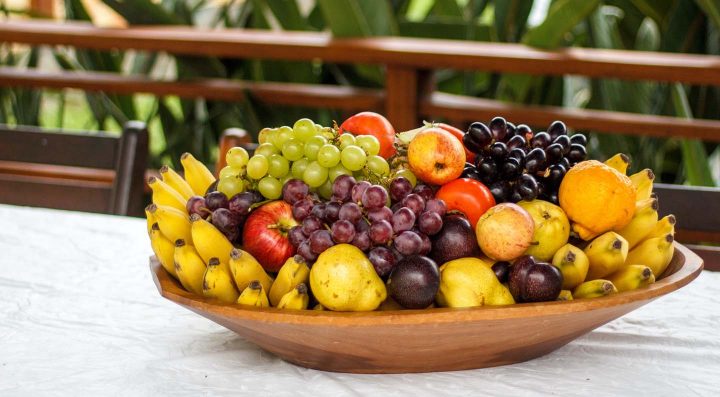
Fresh or frozen fruit should be included in our daily fare – and fruit makes great treats! As part of our meals, fruit can be added to steel-cut oats, salads, and even main dishes. As a treat, sweet fruits such as bananas, cherries, mango, and pineapple make incredible nice creams, smoothies, cobblers, and parfaits. And who doesn’t love baked pears? Of course, fruit is also an excellent snack. Grapes, mandarin oranges, plums, and apples require no prep, are easy to carry, and don’t need refrigeration. Enjoy several servings of fruit each day!
Dates are also a wonderful, whole food sweetener. They are minimally dried (the fresh fruit itself is already wrinkly), and the fiber in dates causes the body to digest them slowly, However, dates and other dried fruits are higher in calorie density than fresh fruits (1250 calories per pound verses roughly 200 – 300 calories per pound – 2750 calories/kg versus 400 – 650 calories/kg); for that reason, dried fruits should be used sparingly, if at all, for those struggling with weight issues.
Date paste and date syrup should also be used sparingly, with limited per-serving quantities. For example, if you add 2 Tablespoons (6 teaspoons) of date syrup to a recipe for twelve muffins, each muffin will have one-half teaspoon of syrup.
AHA and WHO Recommended Limits
Let’s take a look at the sugar limits suggested by other organizations. In order to slow the obesity and heart disease epidemics, the American Heart Association (AHA) and Harvard Health recommend that women and children aged 2-18 consume no more than six teaspoons (25g) of added sugars daily. Men should consume no more than nine teaspoons (36 g) per day. This refers to added sugars, not the natural sugar found in fruits and vegetables. They also say that children under two should have NO added sugar. (Note: If 9 teaspoons sounds like a lot, keep in mind that one 12-oz. can of soda pop contains ten teaspoons of sugar).6)https://www.heart.org/en/healthy-living/healthy-eating/eat-smart/sugar/added-sugars
https://www.heart.org/en/news/2023/05/23/kids-and-added-sugars-how-much-is-too-much
https://nutritionsource.hsph.harvard.edu/2016/08/23/aha-added-sugar-limits-childen/
The World Health Organization (WHO) suggests the ideal goal for both children and adults would be to limit ‘free’ sugars to less than 5% of calories. This reduction would also equate to roughly six teaspoons (25g) per day for adults. According to their website, free sugars (such as honey, syrups, and fruit juice concentrates) contribute to unhealthy weight gain, an increased risk of obesity, and various diseases. Again, free sugars do not refer to the sugars found in fruit.7)https://www.who.int/tools/elena/interventions/free-sugars-adults-ncds
https://www.ages.at/en/human/nutrition-food/nutrition-recommendations/who-sugar-recommendations
Granted, the AHA and the WHO are targeting their recommendations to the general population, not necessarily to those who follow a whole food, plant-based diet. But if you’re someone who consumes sweetened foods on a regular basis, then perhaps the AHA and WHO recommendations would inspire you to begin tracking your intake. Do you sweeten your morning beverage? Add date syrup to your dressings? Do you use sweeteners in your sauces and marinades? Add maple syrup to your banana bread recipe? All of it adds up! By keeping track for a few days, at least you’ll become aware of how much added sugar you’re actually consuming, allowing you to adjust accordingly.

According to Anna Taylor, a Cleveland Clinic Registered Dietician, no sugar is healthy in excess. Any natural sugar should also be counted toward your daily sugar intake. “Whether it’s natural or refined, sugar is still sugar and should be limited,” says Taylor. She also points out that sugar is addictive, and the more we eat, the more we’ll want; but cutting back (and cutting out) added sugar is possible.8)https://health.clevelandclinic.org/best-and-worst-sugar-substitutes The ultimate goal, as spelled out above in the NHA Guidelines, is to enjoy sweetened desserts in small and infrequent quantities.
Are Sugar-Free Products Acceptable?
It depends on the product’s ingredient list. In the majority of cases, sugar-free products contain artificial sweeteners, which may seem like attractive alternatives to sugar because they add no calories to your diet and they’re intensely sweet (200 – 700 times sweeter than table sugar).
These fake sweeteners are widely used in processed foods and soft drinks, candy, jellies, puddings, and pretty much anything labeled ‘sugar-free.’ The most popular brands on the market today are aspartame (Equal and NutraSweet), sucralose (Splenda), acesulfame (Sweet One, ACK, Sunett), saccharin (Sweet-n-low), and sugar alcohols such as Xylitol, Erythritol, Sorbitol, and Mannitol. Polydextrose and maltodextrin are other ingredients to be aware of as well.9)https://www.medicinenet.com/what_is_maltodextrin_and_is_it_bad_for_you/article.htm
Mysonhimer AR, Holscher HD. Gastrointestinal Effects and Tolerance of Nondigestible Carbohydrate Consumption. Adv Nutr. 2022 Dec 22;13(6):2237-2276. doi: 10.1093/advances/nmac094.
Artificial sweeteners should always be avoided. Not only do they lead you to crave more sweets, but the health ramifications are many. From gastrointestinal issues to altered gut bacteria which can lead to extra fat storage, these products have no part in a healthy diet. They’re shown to affect glucose tolerance in both diabetics and non-diabetics, and the Cleveland Clinic and others report that sugar alcohols enhance the risk of blood clotting, heart attack, and stroke.10)https://www.health.harvard.edu/staying-healthy/artificial-sugars-may-raise-blood-sugar
https://www.healthline.com/nutrition/artificial-sweeteners-blood-sugar-insulin#effects-on-insulin
https://newsroom.clevelandclinic.org/2024/06/06/cleveland-clinic-led-study-links-sugar-substitute-to-increased-risk-of-heart-attack-and-stroke
https://newsroom.clevelandclinic.org/2024/06/06/cleveland-clinic-led-study-links-sugar-substitute-to-increased-risk-of-heart-attack-and-stroke
The Bottom Line
Can we overdo it when it comes to healthy sweeteners? Absolutely. Sweetness should complement our healthy lifestyles, not be the center of attention. Stay mindful about your sweetener intake. By choosing fruit for our snacks, nice cream, and desserts, while limiting our consumption of other natural sweeteners, healthy treats can be enjoyed responsibly without overindulging.

Stay Always Up to Date
Sign up to our newsletter and stay always informed with news and tips around your health.

Cyd Notter is a Center for Nutrition Studies Certified Professional, a Licensed PCRM Food for Life Instructor, a Certified Starch Solution Instructor, and a former Certified Health Educator for Wellness Forum Health. She’s also a past newspaper columnist and the author of the award-winning book The “Plan A” Diet.
References
Leave a Reply