Emily, a finance manager, has been working 60-hour weeks for several months to meet deadlines. She starts feeling constantly exhausted, both physically and mentally. Work that she once found engaging now seems overwhelming, and she’s easily irritated with her colleagues. Despite putting in more hours, her productivity declines. Eventually, she starts calling in sick frequently and considers quitting her job, feeling like she just can’t keep going anymore.
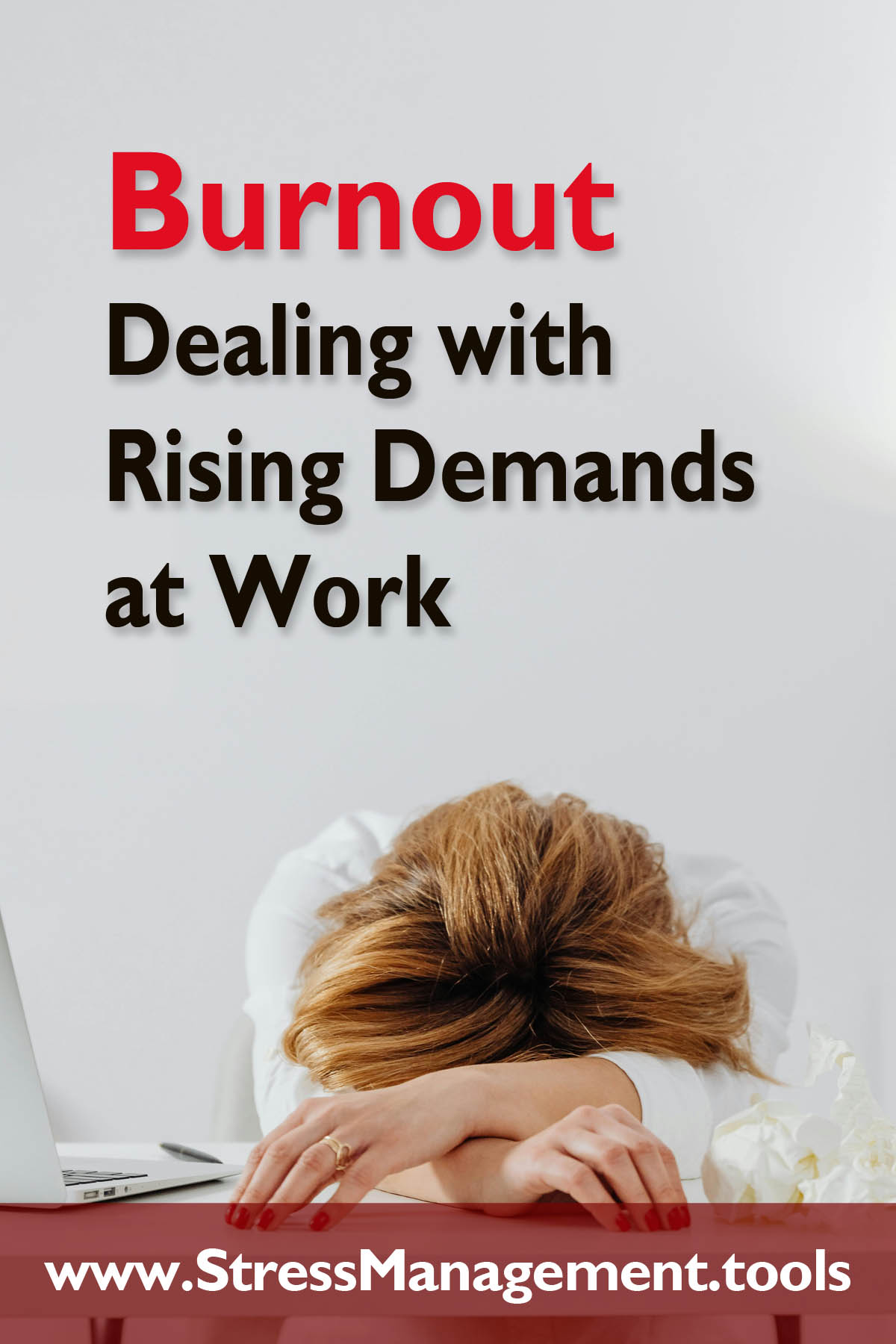
Emily is a victim of burnout. For 2024, World Mental Health Day is focused on workplace health, with the aim of helping people like Emily recognize when work is affecting their well-being, so that they can take steps to address it.1)Announcing 2024 World Mental Health Theme. World Federation for Mental Health. April 17, 2024
Burnout happens when the demands of a job are high for a long time, and are not offset by sufficient mental and physical resources. In this situation, people are no longer able to recover from their demanding job. Their energy is gradually drained, resulting in a state of mental exhaustion, a cynical and negative attitude towards their work, as well as a declining performance.
In other words, people affected by burnout are neither able nor willing to fully function in their job. Burnout can occur in any job, but is most likely in workplaces where demands are high and resources low. It is a widespread phenomenon.
A report by the charity Mental Health UK asserts that the country is on the verge of becoming a burnt-out nation, with 91% of the working adults surveyed reporting high or extreme levels of pressure and stress at some point in the past year.2)Burnout. Mental Health UK
According to the same report, 20% of workers in the UK even took time off work due to poor mental health caused by stress last year.
Research has consistently shown that the primary causes of burnout are excessive and prolonged job demands. This includes, for example, high workloads, job insecurity, role ambiguity, conflict, stress or stressful events, and work pressure.

Burnout has severe consequences, most of all for people affected by it. Burnout impacts people differently, but even mild cases – which could linger for several years – can lead to a multitude of negative health outcomes. This includes work-related anxiety and depression, increased risk of cardiovascular diseases, Type 2 diabetes, insomnia, headaches and perhaps most alarmingly, increased mortality.3)Kirsi Ahola, Ari Väänänen, Aki Koskinen, Anne Kouvonen, Arie Shirom, Burnout as a predictor of all-cause mortality among industrial employees: A 10-year prospective register-linkage study, Journal of Psychosomatic Research, Volume 69, Issue 1, 2010, Pages 51-57, https://doi.org/10.1016/j.jpsychores.2010.01.002.
People with mild cases of burnout are also at risk of developing more severe burnout that will keep them off work sick for long periods.
Burnout is also worrying for organizations as it has a negative impact on creativity, leads to higher employee turnover, increased absenteeism and poor job performance.
The symptoms of burnout differ from one person to another, and sometimes people might not even fully realize they’re burnt out until they are no longer just tired but too exhausted to function.
People who experience burnout are drained of energy and may be overwhelmed even by small tasks. They distance themselves from their work, struggle with self doubt and develop cynical, negative attitudes regarding their job or the people they work for.
When looking for symptoms of burnout, it might help to ask yourself questions like: Do you mostly talk about your work in a negative way? Do you tend to think less about your work and do your job almost mechanically? Do you sometimes feel sickened by your work tasks? Are there days when you feel tired before you arrive at work? Do you often feel emotionally drained during your work? Do you usually feel worn out and weary after your work?
Burnout recovery and prevention needs to help minimize the job demands which cause exhaustion and disengagement. For example, reducing workload and work pressure, and establishing clear boundaries between life and work can help to reduce stressful job demands.
Job resources can also help to mitigate the impact of job demands. This includes things like job control, having a variety of tasks, social support, performance feedback, opportunities for professional development and the quality of a worker’s relationship with their supervisor.
When people have an abundance of these resources, the link between the demands of the job and burnout is greatly reduced because they help workers to cope better.
Recovery is possible
Opportunities for recovery from work-related stress are an especially important job resource in this context. Recovery means that employees have non-work time where they can relax and detach themselves from work. This may include leisure activities that allow people to simply experience pleasure without competitive pressures.

Research has also shown that job crafting is an effective burnout intervention. Job crafting means that employees make small adjustments to both their job demands and resources. Employees can decrease their job demands by taking steps to minimize the emotionally, mentally or physically demanding job aspects or by reducing their workload.4)Moore, C. What is Job Crafting? (Incl. 5 Examples and Exercises). Positive Psychology, May 17, 2019
For example, this might involve looking for a calmer place to work. They can also increase job resources by engaging in professional development, gaining more autonomy at work and by asking others for support, feedback and advice. Over time, engaging in job crafting will lead to lower burnout.
Organizations also need to play their part to reduce burnout. A range of intervention strategies such as stress management training or policies that allow employees to disconnect from work outside of normal working hours are useful tools for combating burnout in an organization.
Do you need a guide to help you understand how to cope with Stress in an all inclusive approach? Learn how to combat stress, mentally, physically, emotionally and strategically in your life.

This article is republished from The Conversation under a Creative Commons license. Read the original article.


Michael Koch is Reader in Human Resource Management & Organisational Behaviour at Brunel Business School, Brunel University London. He has experience in providing consultancy services in a range of HR-related areas, including Rewards Management, Incentive Design, Performance Management, Job Structures and Grading, and HR Strategy.

Sarah Park (PhD, MBA, MA, BA, FHEA) is Professor in International Business at University of Leicester School of Business, University of Leicester. Sarah’s research focuses on international entrepreneurship, entrepreneurial finance, entrepreneurial well-being and entrepreneurial careers.
References
| ↑1 | Announcing 2024 World Mental Health Theme. World Federation for Mental Health. April 17, 2024 |
|---|---|
| ↑2 | Burnout. Mental Health UK |
| ↑3 | Kirsi Ahola, Ari Väänänen, Aki Koskinen, Anne Kouvonen, Arie Shirom, Burnout as a predictor of all-cause mortality among industrial employees: A 10-year prospective register-linkage study, Journal of Psychosomatic Research, Volume 69, Issue 1, 2010, Pages 51-57, https://doi.org/10.1016/j.jpsychores.2010.01.002. |
| ↑4 | Moore, C. What is Job Crafting? (Incl. 5 Examples and Exercises). Positive Psychology, May 17, 2019 |
Leave a Reply