By causing a sharp increase in the risk of heart attack, heart failure, stroke, and kidney failure, high blood pressure seriously damages the heart and arteries. A blood pressure of 120/80 to 139/89 mm Hg is in the normal-to-slightly high range and should be monitored once a year to make sure that it is consistent.1)Good, B., 15 Pressure Cookers. Men’s Health, 14(5):66,1999. Low blood pressure is much more rare, but it could be the problem if you have frequent headaches, fatigue, and fainting spells.
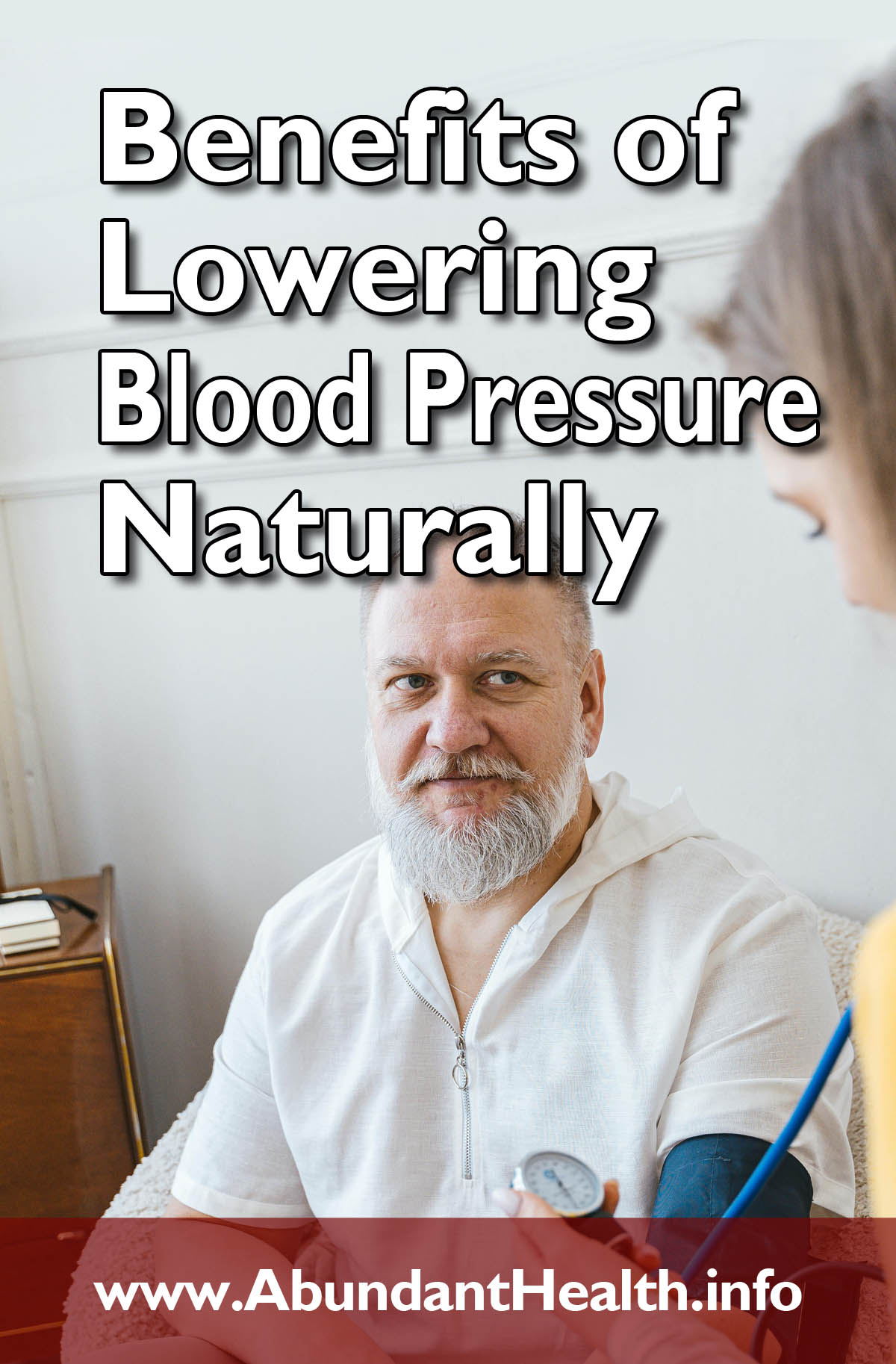
High blood pressure is an important risk factor in some chronic diseases, as findings show that a reduction in diastolic pressure (the lower figure in blood pressure recording-the pressure when the heart is resting) of 2 mm Hg results in a decrease of 6% in coronary heart disease, and a 15% decrease in stroke.2)Hall, R. 12., You Can Lower the Blood Pressure 10 mm Hg with Diet Alone! Internal Medicine Alert, 23(4);25, 2001. Although drug therapy may control hypertension (high blood pressure) and save lives, it can also have significant and harmful side effects. And even more precariously, the long-term benefits and risks of the newer drugs to lower blood pressure, including ACE inhibitors3)Angiotensin-converting enzyme inhibitors are drugs that inhibit production by the body of another body chemical that raises blood pressure. and calcium channel blockers,4)Drugs that block the entrance of calcium into cells and thus decrease constriction of small blood vessels throughout the body; this decreases pressure of heartbeat needed to pump blood to all parts of body are still being studied.
Non-Drug Therapy
Due to these negative effects, the medical world is opting to explore first the non-drug approach-that is, lifestyle changes. Diet is a major weapon of choice that seems to have amazing benefits with simple changes. According to Consumer Reports on Health, reducing sodium intake (as in salt) does not significantly reduce blood pressure in most people with normal pressure.5)Healthy Habits for Hypertension. Consumer Reports on Health, 10(5). However, people with hypertension can experience an average reduction of four to five mm Hg of systolic pressure (the upper figure in a blood pressure record, the pressure when the heart is beating) and one to three mm Hg of diastolic pressure. And the thirty to fifty percent of hypertensive people who are “salt sensitive”6)People whose blood vessels constrict when the amount of sodium (usually from salt) in the blood is elevated, thus forcing the heart to beat harder to push the blood into the myriads of small arteries that feed the tissues. tend to have stronger responses to salt restriction than do people with normal blood pressure.
In the past, researchers had identified potassium as the one nutrient that clearly reduces blood pressure. The reductions, although modest, with an average of less than five mm Hg of systolic pressure and less than three mm Hg of diastolic pressure, were exciting enough to usher in potassium pills, potassium sparing diuretics (such as Aldactone, Dyazide, and Maxzide), and ACE inhibitors (Capoten, Vasotec, Prinivil, and Zestril) that could be harmful for those with impaired kidney function. In addition to potassium, other helpful substances include an increased intake of the nutrients calcium, magnesium, and fiber.
The Dash Study
In a recent study sponsored by the National Institutes of Health (NIH), called the Dietary Approaches to stop Hypertension (DASH), researchers combined all of these factors when they switched their focus to a whole-food diet high in fruits and vegetables and low in fat rather then concentrating upon individual nutrients. The DASH diet includes eight to ten servings of fruits and vegetables a day; two to three servings of low-fat dairy foods; seven to eight servings of grains or grain products; four to five servings a week of nuts, seeds, and beans; and two or fewer servings of meat, poultry, or fish. One serving is equal to one-half cup of cooked vegetables or six ounces (170 ml) of juice.

In people with hypertension, the DASH diet reduced systolic pressure by an average of 1.4 mm Hg and diastolic pressure by 5,5 mm Hg. Rather than rigidly restricting one aspect of the diet, such an eating plan allows people more flexibility and is the kind of diet a person can live with for the long haul.7)Beyond the Salt Shaker. A New Look At Diet and Blood Pressure. Tufts University Health and Nutrition Letter, 15(4):8, 1997.
The Value of Exercise
Besides the diet, exercise is a wonderful weapon of choice to combat hypertension. Regular aerobic exercise reduces both systolic and diastolic pressure by an average of six to seven mm Hg.8)Healthy Habits for Hypertension. Consumer Reports on Health, 10(5). Furthermore, physically active people have a much lower death rate than inactive people, even when their blood pressure is the same. However, people with hypertension should avoid too vigorous aerobic exercise since it could increase their blood pressure to dangerously high levels. Instead, moderate exercise, such as brisk walking and casual hiking or swimming, is much more effective in reducing blood pressure. Strength training also can help lower blood pressure, but one must be sure to exhale during the exertion phase of each exercise and stick to weights light enough to perform ten to fifteen repetitions of each exercise.
Exercise combined with weight loss has the potential to be the first option of choice in the treatment of overweight individuals that have moderately high blood pressure.9)Work Off High Blood Pressure with Exercise, Not Drugs. Heart Disease Weekly, Sept. 3, p. 6, 2000. Individuals who participated in a six-month study were divided into three groups. Group 1 combined exercise with a weight-loss diet; group 2 exercised but did not follow the weight-loss program; and group 3 was a control group that did neither. All participants were moderately overweight men and women aged 29 or older, with sedentary lifestyles and blood pressures ranging from 130 to 180 mm Hg systolic and 85 to 105 mm Hg diastolic pressure.
For group 1, systolic pressure dropped an average of 8 mm Hg and diastolic pressure declined by an average of 6 mm Hg. In group 2, the average systolic reading dropped by only 3.5 mm and the average diastolic reading by 5 mm. On the other hand, the control group showed a minimal decrease of 2 mm in the average systolic reading, while the diastolic pressure remained unchanged. The study results also show that exercise and weight loss helped to keep blood pressure lower even when individuals were under mental stress.

In another study, researchers found that losing just 10 pounds (4.5 kg) lowers the average systolic pressure by nearly 4 mm Hg and diastolic pressure by nearly 3 mm Hg, while greater weight loss will result in greater blood pressure reductions.10)Healthy Habits for Hypertension. Consumer Reports on Health, 10(5). Therefore, exercise in combination with weight loss is an effective drug-free treatment for elevated blood pressure in mild to moderately obese individuals.
Other Helpful Factors
Limiting the use of substances such as alcohol, nonsteroidal anti-inflammatory drugs (NSAlDs), and stopping smoking also help reduce hypertension. Smoking can make some of the anti-hypertensive beta-blocker drugs less effective. More importantly, all hypertensive individuals should seriously consider quitting smoking since the habit sharply increases the risk of cardiovascular disease.
Heavy drinking raises blood pressure, so that the more you drink, the higher your blood pressure. Heavy drinking generally means more than 2 drinks a day for men over age 40, and more than 1 a day for women. For a variety of reasons, the threshold for excessive drinking is even lower in younger men and premenopausal women.
Furthermore, regular use of NSAIDS (such as Advil, Motrin) may boost blood pressure, especially in older people.
Minimizing stress, particularly psychological stress on the job, can also help lower blood pressure. Various suggestions to help fight stress include exercise and relaxation techniques.
Synergy
These individual lifestyle changes are so interrelated that together, they form a synergistic effect greater than each on its own. Diet changes, along with exercise, result in a greater reduction of blood pressure than either on its own. Although both exercise and reduced stress lead to reduced hypertension, exercise is useful as a stress reducer. Amazingly enough, all of these lifestyle changes contribute to healthier lifestyle in general as well as to a reduction of risk in other chronic diseases such as diabetes and cancer.

Stay Always Up to Date
Sign up to our newsletter and stay always informed with news and tips around your health.

Elizabeth Chung, B.S., was a premedical student at Andrews University, Berrien Springs, Michigan, when she wrote this article.
References
| ↑1 | Good, B., 15 Pressure Cookers. Men’s Health, 14(5):66,1999. |
|---|---|
| ↑2 | Hall, R. 12., You Can Lower the Blood Pressure 10 mm Hg with Diet Alone! Internal Medicine Alert, 23(4);25, 2001. |
| ↑3 | Angiotensin-converting enzyme inhibitors are drugs that inhibit production by the body of another body chemical that raises blood pressure. |
| ↑4 | Drugs that block the entrance of calcium into cells and thus decrease constriction of small blood vessels throughout the body; this decreases pressure of heartbeat needed to pump blood to all parts of body |
| ↑5, ↑8, ↑10 | Healthy Habits for Hypertension. Consumer Reports on Health, 10(5). |
| ↑6 | People whose blood vessels constrict when the amount of sodium (usually from salt) in the blood is elevated, thus forcing the heart to beat harder to push the blood into the myriads of small arteries that feed the tissues. |
| ↑7 | Beyond the Salt Shaker. A New Look At Diet and Blood Pressure. Tufts University Health and Nutrition Letter, 15(4):8, 1997. |
| ↑9 | Work Off High Blood Pressure with Exercise, Not Drugs. Heart Disease Weekly, Sept. 3, p. 6, 2000. |
Leave a Reply