Alcohol is almost omnipresent in our environment. Parents, relatives, and friends are role models for more or less successful ways of managing alcohol consumption. Added to this are advertising and movies. The association of alcohol with fun, success, attractiveness, strength, and being cool are images that stick in people’s minds, especially those of young people. The fact that many young people turn to alcohol as a drug has a lot to do with the fact that it is our number one legal drug. It also acts as a kind of ticket to the adult world.

Alcohol is a very peculiar beverage. It has a high potential for addiction. Addiction experts emphasize that regular alcohol consumption leads to far greater problems than illegal drugs, both in terms of quality and quantity.
Cultural and economic factors
Unfortunately, alcohol is inextricably linked to everyday social life. At many occasions and family celebrations, drinking alcohol is the highlight. Alcohol is associated with relaxation and sociability. Anyone who does not want to drink is often portrayed as a spoilsport. This makes peer pressure very strong. This is particularly evident among young people. Even former alcoholics relapse under this strong pressure.
It is often believed that alcohol is a major economic factor in Europe. In reality, it accounts for only about 2% of gross domestic product. Many winegrowers are unable to sell their products and are looking for alternatives. Alcohol taxation has also lost on economic importance.
Consumer behavior
Fortunately, alcohol consumption is declining slightly in general. Unfortunately, women are catching up fast. Their consumption patterns are becoming more and more similar to those of men. This is problematic because women simply cannot tolerate as much alcohol as men. Compared to men, they have a lower percentage of water in their bodies. This means that alcohol is less diluted. Women also break down alcohol more slowly. The combination of alcohol and pregnancy is particularly serious. It can impair the development of the unborn child, even damaging Internal organs. Every year, many children are born with alcohol-related damage.
And there are also the “booze kids.” Children today reach puberty earlier. They also have more pocket money than in the past. This leads to relative independence. And since drinking alcohol is still seen as a ticket to the adult world, it is consumed in abundance.
However, it is the 40- to 50-year-olds who drink the most and most regularly.
Alcopops – Designer drinks
They are sweet, colorful, trendy, chic, and come in handy bottles or cans: lemonades mixed with spirits. The taste of alcohol, which children and young people usually find unpleasant, is masked by high sugar content, carbon dioxide, added flavors, and fruit acids. 12- to 16-year-olds are the target group for these sweet cocktails. Many young people are not sufficiently aware that they are consuming a considerable amount of alcohol. A 0.25-liter bottle contains the equivalent of about two shots of brandy. The carbon dioxide and sugar cause the alcohol to enter the bloodstream very quickly.
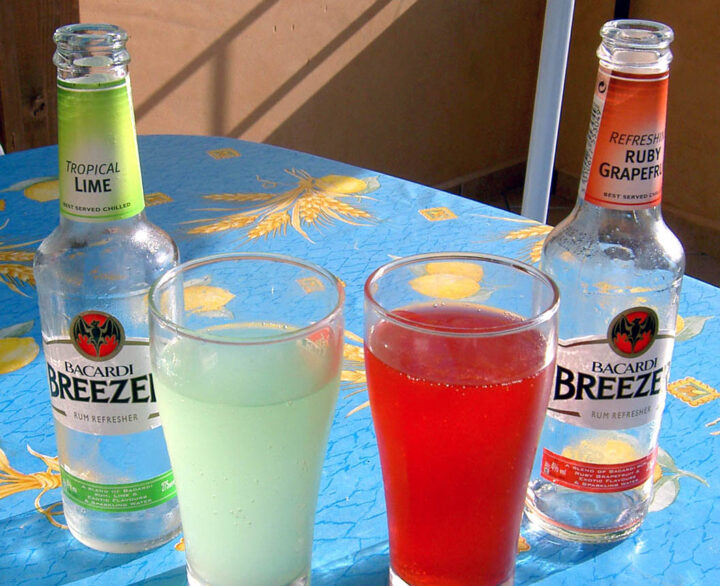
Guarana or caffeine is often added to these drinks, which further intensifies their effect on various organs. This can lead to poor judgment of one’s own reaction, concentration, and coordination of movements. It is easy to drink too much without realizing it, resulting in an unfitness to drive.
Hazardous habit
Chronic consumption is much more dangerous than occasional excesses. Although even these should not be considered harmless. Under the influence of alcohol, people are much more likely to commit crimes because their natural inhibitions are lowered. Unprotected sex, resulting in unwanted pregnancies, also frequently occurs after drinking alcohol. Is it worth it? Because no one knows in advance exactly how they will react under the influence of alcohol and whether they could become dependent, the best course of action is to abstain completely.
Children of habitual drinkers and alcoholics are most at risk. However, it can also happen that the role model has such a deterrent effect that these children decide to lead a teetotal lifestyle. Very inhibited young people and those with low self-esteem are more at risk. A lack of warmth at home, dysfunctional families, a lack of recognition and understanding are further factors that cause young people to easily turn to alcohol. A need for recognition, boredom, a sense of futility and protest are further motives.
We need to consider those motives to find an effective solution to the problem.
Speaking and understanding
It is so important to sit down together, talk about current problems, and look for solutions together. But not only when the problems are already there. Young people must be given responsibilities that allow them to mature and make them feel valuable. Challenging hobbies are extremely important. Physical and mental activity are very valuable, even if this is often difficult to achieve during puberty.

Being a role model is credible! Preaching against smoking and drinking while doing it yourself is not very convincing.
Raising awareness is essential
The brain continues to develop significantly during adolescence. However, the organ most affected by alcohol is the brain. Every time you get drunk, thousands of brain cells die. Your ability to learn and remember is impaired. Your personality development is disrupted. There is no organ or system in the human body that is not damaged by alcohol. The best known is cirrhosis of the liver. But cancer of the esophagus, larynx, and mouth also occur frequently. Nerves, the gastrointestinal tract, the heart, the pancreas, and mental performance are damaged. The risk of physical and psychological dependence is high.
Ethical principles
A few sentences from the “European Alcohol Charter” are intended to stimulate reflection and conclude this article.
- All individuals have the right to a family, social, and work life that is protected from accidents, violence, and other negative consequences of alcohol consumption.
- All individuals have the right to accurate, impartial information and education about the consequences of alcohol consumption for health, family, and society from an early age.
- All children and adolescents have the right to grow up in an environment where they are protected from the negative consequences of alcohol consumption and, as far as possible, from alcohol advertising.
- All individuals at risk of alcohol abuse or alcohol-related harm and their family members have a right to access therapy and support.
- All individuals who do not wish to consume alcohol or who are unable to consume alcohol for health or other reasons have a right not to be pressured to consume alcohol and to be supported in their abstinence.
Alcohol is a great solvent. It dissolves:
- Relationships,
- bank accounts,
- families,
- apartments,
- just it does not solve problems.

Stay Always Up to Date
Sign up to our newsletter and stay always informed with news and tips around your health.

Esther Neumann studied Nutrition at the University of Vienna. Since then she served as an author for the health magazine “Leben und Gesundheit” and conducted health lectures in various locations of Austria.
Leave a Reply