Stroke is so common that all of us have made personal observations and are interested in an overview of restoration following the acute care of an insult to the brain, our ”command center.” This insult was caused by hemorrhage from a blood vessel, blockage of a blood vessel, or by lack of enough blood flow reaching the vessel because of shock or heart failure. Strokes have a vascular origin, but the clinical picture that they present may be similar to what is seen from some head injuries, brain tumors, infections, toxins, and degenerative disorders. All these may benefit from basic principles of rehabilitation, but they must be appropriately applied.
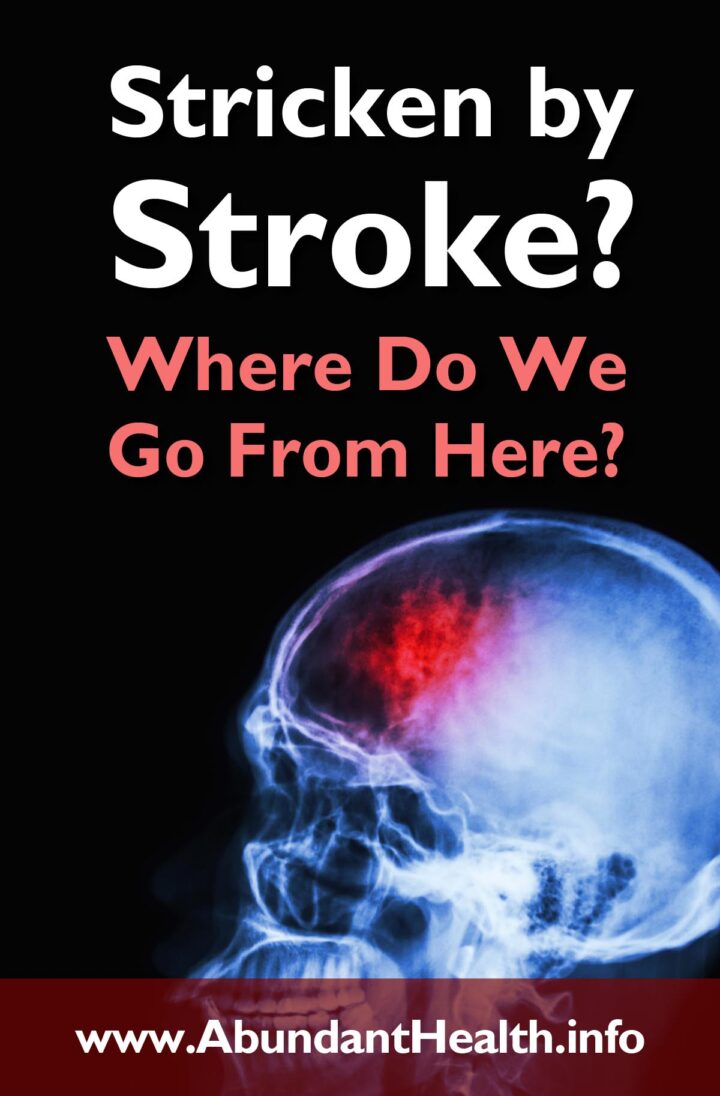
Accurate diagnosis is extremely important—actually essential to well-directed effort. Prompt proper evaluation of suspected strokes is now widely available. This is no time for guesswork. Continuing observation, carefully following developments and studying the patients course, are helpful. As it is said, “time is a great healer.” Time is also a great revealer. An experienced physician will know when it is safe to “buy time” or when expensive tests should be done at once. Feedback to the physician is vital.
Just what part of the brain has been affected? This will determine whether speech, judgment, initiative, balance, coordination, perception of sequence of time or space, walking, vision, or other sensations have been impaired. Results depend greatly on the location and size of the brain insult, but the functional loss or ultimate degree of restoration often depends on the course of action—the actions of those caring for the patient, and the actions and attitudes of the patient himself.
Patients may not be in a good position to evaluate the impact that their neurological change has had. Some feel so threatened by the necessary adjustments that they may deny the problem. Others feel so devastated by their perceptions of their “new selves” that they feel hopeless. Physical, occupational, or speech therapists, neuropsychologists or rehabilitation nurses, may join the physician to round out the evaluation. Social workers and vocational counselors may be needed to define the implications and help map out “the road back.”
There are dangers of going to bed, complications to be avoided. Skin preservation calls for vigilance from the start and involves frequent changes of position, early detection of any redness or other discoloration over bony prominences in such places as the ankles, heels, hips, and low back. Proper positioning, range of motion, and standing at the earliest time practicable, can minimize the tightening that tends to occur in the larger muscle groups. Bladder and bowel training can relieve the obvious deficits, and relieve worries, restoring dignity. Exercising the muscles that are still responsive can minimize physical deconditioning. This can almost always be started early.
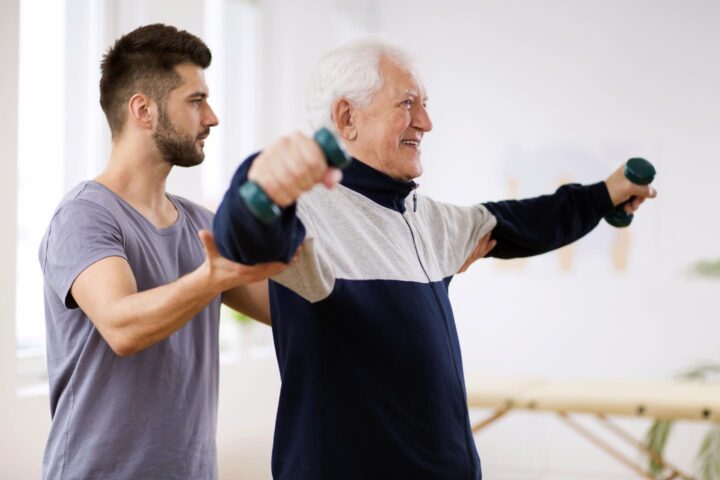
Since accomplishment is a great antidepressant, beginning self-care early is encouraged. Early ambulation is usually possible and goes a long way in preventing blood clots in the legs, and preventing or minimizing pulmonary problems. The words of the Great Physician can be applied here: “To him that hath shall be given, and from him that hath not will be taken away even that which he hath.” He who has no physical activity tends to lose whatever physical activity remains. He who is not up and about, being physically active, is in danger of complications that will further add to his handicap.
Success is the reward of responding wisely to the circumstances at hand and commonly involves diligent work and well-directed effort. It requires realistic goals and investing time and effort where the potential is greatest, not necessarily where the loss is greatest. For the patient who has had a stroke, it often involves a shift from physical therapy that concentrates on the paralyzed part, to therapy that emphasizes getting on with life, making the best use of recovered and remaining abilities, and taking an active hand in community and family life. The best rehabilitation plan leads to a series of success experiences. But if residual limitations are not accepted, these words of the wise man will be experienced: “Hope deferred maketh the heart sick.”
Problems with swallowing require careful assessment and special techniques to prevent choking or aspiration with pneumonia. Slurred speech often improves as do difficulties involving word-finding. Communication difficulties can be extremely frustrating to the patient who cannot express the simplest need. These test the very soul of the patient and those who are nearest to him. I recall with admiration the formerly eloquent minister of a large church who had been president of the rotary club and in demand as the featured speaker at large community events. His stroke left him entirely devoid of verbal communication. He remained pleasant and good humored.
By contrast, a successful businessman used his cane to beat angrily on his new short-leg brace, which he needed to keep from tripping over his “drop foot.” This highlights the difficulties of accepting necessary changes and the fact that special devices such as braces, dentures, hearing aids, and glasses have a nuisance value as well as a practical value. Unless the perceived practical value clearly surpasses the nuisance value, the device will not be accepted.
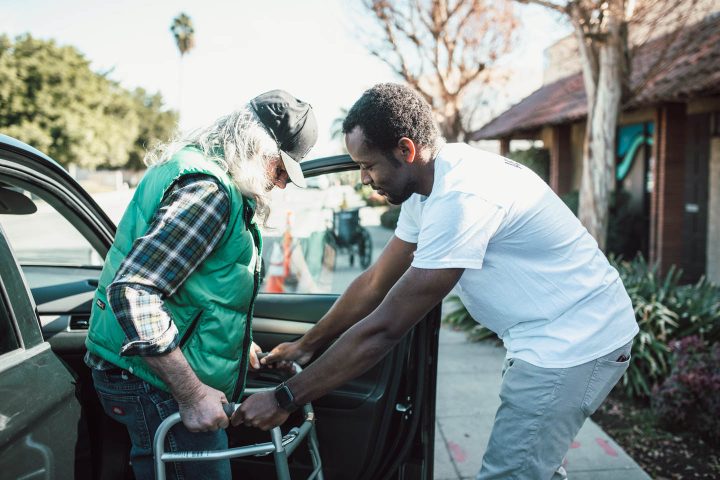
“For every stroke there is a stricken family.” When the community of friends, neighbors, employers, extended family, and church family recognize that they are part of the rehabilitation team, the rewards are most heartwarming. An adapted employment situation, an encouraging call, providing a couple of hours break for the caregiver, transportation, a visit, or sending over a hot dish will be gratefully remembered for a lifetime.
For many, life after a stroke has been very productive. Louis Pasteur had 30 years of scientific productivity after his stroke. Handel composed the “Messiah” after having had a stroke. Just today a saleslady in a department store recognized me from her experience in our rehabilitation hospital 17 years ago. She was only 38 years old when several strokes deprived her of speech and impaired her comprehension for months. There had been warning signs: elevated blood pressure, obesity, high salt intake, tobacco abuse, a dozen cups of coffee per day, and a family history of strokes.
For her the way back involved neurosurgery, many months of rehabilitation, and commitment to lifestyle betterment. Now after losing 66 pounds, she is trim, she is cheerful, has “knocked out the noxious” from her life, has been working the past 14 years, and has hardly any neurological deficit. She proclaims a healthful lifestyle to all who will listen.
If the 60-year-old executive I admitted last week had only heard and heeded those risk factor warnings in time! Seven twelve-hour work days a week, elevated cholesterol and blood pressure, three packs of cigarettes a day, and festering family problems with estrangement from his children set the stage for his heart attack nine years ago and for the paralyzing stroke that brought him to see me now. Like a multitude of others, he had been courting disaster. Timely changes, with a fraction of the effort involved in rehabilitation, would have set him up to be like his mother. She is fully independent—still driving at age 93!
“Wisdom cries from the street corner,” said the wise man. Wisdom also cries from the consultation room, from our personal observations, and from advice fount at this site. “The way of the transgressor [of the laws of health] is hard!” But with timely lifestyle changes it can be the way we do not need to travel.

Stay Always Up to Date
Sign up to our newsletter and stay always informed with news and tips around your health.

Russell is the co-funder of Reading Rehabilitation Hospital in Pennsylvania. He was a medical educator for 10 years at Loma Linda University and Universidad de Montemorelos in Mexico.
Leave a Reply