People have been using salt since the dawn of civilization to process, preserve and enhance foods. In ancient Rome, salt was so central to commerce that soldiers were paid their “salarium,” or salaries, in salt, for instance. Salt’s value was in part as a food preservative, keeping unwanted microbes at bay while allowing desired ones to grow. It was this remarkable ability to regulate bacterial growth that likely helped spark the development of fermented foods ranging from sauerkraut to salami, olives to bread, cheese to kimchi.1)Hesseltine, C.W. and Wang, H.L. (1967), Traditional fermented foods. Biotechnol. Bioeng., 9: 275-288. https://doi.org/10.1002/bit.260090302
Today, salt has become ubiquitous and highly concentrated in increasingly processed diets.2)Sodium Sources: Where Does All That Sodium Come From? American Heart Association The evidence has mounted that too much salt – specifically the sodium chloride added to preserve and enhance the flavor of many highly processed foods – is making people sick. It can cause high blood pressure3)Feng J et. al. Salt Reduction to Prevent Hypertension and Cardiovascular Disease: JACC State-of-the-Art Review. Journal of the American College of Cardiology, Volume 75, Number 6 and contribute to heart attacks and stroke.4)Neil B et. al. Effect of Salt Substitution on Cardiovascular Events and Death. DOI: 10.1056/NEJMoa2105675 It is also associated with an increased risk of developing stomach and colon cancer, Ménière’s disease, osteoporosis and obesity.5)Wu X, Chen L, Cheng J, Qian J, Fang Z, Wu J. Effect of Dietary Salt Intake on Risk of Gastric Cancer: A Systematic Review and Meta-Analysis of Case-Control Studies. Nutrients. 2022; 14(20):4260. https://doi.org/10.3390/nu14204260
Yawar M, Baig-ansari N. Dietary Sodium (salt) Intake and Risk of Colorectal Cancer: A
Systematic Review. https://cdn.nutrition.org/article/S2475-2991(23)14364-2/pdf
Yang, X., Lin, C., Wu, Q., Li, L., & Mei, X. (2024). Low-sodium diet with adequate water intake improved the clinical efficacy in Ménière’s disease. Acta Oto-Laryngologica, 144(1), 14–18. https://doi.org/10.1080/00016489.2024.2315302
Hong, S., Choi, J.W., Park, JS. et al. The association between dietary sodium intake and osteoporosis. Sci Rep 12, 14594 (2022). https://doi.org/10.1038/s41598-022-18830-4
Allison, S. High salt intake as a driver of obesity. Nat Rev Nephrol 14, 285 (2018). https://doi.org/10.1038/nrneph.2018.23
How might a substance previously thought worth its weight in gold have transformed into something many medical institutions consider a key predictor of disease?6)Campbell, N.R.C., Whelton, P.K., Orias, M. et al. 2022 World Hypertension League, Resolve To Save Lives and International Society of Hypertension dietary sodium (salt) global call to action. J Hum Hypertens 37, 428–437 (2023). https://doi.org/10.1038/s41371-022-00690-0
Micha R, Peñalvo JL, Cudhea F, Imamura F, Rehm CD, Mozaffarian D. Association Between Dietary Factors and Mortality From Heart Disease, Stroke, and Type 2 Diabetes in the United States. JAMA. 2017;317(9):912–924. doi:10.1001/jama.2017.0947
Salt lobbyists may be one answer to this question. And as a gastroenterologist and research scientist at the University of Washington, I want to share the mounting evidence that microbes from the shadows of your gut might also shed some light on how salt contributes to disease.
Blood pressure cookers
Sodium’s role in blood pressure and heart disease results largely from its regulating the amount of water inside your blood vessels. In simple terms, the more sodium in your blood, the more water it pulls into your blood vessels. This leads to higher blood pressure and subsequently an increased risk for heart attack and stroke. Some people may be more or less sensitive to the effects salt has on blood pressure.7)Balafa, O., Kalaitzidis, R.G. Salt sensitivity and hypertension. J Hum Hypertens 35, 184–192 (2021). https://doi.org/10.1038/s41371-020-00407-1

Recent research suggests an additional way salt may raise blood pressure – by altering your gut microbiome.8)Gut microbial metabolites lower blood pressure in patients with hypertension. Nat Cardiovasc Res 2, 18–19 (2023). https://doi.org/10.1038/s44161-022-00204-8 Salt leads to a decrease in healthy microbes and the key metabolites they produce from fiber.9)Hamad I, Cardilli A, Côrte-Real BF, Dyczko A, Vangronsveld J, Kleinewietfeld M. High-Salt Diet Induces Depletion of Lactic Acid-Producing Bacteria in Murine Gut. Nutrients. 2022; 14(6):1171. https://doi.org/10.3390/nu14061171
Bier A, Braun T, Khasbab R, Di Segni A, Grossman E, Haberman Y, Leibowitz A. A High Salt Diet Modulates the Gut Microbiota and Short Chain Fatty Acids Production in a Salt-Sensitive Hypertension Rat Model. Nutrients. 2018; 10(9):1154. https://doi.org/10.3390/nu10091154 These metabolites decrease inflammation in blood vessels and keep them relaxed, contributing to reduced blood pressure.10)Gut microbial metabolites lower blood pressure in patients with hypertension. Nat Cardiovasc Res 2, 18–19 (2023). https://doi.org/10.1038/s44161-022-00204-8
Xu J et. al. Short-Chain Fatty Acid Receptors and Blood Pressure Regulation: Council on Hypertension Mid-Career Award for Research Excellence 2021 https://doi.org/10.1161/HYPERTENSIONAHA.122.18558
With the exception of certain organisms that thrive in salt called halophiles,11)Seck, E.H., Senghor, B., Merhej, V. et al. RETRACTED ARTICLE: Salt in stools is associated with obesity, gut halophilic microbiota and Akkermansia muciniphila depletion in humans. Int J Obes 43, 862–871 (2019). https://doi.org/10.1038/s41366-018-0201-3 high levels of salt can poison just about any microbe, even ones your body wants to keep around. This is why people have been using salt for a long time to preserve food and keep unwanted bacteria away.
But modern diets often have too much sodium. According to the World Health Organization, healthy consumption amounts to less than 2,000 milligrams per day for the average adult.12)Sodium reduction. WHO, 11 May 2026 The global mean intake of 4,310 milligrams of sodium has likely increased the amount of salt in the gut over healthy levels.13)Brensilver J et. al. Effect of variations in dietary sodium intake on sodium excretion in mature rats. Kidney International, Vol.27(1985),pp.497—502
Salt of the girth
Sodium is connected to health outcomes other than blood pressure, and your microbiome may be playing a role here, too.14)Farquhar, W, Edwards, D, Jurkovitz, C. et al. Dietary Sodium and Health: More Than Just Blood Pressure. JACC. 2015 Mar, 65 (10) 1042–1050. https://doi.org/10.1016/j.jacc.2014.12.039
High sodium diets and higher sodium levels in stool are significantly linked to metabolic disorders, including elevated blood sugar, fatty liver disease and weight gain.15)Wu Q et. al. The role of dietary salt in metabolism and energy balance: Insights beyond cardiovascular disease. https://doi.org/10.1111/dom.14980
Lin Y, Chattopadhyay K, Yang X, Li JL, Chen YS, Zhou Y, Li L. Association Between Dietary Salt and Plasma Glucose, Insulin and Hemoglobin A1c Levels Among Type 2 Diabetes Patients in Eastern China. Diabetes Metab Syndr Obes. 2021;14:4811-4818
https://doi.org/10.2147/DMSO.S338915
Shojaei-Zarghani, S., Safarpour, A. R., Fattahi, M. R., & Keshtkar, A. (2022). Sodium in relation with nonalcoholic fatty liver disease: A systematic review and meta-analysis of observational studies. Food Science & Nutrition, 10, 1579–1591. https://doi.org/10.1002/fsn3.2781
Lee J, Sohn C, Kim OY, Lee YM, Yoon MO, Lee M. The association between dietary sodium intake and obesity in adults by sodium intake assessment methods: a review of systematic reviews and re-meta-analysis. Nutr Res Pract. 2023 Apr;17(2):175-191. https://doi.org/10.4162/nrp.2023.17.2.175 In fact, one study estimated that for every one gram per day increase in dietary sodium, there is a 15% increased risk of obesity.16)Xi Zhang, Jiawei Wang, Jibin Li, Yongfu Yu, Yiqing Song, A positive association between dietary sodium intake and obesity and central obesity: results from the National Health and Nutrition Examination Survey 1999-2006, Nutrition Research, Volume 55, 2018, Pages 33-44,
https://doi.org/10.1016/j.nutres.2018.04.008.
A gold-standard dietary study from the National Institutes of Health found that those on a diet of ultraprocessed foods over two weeks ate about 500 more calories and weighed about 2 pounds more compared with those on a minimally processed diet. One of the biggest differences between the two diets was the extra 1.2 grams of sodium consumed with the ultraprocessed diets.17)Hall K, Ayuketah A, Brychta R … Ultra-Processed Diets Cause Excess Calorie Intake and Weight Gain: An Inpatient Randomized Controlled Trial of Ad Libitum Food Intake Cell Metabolism, 2019; 30, 67-77.e3 https://doi.org/10.1016/j.cmet.2019.05.008
A leading explanation for why increased salt may lead to weight gain despite having no calories is that sodium increases cravings.18)Michael J. Morris, Elisa S. Na, Alan Kim Johnson, Salt craving: The psychobiology of pathogenic sodium intake, Physiology & Behavior, Volume 94, Issue 5, 2008, Pages 709-721, ISSN 0031-9384, https://doi.org/10.1016/j.physbeh.2008.04.008. When sodium is combined with simple sugars and unhealthy fats, these so-called hyperpalatable foods may be linked to fat gain, as they are particularly good at stimulating the reward centers in the brain and addictionlike eating behaviors.19)Tera L. Fazzino, James L. Dorling, John W. Apolzan, Corby K. Martin, Meal composition during an ad libitum buffet meal and longitudinal predictions of weight and percent body fat change: The role of hyper-palatable, energy dense, and ultra-processed foods, Appetite, Volume 167, 2021, 105592, ISSN 0195-6663, https://doi.org/10.1016/j.appet.2021.105592.
de Macedo, Isabel Cristina, de Freitas, Joice Soares, da Silva Torres, Iraci Lucena, The Influence of Palatable Diets in Reward System Activation: A Mini Review, Advances in Pharmacological and Pharmaceutical Sciences, 2016, 7238679, 7 pages, 2016. https://doi.org/10.1155/2016/7238679
Nicole M Avena, Mark S Gold, Variety and hyperpalatability: are they promoting addictive overeating? The American Journal of Clinical Nutrition, Volume 94, Issue 2, 2011, Pages 367-368, ISSN 0002-9165, https://doi.org/10.3945/ajcn.111.020164.
Salt may also connect to cravings via a short circuit in the gut microbiome. Microbiome metabolites stimulate the release of a natural version of weight loss drugs Wegovy and Ozempic, the gut hormone GLP-1. Through GLP-1, a healthy microbiome can control your appetite, blood sugar levels and your body’s decision to burn or store energy as fat. Too much salt may interfere with its release.
Other explanations for salt’s effect on metabolic disease, with varying amounts of evidence, include increased sugar absorption,20)Rieg, T., Fenton, R., & Poulsen, S. (2015). Sodium-glucose cotransport. Current Opinion in Nephrology & Hypertension, 24(5), 463–469. https://doi.org/10.1097/MNH.0000000000000152 increased gut-derived corticosteroids21)Hannah M Costello, Georgios Krilis, Celine Grenier, David Severs, Alicja Czopek, Jessica R Ivy, Mark Nixon, Megan C Holmes, Dawn E W Livingstone, Ewout J Hoorn, Neeraj Dhaun, Matthew A Bailey, High salt intake activates the hypothalamic–pituitary–adrenal axis, amplifies the stress response, and alters tissue glucocorticoid exposure in mice, Cardiovascular Research, Volume 119, Issue 8, June 2023, Pages 1740–1750, https://doi.org/10.1093/cvr/cvac160 and a sugar called fructose22)M.A. Lanaspa, M. Kuwabara, et. al. High salt intake causes leptin resistance and obesity in mice by stimulating endogenous fructose production and metabolism, Proc. Natl. Acad. Sci. U.S.A. 115 (12) 3138-3143, https://doi.org/10.1073/pnas.1713837115 (2018). that can lead to fat accumulation and decreases in energy use for heat production.23)Mähler A, Klamer S, Maifeld A, Bartolomaeus H, Markó L, Chen C-Y, Forslund SK, Boschmann M, Müller DN, Wilck N. Increased Salt Intake Decreases Diet-Induced Thermogenesis in Healthy Volunteers: A Randomized Placebo-Controlled Study. Nutrients. 2022; 14(2):253. https://doi.org/10.3390/nu14020253
Desalin-nations
While many countries are implementing national salt reduction initiatives, sodium consumption in most parts of the world remains on the rise.24)Joseph Alvin Santos, Dejen Tekle, Emalie Rosewarne, Nadia Flexner, Laura Cobb, Ayoub Al-Jawaldeh, Warrick Junsuk Kim, Joao Breda, Stephen Whiting, Norm Campbell, Bruce Neal, Jacqui Webster, Kathy Trieu, A Systematic Review of Salt Reduction Initiatives Around the World: A Midterm Evaluation of Progress Towards the 2025 Global Non-Communicable Diseases Salt Reduction Target, Advances in Nutrition, Volume 12, Issue 5, 2021, Pages 1768-1780, ISSN 2161-8313, https://doi.org/10.1093/advances/nmab008. Dietary salt reduction in the United States in particular remains behind the curve, while many European countries have started to see benefits such as lower blood pressure and fewer deaths from heart disease through initiatives like improved package labeling of salt content, reformulating foods to limit salt and even salt taxes.25)Clarke LS, Overwyk K, Bates M, Park S, Gillespie C, Cogswell ME. Temporal Trends in Dietary Sodium Intake Among Adults Aged ≥19 Years — United States, 2003–2016. MMWR Morb Mortal Wkly Rep 2021;70:1478–1482. DOI: http://dx.doi.org/10.15585/mmwr.mm7042a4
Loreen Kloss, Julia Dawn Meyer, Lutz Graeve, Walter Vetter, Sodium intake and its reduction by food reformulation in the European Union — A review, NFS Journal, Volume 1, 2015, Pages 9-19, https://doi.org/10.1016/j.nfs.2015.03.001.
Feng J He, Norm R C Campbell, Mark Woodward, Graham A MacGregor, Salt reduction to prevent hypertension: the reasons of the controversy, European Heart Journal, Volume 42, Issue 25, 1 July 2021, Pages 2501–2505, https://doi.org/10.1093/eurheartj/ehab274
The Nutri-Score: A Science-Based Front-of-Pack Nutrition Label, WHO, IARC Evidence Summary Brief No. 2
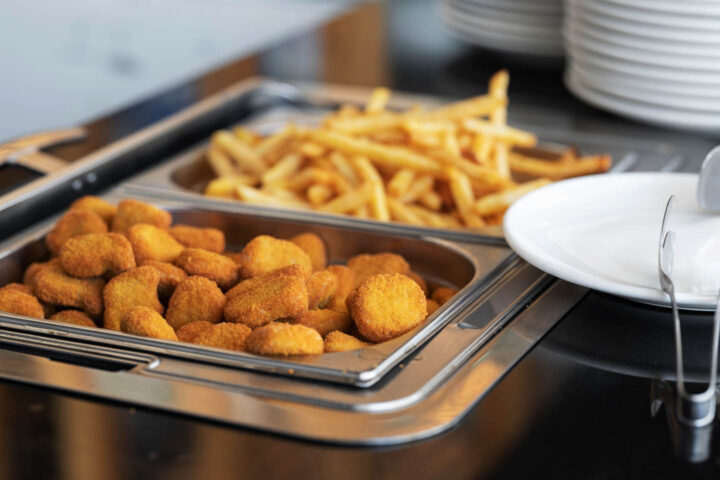
Comparing the nutrition facts of fast-food items between countries reveals considerable variability. For instance, McDonald’s chicken nuggets are saltiest in the U.S. and even American Coke contains salt, an ingredient it lacks in other countries.26)Dunford E et. al. The variability of reported salt levels in fast foods across six countries: opportunities for salt reduction. https://doi.org/10.1503/cmaj.111895
Shute N. Fast Food In The U.S. Has Way More Salt Than In Other Countries. npr.org April 16, 2012
Coca Cola Original Nutrition Facts
Coca Cola Original Taste Open Food Facts
The salt industry in the U.S may have a role here. It lobbied to prevent government regulations on salt in the 2010s, not dissimilar from what the tobacco industry did with cigarettes in the 1980s. Salty foods sell well. One of the key voices of the salt industry for many years, the now-defunct Salt Institute, may have confused public health messaging around the importance of salt reduction by emphasizing the less common instances where restriction can be dangerous.27)Greenfieldboyce N. After A Century, A Voice For The U.S. Salt Industry Goes Quiet. npr.org March 30, 2019
Devaney T. Salt lobby warns sodium reduction will ‘endanger public health’. The Hill, January 6, 2016
Glenn K. Too Little Sodium Can be Harmful to Heart Failure Patients. American College of Cardiology, Feb 23, 2023
But the evidence for reducing salt in the general diet is mounting, and institutions are responding. In 2021, the U.S. Department of Agriculture issued new industry guidance calling for a voluntary gradual reduction of salt in commercially processed and prepared foods.28)Guidance for Industry: Voluntary Sodium Reduction Goals. FDA, October 2021
Sodium Reduction in the Food Supply. FDA, August 2024 The Salt Institute dissolved in 2019. Other organizations such as the American Frozen Food Institute and major ingredient suppliers such as Cargill are on board with lowering dietary salt.29)AFFI Statement on FDA Release of Voluntary Sodium Reduction Goals. Press Release, October 13, 2021
How US Food Companies Can Improve Healthful Food Offerings. cargill.com
From add-vice to advice
How can you feed your gut microbiome well while being mindful of your salt intake?
Start with limiting your consumption of highly processed foods: salty meats (such as fast food and cured meat), salty treats (such as crackers and chips) and salty sneaks (such as soft drinks, condiments and breads). Up to 70% of dietary salt in the U.S. is currently consumed from packaged and processed foods.30)Sodium in Your Diet. FDA
Instead, focus on foods low in added sodium and sugar and high in potassium and fiber, such as unprocessed, plant-based foods: beans, nuts, seeds, whole grains, fruits and vegetables. Fermented foods, though often high in sodium, may also be a healthier option due to high levels of short-chain fatty acids, fiber, polyphenols and potassium.31)Şanlier, N., Gökcen, B. B., & Sezgin, A. C. (2019). Health benefits of fermented foods. Critical Reviews in Food Science and Nutrition, 59(3), 506–527. https://doi.org/10.1080/10408398.2017.1383355
Wastyk H, et. al. Gut-microbiota-targeted diets modulate human immune status. Cell, 2021; 184, 4137-4153.e14 https://doi.org/10.1016/j.cell.2021.06.019
Shimizu, H., Masujima, Y., Ushiroda, C. et al. Dietary short-chain fatty acid intake improves the hepatic metabolic condition via FFAR3. Sci Rep 9, 16574 (2019). https://doi.org/10.1038/s41598-019-53242-x
Finally, consider the balance of dietary sodium and potassium. While sodium helps keep fluid in your blood vessels, potassium helps keep fluid in your cells. Dietary sodium and potassium are best consumed in balanced ratios.32)Damman C. Too Much or Too Little Salt? Balanced Advice on Sodium to Potassium Ratios. Gutbites MD
While all advice is best taken with a grain of salt, your microbiome gently asks that it just not be large.

Stay Always Up to Date
Sign up to our newsletter and stay always informed with news and tips around your health.
This article is republished from The Conversation under a Creative Commons license. Read the original article.


Christopher Damman, M.D., is a board certified gastroenterologist at the Digestive Health Center at University of Washington Medical Center and a UW associate professor of Gastroenterology and Medicine. He has a particular interest in the microbiome & functional foods, and he explores these themes as Editor-In-Chief at Gut Bites MD.
References
| ↑1 | Hesseltine, C.W. and Wang, H.L. (1967), Traditional fermented foods. Biotechnol. Bioeng., 9: 275-288. https://doi.org/10.1002/bit.260090302 |
|---|---|
| ↑2 | Sodium Sources: Where Does All That Sodium Come From? American Heart Association |
| ↑3 | Feng J et. al. Salt Reduction to Prevent Hypertension and Cardiovascular Disease: JACC State-of-the-Art Review. Journal of the American College of Cardiology, Volume 75, Number 6 |
| ↑4 | Neil B et. al. Effect of Salt Substitution on Cardiovascular Events and Death. DOI: 10.1056/NEJMoa2105675 |
| ↑5 | Wu X, Chen L, Cheng J, Qian J, Fang Z, Wu J. Effect of Dietary Salt Intake on Risk of Gastric Cancer: A Systematic Review and Meta-Analysis of Case-Control Studies. Nutrients. 2022; 14(20):4260. https://doi.org/10.3390/nu14204260 Yawar M, Baig-ansari N. Dietary Sodium (salt) Intake and Risk of Colorectal Cancer: A Systematic Review. https://cdn.nutrition.org/article/S2475-2991(23)14364-2/pdf Yang, X., Lin, C., Wu, Q., Li, L., & Mei, X. (2024). Low-sodium diet with adequate water intake improved the clinical efficacy in Ménière’s disease. Acta Oto-Laryngologica, 144(1), 14–18. https://doi.org/10.1080/00016489.2024.2315302 Hong, S., Choi, J.W., Park, JS. et al. The association between dietary sodium intake and osteoporosis. Sci Rep 12, 14594 (2022). https://doi.org/10.1038/s41598-022-18830-4 Allison, S. High salt intake as a driver of obesity. Nat Rev Nephrol 14, 285 (2018). https://doi.org/10.1038/nrneph.2018.23 |
| ↑6 | Campbell, N.R.C., Whelton, P.K., Orias, M. et al. 2022 World Hypertension League, Resolve To Save Lives and International Society of Hypertension dietary sodium (salt) global call to action. J Hum Hypertens 37, 428–437 (2023). https://doi.org/10.1038/s41371-022-00690-0 Micha R, Peñalvo JL, Cudhea F, Imamura F, Rehm CD, Mozaffarian D. Association Between Dietary Factors and Mortality From Heart Disease, Stroke, and Type 2 Diabetes in the United States. JAMA. 2017;317(9):912–924. doi:10.1001/jama.2017.0947 |
| ↑7 | Balafa, O., Kalaitzidis, R.G. Salt sensitivity and hypertension. J Hum Hypertens 35, 184–192 (2021). https://doi.org/10.1038/s41371-020-00407-1 |
| ↑8 | Gut microbial metabolites lower blood pressure in patients with hypertension. Nat Cardiovasc Res 2, 18–19 (2023). https://doi.org/10.1038/s44161-022-00204-8 |
| ↑9 | Hamad I, Cardilli A, Côrte-Real BF, Dyczko A, Vangronsveld J, Kleinewietfeld M. High-Salt Diet Induces Depletion of Lactic Acid-Producing Bacteria in Murine Gut. Nutrients. 2022; 14(6):1171. https://doi.org/10.3390/nu14061171 Bier A, Braun T, Khasbab R, Di Segni A, Grossman E, Haberman Y, Leibowitz A. A High Salt Diet Modulates the Gut Microbiota and Short Chain Fatty Acids Production in a Salt-Sensitive Hypertension Rat Model. Nutrients. 2018; 10(9):1154. https://doi.org/10.3390/nu10091154 |
| ↑10 | Gut microbial metabolites lower blood pressure in patients with hypertension. Nat Cardiovasc Res 2, 18–19 (2023). https://doi.org/10.1038/s44161-022-00204-8 Xu J et. al. Short-Chain Fatty Acid Receptors and Blood Pressure Regulation: Council on Hypertension Mid-Career Award for Research Excellence 2021 https://doi.org/10.1161/HYPERTENSIONAHA.122.18558 |
| ↑11 | Seck, E.H., Senghor, B., Merhej, V. et al. RETRACTED ARTICLE: Salt in stools is associated with obesity, gut halophilic microbiota and Akkermansia muciniphila depletion in humans. Int J Obes 43, 862–871 (2019). https://doi.org/10.1038/s41366-018-0201-3 |
| ↑12 | Sodium reduction. WHO, 11 May 2026 |
| ↑13 | Brensilver J et. al. Effect of variations in dietary sodium intake on sodium excretion in mature rats. Kidney International, Vol.27(1985),pp.497—502 |
| ↑14 | Farquhar, W, Edwards, D, Jurkovitz, C. et al. Dietary Sodium and Health: More Than Just Blood Pressure. JACC. 2015 Mar, 65 (10) 1042–1050. https://doi.org/10.1016/j.jacc.2014.12.039 |
| ↑15 | Wu Q et. al. The role of dietary salt in metabolism and energy balance: Insights beyond cardiovascular disease. https://doi.org/10.1111/dom.14980 Lin Y, Chattopadhyay K, Yang X, Li JL, Chen YS, Zhou Y, Li L. Association Between Dietary Salt and Plasma Glucose, Insulin and Hemoglobin A1c Levels Among Type 2 Diabetes Patients in Eastern China. Diabetes Metab Syndr Obes. 2021;14:4811-4818 https://doi.org/10.2147/DMSO.S338915 Shojaei-Zarghani, S., Safarpour, A. R., Fattahi, M. R., & Keshtkar, A. (2022). Sodium in relation with nonalcoholic fatty liver disease: A systematic review and meta-analysis of observational studies. Food Science & Nutrition, 10, 1579–1591. https://doi.org/10.1002/fsn3.2781 Lee J, Sohn C, Kim OY, Lee YM, Yoon MO, Lee M. The association between dietary sodium intake and obesity in adults by sodium intake assessment methods: a review of systematic reviews and re-meta-analysis. Nutr Res Pract. 2023 Apr;17(2):175-191. https://doi.org/10.4162/nrp.2023.17.2.175 |
| ↑16 | Xi Zhang, Jiawei Wang, Jibin Li, Yongfu Yu, Yiqing Song, A positive association between dietary sodium intake and obesity and central obesity: results from the National Health and Nutrition Examination Survey 1999-2006, Nutrition Research, Volume 55, 2018, Pages 33-44, https://doi.org/10.1016/j.nutres.2018.04.008. |
| ↑17 | Hall K, Ayuketah A, Brychta R … Ultra-Processed Diets Cause Excess Calorie Intake and Weight Gain: An Inpatient Randomized Controlled Trial of Ad Libitum Food Intake Cell Metabolism, 2019; 30, 67-77.e3 https://doi.org/10.1016/j.cmet.2019.05.008 |
| ↑18 | Michael J. Morris, Elisa S. Na, Alan Kim Johnson, Salt craving: The psychobiology of pathogenic sodium intake, Physiology & Behavior, Volume 94, Issue 5, 2008, Pages 709-721, ISSN 0031-9384, https://doi.org/10.1016/j.physbeh.2008.04.008. |
| ↑19 | Tera L. Fazzino, James L. Dorling, John W. Apolzan, Corby K. Martin, Meal composition during an ad libitum buffet meal and longitudinal predictions of weight and percent body fat change: The role of hyper-palatable, energy dense, and ultra-processed foods, Appetite, Volume 167, 2021, 105592, ISSN 0195-6663, https://doi.org/10.1016/j.appet.2021.105592. de Macedo, Isabel Cristina, de Freitas, Joice Soares, da Silva Torres, Iraci Lucena, The Influence of Palatable Diets in Reward System Activation: A Mini Review, Advances in Pharmacological and Pharmaceutical Sciences, 2016, 7238679, 7 pages, 2016. https://doi.org/10.1155/2016/7238679 Nicole M Avena, Mark S Gold, Variety and hyperpalatability: are they promoting addictive overeating? The American Journal of Clinical Nutrition, Volume 94, Issue 2, 2011, Pages 367-368, ISSN 0002-9165, https://doi.org/10.3945/ajcn.111.020164. |
| ↑20 | Rieg, T., Fenton, R., & Poulsen, S. (2015). Sodium-glucose cotransport. Current Opinion in Nephrology & Hypertension, 24(5), 463–469. https://doi.org/10.1097/MNH.0000000000000152 |
| ↑21 | Hannah M Costello, Georgios Krilis, Celine Grenier, David Severs, Alicja Czopek, Jessica R Ivy, Mark Nixon, Megan C Holmes, Dawn E W Livingstone, Ewout J Hoorn, Neeraj Dhaun, Matthew A Bailey, High salt intake activates the hypothalamic–pituitary–adrenal axis, amplifies the stress response, and alters tissue glucocorticoid exposure in mice, Cardiovascular Research, Volume 119, Issue 8, June 2023, Pages 1740–1750, https://doi.org/10.1093/cvr/cvac160 |
| ↑22 | M.A. Lanaspa, M. Kuwabara, et. al. High salt intake causes leptin resistance and obesity in mice by stimulating endogenous fructose production and metabolism, Proc. Natl. Acad. Sci. U.S.A. 115 (12) 3138-3143, https://doi.org/10.1073/pnas.1713837115 (2018). |
| ↑23 | Mähler A, Klamer S, Maifeld A, Bartolomaeus H, Markó L, Chen C-Y, Forslund SK, Boschmann M, Müller DN, Wilck N. Increased Salt Intake Decreases Diet-Induced Thermogenesis in Healthy Volunteers: A Randomized Placebo-Controlled Study. Nutrients. 2022; 14(2):253. https://doi.org/10.3390/nu14020253 |
| ↑24 | Joseph Alvin Santos, Dejen Tekle, Emalie Rosewarne, Nadia Flexner, Laura Cobb, Ayoub Al-Jawaldeh, Warrick Junsuk Kim, Joao Breda, Stephen Whiting, Norm Campbell, Bruce Neal, Jacqui Webster, Kathy Trieu, A Systematic Review of Salt Reduction Initiatives Around the World: A Midterm Evaluation of Progress Towards the 2025 Global Non-Communicable Diseases Salt Reduction Target, Advances in Nutrition, Volume 12, Issue 5, 2021, Pages 1768-1780, ISSN 2161-8313, https://doi.org/10.1093/advances/nmab008. |
| ↑25 | Clarke LS, Overwyk K, Bates M, Park S, Gillespie C, Cogswell ME. Temporal Trends in Dietary Sodium Intake Among Adults Aged ≥19 Years — United States, 2003–2016. MMWR Morb Mortal Wkly Rep 2021;70:1478–1482. DOI: http://dx.doi.org/10.15585/mmwr.mm7042a4 Loreen Kloss, Julia Dawn Meyer, Lutz Graeve, Walter Vetter, Sodium intake and its reduction by food reformulation in the European Union — A review, NFS Journal, Volume 1, 2015, Pages 9-19, https://doi.org/10.1016/j.nfs.2015.03.001. Feng J He, Norm R C Campbell, Mark Woodward, Graham A MacGregor, Salt reduction to prevent hypertension: the reasons of the controversy, European Heart Journal, Volume 42, Issue 25, 1 July 2021, Pages 2501–2505, https://doi.org/10.1093/eurheartj/ehab274 The Nutri-Score: A Science-Based Front-of-Pack Nutrition Label, WHO, IARC Evidence Summary Brief No. 2 |
| ↑26 | Dunford E et. al. The variability of reported salt levels in fast foods across six countries: opportunities for salt reduction. https://doi.org/10.1503/cmaj.111895 Shute N. Fast Food In The U.S. Has Way More Salt Than In Other Countries. npr.org April 16, 2012 Coca Cola Original Nutrition Facts Coca Cola Original Taste Open Food Facts |
| ↑27 | Greenfieldboyce N. After A Century, A Voice For The U.S. Salt Industry Goes Quiet. npr.org March 30, 2019 Devaney T. Salt lobby warns sodium reduction will ‘endanger public health’. The Hill, January 6, 2016 Glenn K. Too Little Sodium Can be Harmful to Heart Failure Patients. American College of Cardiology, Feb 23, 2023 |
| ↑28 | Guidance for Industry: Voluntary Sodium Reduction Goals. FDA, October 2021 Sodium Reduction in the Food Supply. FDA, August 2024 |
| ↑29 | AFFI Statement on FDA Release of Voluntary Sodium Reduction Goals. Press Release, October 13, 2021 How US Food Companies Can Improve Healthful Food Offerings. cargill.com |
| ↑30 | Sodium in Your Diet. FDA |
| ↑31 | Şanlier, N., Gökcen, B. B., & Sezgin, A. C. (2019). Health benefits of fermented foods. Critical Reviews in Food Science and Nutrition, 59(3), 506–527. https://doi.org/10.1080/10408398.2017.1383355 Wastyk H, et. al. Gut-microbiota-targeted diets modulate human immune status. Cell, 2021; 184, 4137-4153.e14 https://doi.org/10.1016/j.cell.2021.06.019 Shimizu, H., Masujima, Y., Ushiroda, C. et al. Dietary short-chain fatty acid intake improves the hepatic metabolic condition via FFAR3. Sci Rep 9, 16574 (2019). https://doi.org/10.1038/s41598-019-53242-x |
| ↑32 | Damman C. Too Much or Too Little Salt? Balanced Advice on Sodium to Potassium Ratios. Gutbites MD |
Leave a Reply