Are you toying with the idea of eating less meat, but unsure whether it’s the right choice nutritionally and how best to do it?
If so, you’re not alone. Many people are now looking to eat fewer animal products because of the desire to eat sustainably, and moving towards a plant-based diet is indeed an admirable goal.1)Plant-based diets. British Nutrition Foundation
It’s better for our health, lowering the risk of chronic diseases such as obesity, type 2 diabetes, cardiovascular disease and some cancers. And it helps our planet.2)Plant-based diet lowers risk for chronic diseases, weight gain, death. healio.com June 11, 2018
A 2019 report on healthy diets from sustainable farming systems concluded that reducing meat and fish consumption – and replacing required calories with plant-based food – are the best methods to reduce greenhouse gas emissions, environmental degradation and biodiversity loss.3)EAT-Lancet Commission Summary Report.
As nutrition experts we’re all too aware that transforming eating habits can require difficult behavior changes.
So, we emphasize small steps. A plant-based diet (as opposed to a plant-only diet) does not mean the total absence of animal products and allows for greater food flexibility and choice than a vegan diet. Or you could take the flexitarian approach, where small amounts of quality animal-based food are consumed alongside significant amounts of plant foods.4)Derbyshire E. Flexitarian Diets and Health: A Review of the Evidence-Based Literature. https://doi.org/10.3389/fnut.2016.00055
Here are some of the basic principles of good nutrition which can help you to eat healthily while reducing your meat intake.
Protein is easy
Amino acids are the building blocks of protein, and essential amino acids (EAAs) are those which the body cannot make itself.
It’s a common misconception that we all need the high-quality protein contained in meat, In fact, we can exist very well with protein from other sources.
To meet protein needs from plant foods alone – such as grains, legumes, nuts, seeds, tubers, fruit and vegetables – a larger amount of plant foods may need to be eaten, especially if eaten in isolation.5)Protein. British Nutrition Foundation
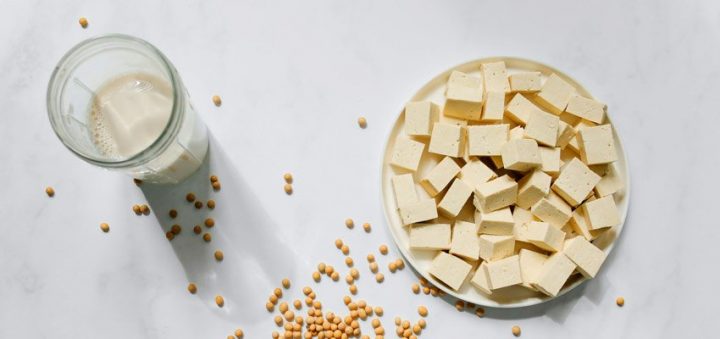
For instance, an average boiled chicken egg, weighing 50 grams, will provide seven grams of protein and all the EAAs in plentiful amounts. And a small 87 gram portion of soya bean tofu will give you the same amount of protein and all the EAAs in lesser, but adequate, amounts to meet nutritional needs. But you would need to eat a 250 gram portion of boiled white rice, or 130 grams of peas (four to five tablespoons), to get seven grams of protein.
In reality though, meals are rarely made up of one type of food alone. The concept of complementary proteins means that a diet which completely lacks animal foods will be sufficient in protein and EAAs, as long as it contains a varied range of plant based foods.6)Protein. British Nutrition Foundation The white rice and peas mentioned above is a classic example: the EAA lysine, in short supply in grains, is plentiful in pulses, whereas the methionine in short supply in pulses, is plentiful in grains.
So, the daily mixing of grains, pulses, nuts and seeds within meals will ensure a full complement of EAA. In short, there is little evidence of protein-deficiency among vegetarians, vegans or plant-based diet-eaters in the UK.
Micronutrient needs
Micronutrient (vitamins and minerals) deficiency can be a problem though, so care must be taken to ensure you meet your dietary requirements.7)Vitamins and minerals. British Nutrition Foundation
Red meat is a rich source of dietary iron. But in fact, the consumption of red meat only once or twice a week – or loss of it – will not make much difference to your overall iron status (how much is in your body).8)Top dietary iron sources in the UK. British Journal of General Practice
Although the type of iron in plant foods is not as available to the body as haem iron provided by meat, regularly eating a variety of plant sources (green vegetables, pulses and nuts) will improve iron intake, particularly if combined with a vitamin C source to improve absorption.9)Iron: Food Fact Sheet. Association of UK Dietitians Key sources of vitamin C include salad vegetables (fresh tomatoes and peppers) and lightly cooked green vegetables and potatoes.

Other major sources of iron are fortified staples, such as flour products and breakfast cereals, and – if you’re not going vegan – oily fish such as salmon, mackeral or sardines.
And don’t forget..
Animal products provide excellent amounts of calcium, zinc, iodine and omega-3 anti-inflammatory oils,10)Omega 3 fats. Heart UK so if you’re cutting out dairy and fish as well as meat and a adopting a plant-only diet you need to take care you get sufficient quantities of these nutrients.11)Vegetarian, vegan and plant-based diet: Food Fact Sheet. Association of UK Dietitians
Iodine is particularly challenging to meet through plants alone.12)Iodine: Food Fact Sheet. Association of UK Dietitians Iodised salt is not commonly available in the UK, (but readily available in the US and other countries) so seeking out other sources would be prudent. Dietary seaweeds (kombu, wakame, laver bread and nori) can be used in soups, stews, salads and sushi a few times a week.
Omega-3 oils can be obtained from a variety of plant based oils.13)Omega 3 fats. Heart UK And zinc content is highest in nut butters as well as unrefined flours and pulses, such as wholegrains and green or brown lentils.
The only natural source of B12 is animal products, but there are other sources include nutritional yeasts and fortified products such as breakfast cereals. A supplement may be required for those following a plant-only diet.
Eating Healthily and Sustainably
The key to healthy eating is a balanced diet,14)The Eatwell Guide. NHS predominantly plant-based15)Vegetarian, vegan and plant-based diet: Food Fact Sheet. Association of UK Dietitians and minimally processed.16)Fairchild R. Why forgotten food manufacturers deserve our thanks too. The Conversation, June 5, 2020 Highly processed foods are a major source of fats, salt and sugar, whether plant-based or animal-based.
Reducing our meat-based consumption, even for one day a week, will make a difference to our health and the planet. And if we do consume meat, looking for more sustainable sources will ultimately encourage less intensive farming of animals.17)8 ways to eat more sustainably without giving up meat. Country Living

Stay Always Up to Date
Sign up to our newsletter and stay always informed with news and tips around your health.
This article is republished from The Conversation under a Creative Commons license. Read the original article.


Ruth is a registered nutritionist who lectures in Nutrition, health promotion, sensory analysis and new food product development at Cardiff Metropolitan University to students on food, nutrition, dietetics and allied health care courses. She has spoken to many public groups and worked with media and the press on a variety of nutrition and food related topics.

Shirley is Senior Lecturer within the Nutrition and Dietetic Department of Cardiff Metropolitan University. Her areas of expertise are global nutrition, early programming of health and disease, infant and young child feeding, and breastfeeding.
References
| ↑1 | Plant-based diets. British Nutrition Foundation |
|---|---|
| ↑2 | Plant-based diet lowers risk for chronic diseases, weight gain, death. healio.com June 11, 2018 |
| ↑3 | EAT-Lancet Commission Summary Report. |
| ↑4 | Derbyshire E. Flexitarian Diets and Health: A Review of the Evidence-Based Literature. https://doi.org/10.3389/fnut.2016.00055 |
| ↑5 | Protein. British Nutrition Foundation |
| ↑6 | Protein. British Nutrition Foundation |
| ↑7 | Vitamins and minerals. British Nutrition Foundation |
| ↑8 | Top dietary iron sources in the UK. British Journal of General Practice |
| ↑9 | Iron: Food Fact Sheet. Association of UK Dietitians |
| ↑10, ↑13 | Omega 3 fats. Heart UK |
| ↑11 | Vegetarian, vegan and plant-based diet: Food Fact Sheet. Association of UK Dietitians |
| ↑12 | Iodine: Food Fact Sheet. Association of UK Dietitians |
| ↑14 | The Eatwell Guide. NHS |
| ↑15 | Vegetarian, vegan and plant-based diet: Food Fact Sheet. Association of UK Dietitians |
| ↑16 | Fairchild R. Why forgotten food manufacturers deserve our thanks too. The Conversation, June 5, 2020 |
| ↑17 | 8 ways to eat more sustainably without giving up meat. Country Living |
Leave a Reply